
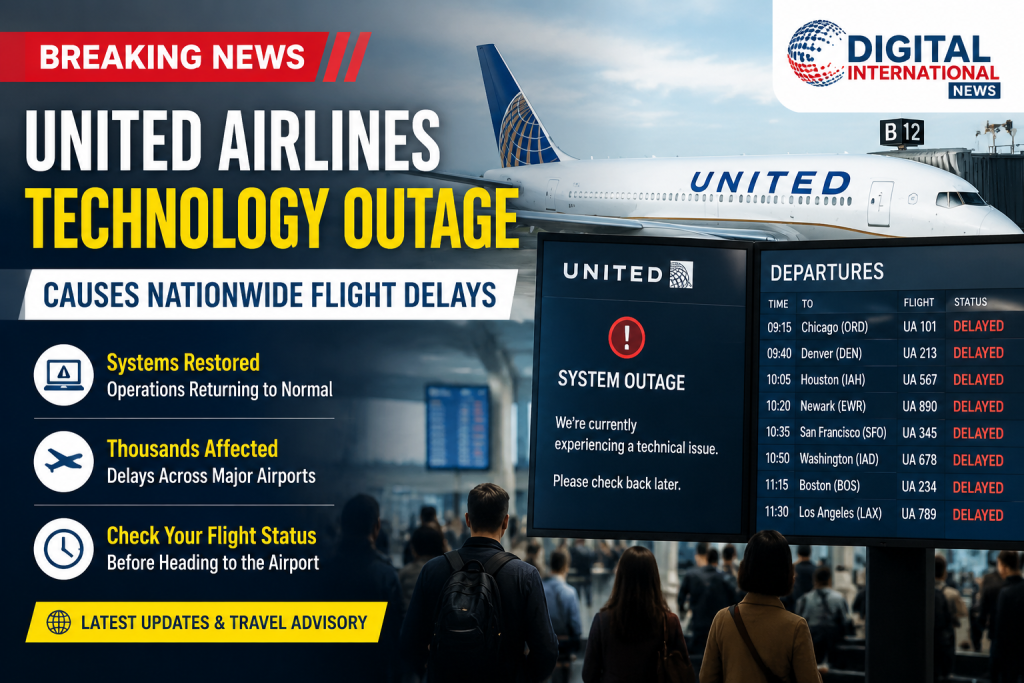
Thousands of passengers across the US faced delays as flights were grounded due to a system failure at United Airlines.
United Airlines restored its systems after a nationwide technology outage, but some flights continue to face delays. Read the latest news, impact, and traveler advice.
United Airlines experienced a significant technology outage that temporarily disrupted flight operations across the United States, creating delays for thousands of passengers and affecting airport operations at several major hubs. The incident highlighted the growing dependence of modern airlines on digital infrastructure, where even a short-lived technical failure can impact reservations, check-ins, boarding procedures, and customer service.
Although the airline restored its systems within hours, the disruption caused a ripple effect that continued throughout the day as flight schedules gradually returned to normal. Aviation experts note that recovering from a system-wide outage often takes longer than fixing the technical problem itself because aircraft, flight crews, and passengers must all be repositioned. The technology issue began during the morning hours when United Airlines reported problems affecting its reservation and operational systems. Travelers across the country experienced difficulties checking in for flights, obtaining boarding passes, and completing ticket transactions.
Airport terminals quickly became crowded as passengers waited for updates while airline employees manually assisted customers. Self-service kiosks at several airports displayed error messages, forcing many travelers to rely on airport staff. United Airlines confirmed that the issue was caused by an internal technology problem affecting its operational systems. The company emphasized that flights already in the air remained safe and continued to their destinations while the disruption primarily affected departures and passenger processing.
The outage impacted several of United Airlines’ busiest hubs, including: Newark Liberty International Airport George Bush Intercontinental Airport (Houston) Washington Dulles International Airport Chicago O’Hare International Airport Denver International Airport Passengers at these airports reported delays ranging from several minutes to multiple hours as airline staff worked to restore normal operations.
Many passengers faced unexpected travel challenges during the outage. Common issues included: Delayed check-in procedures Boarding pass generation failures Reservation lookup problems Customer service delays Longer airport waiting times Flight departure delays Fortunately, the disruption did not create any safety concerns. Air traffic control systems continued operating normally, and aircraft already airborne completed their scheduled flights.
United Airlines responded quickly by informing customers through airport announcements and digital channels. Technical teams worked to identify and resolve the issue while airport personnel assisted travelers manually wherever possible. After restoring its systems, the airline announced that operations were gradually returning to normal. However, officials warned that residual delays would continue throughout the day because aircraft rotations and crew schedules required time to recover.
Modern airlines rely on interconnected digital systems to manage nearly every aspect of their operations. These systems coordinate: Flight scheduling Aircraft assignments Crew management Passenger reservations Check-in services Boarding procedures Baggage tracking Ticket processing Even if aircraft are ready to fly, departures can be delayed if passengers cannot check in or receive boarding passes. This demonstrates how critical reliable IT infrastructure has become for global aviation.
Unlike isolated flight delays caused by weather, technology outages often spread throughout an airline’s network. When one aircraft departs late, subsequent flights using the same aircraft may also be delayed. Crew members can exceed legal working-hour limits, connecting passengers may miss onward flights, and baggage transfers become more complicated. As a result, restoring schedules after a technology failure often takes several hours beyond the initial repair.
Travel experts recommend several practical steps whenever an airline experiences a technology issue: Check flight status before leaving for the airport. Arrive earlier than usual. Keep digital and printed travel documents whenever possible Enable airline app notifications. Monitor airport display screens for gate changes. Contact airline support only when necessary to reduce call-center congestion. Retain receipts if unexpected expenses occur due to delays These simple precautions can reduce stress during unexpected disruptions.
The aviation industry continues investing billions of dollars in advanced technology designed to improve efficiency and passenger experience. Artificial intelligence, automated check-in, biometric boarding, cloud-based reservation systems, and real-time aircraft monitoring have transformed airline operations. However, these innovations also increase the importance of cybersecurity, system redundancy, and disaster recovery planning. Airlines worldwide continue upgrading their digital infrastructure to reduce the risk of future service interruptions.
Technology outages are not unique to one airline. Over the past several years, multiple global carriers have experienced operational disruptions caused by software failures, infrastructure issues, and external technology incidents. Industry analysts say airlines increasingly invest in backup systems, cloud infrastructure, and cybersecurity protections to improve resilience and maintain customer confidence.
United Airlines has confirmed that the technical issue has been resolved and normal operations are being restored. While many flights resumed as scheduled, some passengers may continue to experience delays as the airline rebalances aircraft, crews, and passenger connections across its network.
The United Airlines technology outage serves as another reminder of how essential digital systems have become in modern air travel. Although the disruption was temporary and no safety issues were reported, thousands of travelers experienced delays and inconvenience while the airline worked to restore its operations.