
Valve Unveils Steam Machine 2026 With Premium Pricing and Powerful Gaming Features
Valve Unveils the Steam Machine With a Premium Price Tag
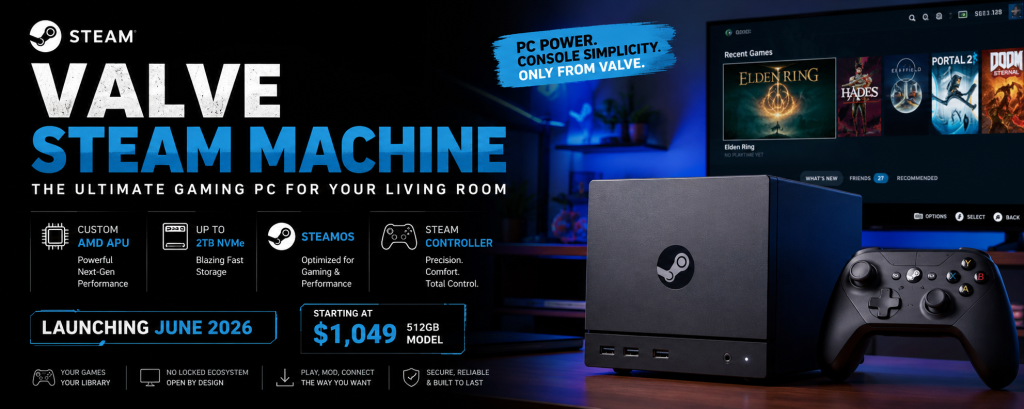
Valve has officially announced the launch details and pricing for its highly anticipated Steam Machine, a living-room-focused gaming PC designed to bring the power and flexibility of PC gaming to a console-style experience. The device is scheduled to launch in late June 2026 and represents Valve’s most ambitious hardware project since the Steam Deck.
The Steam Machine starts at $1,049 for the 512GB version, while a higher-capacity 2TB model will be available for $1,349. Valve is also offering its new Steam Controller separately, allowing users to customize their gaming setup according to their preferences.
A Different Approach to Gaming Hardware
Unlike traditional console manufacturers, Valve is not subsidizing the Steam Machine. Companies such as Sony and Microsoft often sell hardware at lower margins and recover profits through software sales and subscriptions. Valve has chosen a different strategy, emphasizing openness, user choice, and the flexibility associated with PC gaming.
According to Valve, the Steam Machine is intended to function as both a gaming platform and a customizable Linux-based PC. This means users can access their existing Steam libraries, install compatible software, and enjoy a console-like experience without being locked into a closed ecosystem.
Why the Steam Machine Costs More Than Traditional Consoles
One of the most discussed aspects of the announcement is the price. At over $1,000, the Steam Machine costs significantly more than current-generation gaming consoles.
Valve attributes part of the higher cost to ongoing component shortages affecting the technology industry, particularly memory and storage components. These market conditions have increased manufacturing costs across multiple hardware categories, from gaming devices to personal computers.
Industry analysts note that the Steam Machine is positioned closer to a compact gaming PC than a traditional console. As a result, direct price comparisons with consoles may not fully reflect the device’s intended purpose and capabilities.
SteamOS at the Center of the Experience
The Steam Machine runs on SteamOS, Valve’s Linux-based operating system. Recent updates to SteamOS have expanded hardware compatibility and improved support for a wider range of PC components. Valve has also announced efforts to make SteamOS easier to install on custom-built desktop systems, allowing users to create their own Steam Machine-style setups.
For gamers who prefer a living-room gaming experience without the complexity often associated with traditional PCs, SteamOS provides a streamlined interface optimized for controllers and television displays.
Performance Expectations
Although complete performance benchmarks are still emerging, early information suggests that the Steam Machine includes a custom AMD processor paired with dedicated graphics hardware. Valve appears to have focused on delivering strong gaming performance while maintaining a compact form factor suitable for entertainment centers.
Gaming enthusiasts are particularly interested in how the Steam Machine compares with existing gaming PCs and consoles. While raw benchmark numbers may not always tell the full story, Valve’s emphasis on optimization through SteamOS could help deliver a smooth gaming experience for supported titles.
Expanding the Steam Ecosystem
The Steam Machine is part of a broader hardware strategy that includes the Steam Controller and the upcoming Steam Frame VR headset. Valve has expanded its Steam Verified program to support these new devices, helping players identify games that offer the best experience on the company’s hardware.
This ecosystem approach mirrors Valve’s success with the Steam Deck, which demonstrated that there is significant demand for gaming hardware built around the Steam platform. The Steam Machine aims to extend that philosophy into the living room.
Challenges Ahead
Despite the excitement surrounding the launch, Valve faces several challenges. The premium price point may limit mainstream adoption, especially among gamers who already own current-generation consoles or gaming PCs. In addition, ongoing supply-chain constraints could affect availability during the launch period.
Competition is also becoming more intense as manufacturers continue introducing powerful gaming handhelds, compact PCs, and streaming-focused gaming solutions. Valve will need to demonstrate that the Steam Machine offers a compelling balance of convenience, performance, and value.
The launch of the Steam Machine marks an important moment in Valve’s long-term hardware strategy. By combining the flexibility of PC gaming with the simplicity of a console-style experience, Valve is attempting to create a new category of gaming device aimed at enthusiasts who want the best of both worlds.