
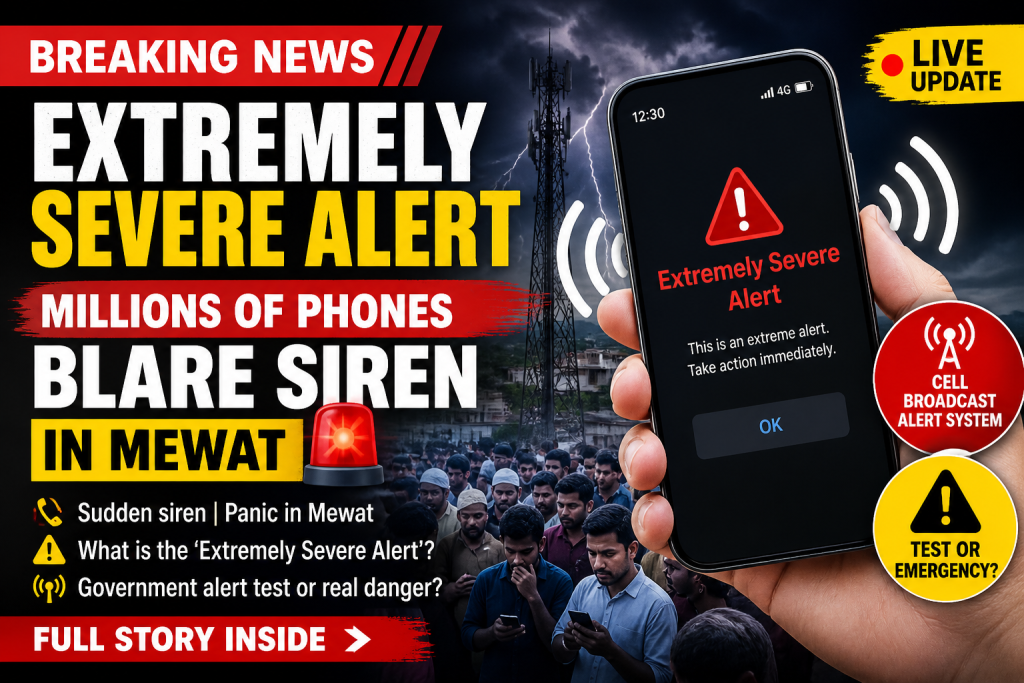
Extremely Severe Alert” Triggers Panic: Millions of Phones Blast Siren Across Mewat
Residents across Mewat and nearby regions experienced moments of shock and confusion after millions of mobile phones suddenly emitted a loud siren accompanied by a message labeled “Extremely Severe Alert.” The unexpected notification caused panic among many, with some fearing an imminent disaster.
What Exactly Happened?
The alert appeared simultaneously on smartphones across multiple areas, overriding silent modes and triggering a sharp alarm sound. The message read “Extremely Severe Alert, a phrase typically associated with life-threatening emergencies such as cyclones, earthquakes, or other major disasters. However, officials later clarified that this was not a real emergency, but a system-wide test of India’s emergency alert infrastructure.
Who Sent the Alert?
The alert was issued as part of a nationwide testing initiative by the Department of Telecommunications in collaboration with the National Disaster Management Authority. This system uses Cell Broadcast Technology, which allows authorities to send messages to all mobile devices within a specific geographic area—instantly and without needing internet access.
Why Use “Extremely Severe Alert”?
The term “Extremely Severe Alert” is typically reserved for high-risk emergencies. Its use in a test scenario is intentional: To simulate real-life emergency conditions To ensure devices respond correctly (sound, vibration, display) To evaluate public reaction and system effectiveness While technically accurate for testing, the lack of prior public awareness led to widespread confusion.
Panic in Mewat
In Mewat, the sudden siren startled residents, with many stepping out of homes or calling relatives to check on their safety. Social media quickly filled with messages asking whether the alert was linked to an earthquake, war, or technical glitch. Local authorities reassured the public soon after, confirming that no real threat existed.
What Is the Emergency Alert System?
India’s Emergency Alert System is being strengthened to provide: Early warnings for natural disasters (floods, earthquakes, cyclones) Critical public safety messages Fast, reliable communication without network congestion This system is especially crucial for rural and disaster-prone regions.
What Should You Do If You Receive Such Alerts?
Read the message carefully before reacting Do not panic immediately Check official updates from government sources Follow instructions only if a real emergency is confirmed
While the sudden “Extremely Severe Alert” caused fear, it also highlighted the importance of a robust warning system. Once fully implemented, this technology could play a crucial role in saving lives during real emergencies Authorities are expected to improve public awareness before future tests to avoid unnecessary panic.