
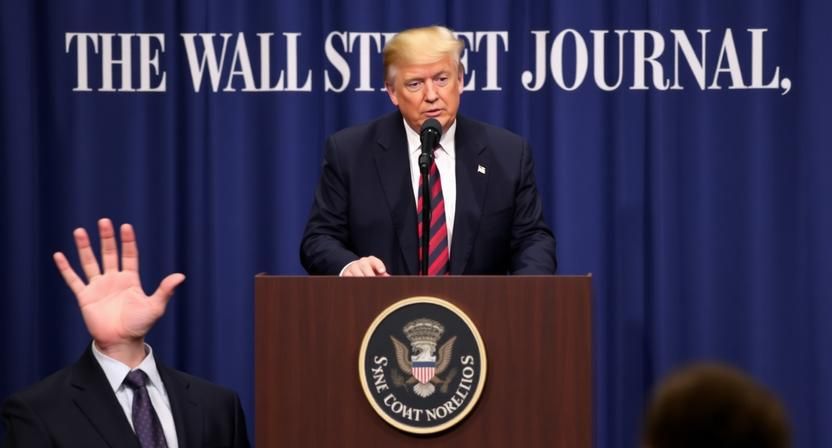
Trump $10 Billion Lawsuit Against Wall Street Journal Dismissed by Federal Judge
In a major legal development, Donald Trump has suffered a setback after a U.S. federal judge dismissed his $10 billion defamation lawsuit against The Wall Street Journal. The case centered on a controversial report linked to convicted financier Jeffrey Epstein, which Trump claimed was false and damaging to his reputation. The ruling marks a significant moment in the ongoing legal battles involving high-profile media organizations and public figures in the United States.
Background of the Lawsuit
Former U.S. President Donald Trump filed the lawsuit against The Wall Street Journal, its parent company Dow Jones & Company, media executive Rupert Murdoch, and several journalists. The legal action followed a 2025 investigative report published by The Wall Street Journal. The report claimed that Trump had allegedly sent a birthday letter to Jeffrey Epstein in 2003, which reportedly contained suggestive language and drawings. Trump strongly denied the allegations, stating that:
He never wrote the letter mentioned in the article. The newspaper published false and defamatory claims. The report harmed his public image and business interests. As a result, Trump demanded $10 billion in damages, one of the largest defamation claims filed against a media organization in recent years. Judge’s Decision: Why the Case Was Dismissed On April 13, 2026, a federal judge dismissed the lawsuit, ruling that Trump’s legal team failed to meet the legal standard required for defamation cases involving public figures.
Under U.S. law, public figures such as politicians must prove “actual malice.” This means they must demonstrate that: The publication knew the information was false, or The publication acted with reckless disregard for the truth The judge concluded that: The Wall Street Journal followed journalistic procedures, including seeking comment from Trump before publishing. Trump’s legal team did not provide sufficient evidence showing intentional wrongdoing by the newspaper. Because of this, the court ruled in favor of the media defendants.
Case Dismissed “Without Prejudice” — What It Means
Although the lawsuit was dismissed, the court issued the ruling “without prejudice. This legal term means: Trump still has the right to refile the lawsuit. He may submit a revised complaint with additional supporting evidence. A deadline has reportedly been set for late April 2026 to file an amended case. Legal experts say this keeps the dispute alive, even though the initial complaint was rejected.
Response From Both Sides
Trump’s Position Representatives for Donald Trump have continued to insist that the article was inaccurate and politically motivated. Trump has maintained that he will continue fighting the case and may submit updated legal claims.
The Wall Street Journal’s Response The Wall Street Journal and its parent company Dow Jones & Company defended their reporting, stating that: The article was accurate and responsibly sourced. Journalists followed standard editorial procedures. They will continue to stand by their reporting. Media advocates view the dismissal as an example of courts protecting press freedom when journalists follow responsible reporting practices.
Legal and Media Implications
The dismissal of this high-profile lawsuit has broader implications for both defamation law and media freedom. Key Implications: Reinforces the “actual malice” standard required in U.S. defamation law. Highlights the difficulty public figures face when suing media outlets. Strengthens legal protections for investigative journalism. Signals that courts expect strong evidence before allowing major defamation claims to proceed. Legal analysts note that large lawsuits against media organizations are becoming more common, but many face challenges due to strict legal standards.
Timeline of Key Events
2025: The Wall Street Journal publishes investigative article related to Jeffrey Epstein. 2025: Donald Trump files a $10 billion defamation lawsuit. April 2026: Federal judge dismisses the lawsuit. Late April 2026: Deadline expected for Trump to file an amended complaint.
Public and Political Reaction
The dismissal has sparked reactions across political and media circles. Supporters of Trump argue that media outlets should be held accountable for inaccurate reporting. Meanwhile, press freedom organizations see the ruling as a victory for journalistic independence.
Political analysts say the case could continue to influence public debate over: Media accountability Freedom of speech Legal limits of defamation claims
What Happens Next
Despite the dismissal, the case may not be over. Possible next steps include: Trump refiling the lawsuit with additional evidence. Further court hearings if an amended complaint is accepted. Continued public and media attention on Epstein-related reporting. Legal observers believe the coming weeks will determine whether the case moves forward again.
The dismissal of Donald Trump’s $10 billion lawsuit against The Wall Street Journal marks a significant legal development in media law and defamation disputes. While the judge ruled that Trump failed to prove actual malice, the possibility of refiling means the story is far from over.
As legal battles between public figures and news organizations continue to grow, this case highlights the balance courts must maintain between protecting reputations and defending press freedom.