
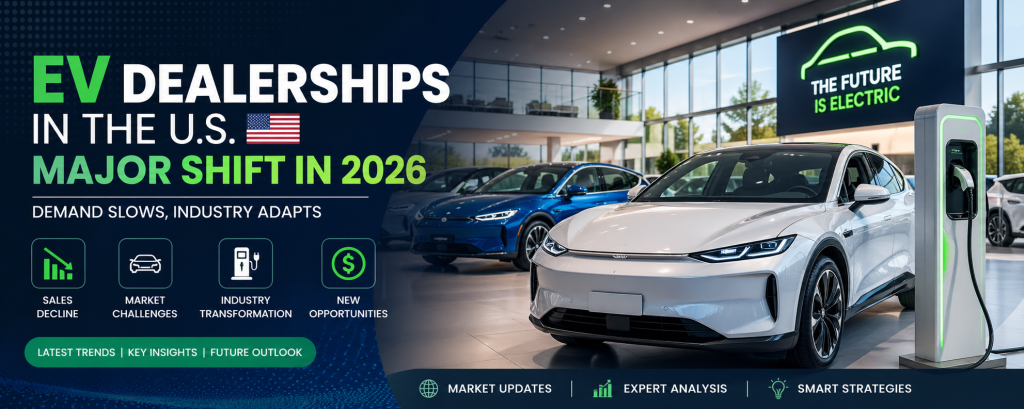
U.S. EV Dealerships Struggle as Electric Vehicle Demand Declines in 2026
The electric vehicle (EV) revolution in the United States is entering a new phase in 2026. While EV adoption was once accelerating rapidly, recent data shows that dealerships across the country are now facing slowing demand, shifting customer preferences, and changing government policies.
EV Sales Slow Down Across the U.S.
Electric vehicle sales in the U.S. have dropped significantly in early 2026, creating new challenges for dealerships. EV sales fell around 27% year-over-year in Q1 2026 Market share dropped to about 6%, down from previous highs Monthly EV sales have declined for six consecutive months Experts say the slowdown is partly due to the end of the $7,500 federal EV tax credit, which had previously boosted demand.
Impact on EV Dealerships
The decline in demand is directly affecting EV dealerships across the U.S. Dealers are seeing slower showroom traffic Inventory is harder to move, especially for high-priced EV models Some dealerships are shifting focus back to hybrid and gasoline vehicles Automakers and dealers are now adjusting strategies to match real customer demand rather than expectations.
Automakers Changing Strategy
Major automakers are already responding to the shift: Companies are reducing EV production targets Investment is shifting back to gas-powered vehicles in some cases Brands are launching cheaper EV models to attract buyers Despite the slowdown, automakers remain committed to long-term EV growth.
High Prices Still a Major Barrier
One of the biggest challenges for EV dealerships is affordability: Average new EV price: $56,000+ Monthly payments and lease costs remain high Many buyers are choosing hybrids or used vehicles instead This pricing issue is forcing dealerships to rethink how they market EVs.
Rise of Used EV Market
A major shift is coming that could benefit dealerships: Over 600,000+ used EVs expected by 2028 Used EV prices are dropping rapidly Buyers are increasingly choosing second-hand EVs This trend could open a new revenue stream for dealerships.
Key Challenges for EV Dealers
EV dealerships in the U.S. are facing multiple issues: Lack of charging infrastructure High upfront vehicle costs Policy uncertainty and subsidy removal Changing consumer preferences Additionally, Americans still prefer larger vehicles like trucks and SUVs, which are harder and more expensive to electrify
Temporary Slowdown or Long-Term Shift?
Despite current struggles, experts believe the EV market will stabilize: New affordable EV models are coming Fuel prices may push demand back up Technology improvements will reduce costs Dealerships that adapt—by offering used EVs, hybrids, and flexible financing—are likely to survive and grow.
The EV dealership landscape in the United States is undergoing a critical transformation in 2026. While the initial hype has cooled, the long-term future of electric vehicles remains strong. For dealerships, success now depends on adaptability, pricing strategy, and understanding real consumer needs.