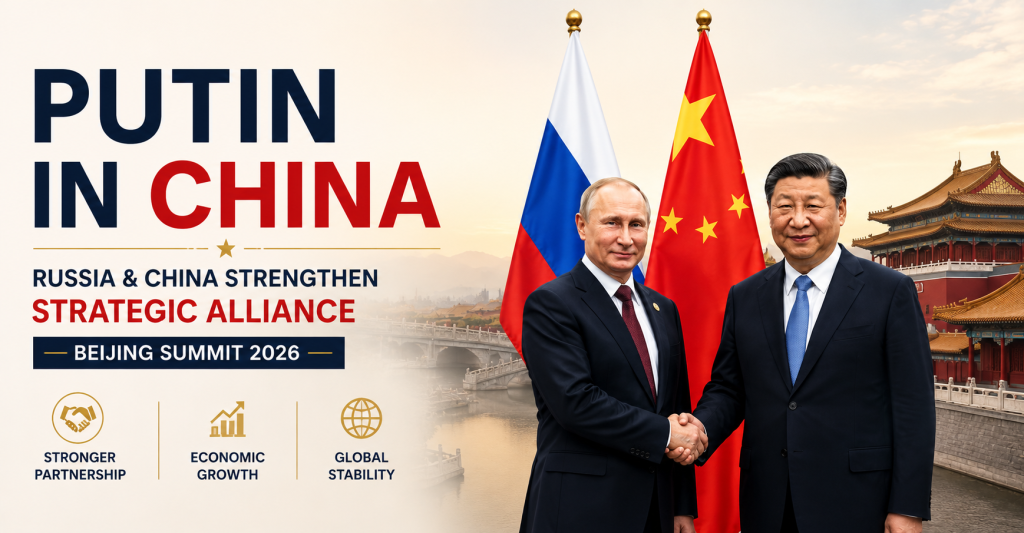
Putin in China 2026: Xi Jinping and Vladimir Putin Hold High-Stakes Beijing Summit
Russian President Vladimir Putin arrived in Beijing this week for an important diplomatic visit hosted by Chinese President Xi Jinping. The meeting has quickly become one of the most discussed global political events of 2026, drawing attention from governments, investors, and international analysts worldwide.
The summit comes at a critical moment for global politics, trade, and energy markets. Russia and China continue to expand their strategic cooperation while tensions between major world powers remain high. Analysts believe the visit could reshape international alliances and influence global economic policies in the coming months.
Why Putin’s China Visit Matters
The relationship between Russia and China has grown significantly stronger over the past few years. Both nations have increased cooperation in: Energy and natural gas projects Military coordination Trade and technology partnerships Global diplomatic initiatives Alternative financial systems outside Western influence
During the Beijing summit, both leaders emphasized mutual respect, sovereignty, and long-term cooperation. According to official statements, the two countries are aiming to build a “stable multipolar world order.” The visit is also strategically important because it happened shortly after recent diplomatic meetings between China and Western leaders. Beijing appears to be balancing relationships with both Eastern and Western powers while strengthening its own global influence.
Focus on Energy and Trade
One of the biggest topics during the summit is expected to be energy cooperation. Russia remains one of the world’s largest exporters of oil and natural gas, while China continues to require massive energy imports to support its economy. Expansion of cross-border energy pipelines Long-term gas supply agreements Increased use of local currencies in trade Infrastructure investments between Russia and China
Experts believe these agreements could reduce dependence on the U.S. dollar in regional trade, a move closely watched by international financial markets. The proposed Power of Siberia 2 gas pipeline is also receiving renewed attention. If finalized, the project could significantly increase Russian gas exports to China over the next decade.
Global Reactions to the Summit
Western governments are carefully monitoring the meeting. International observers say the strengthening partnership between Moscow and Beijing could affect global diplomacy, defense strategies, and international trade routes. Some analysts see the alliance as:
A counterbalance to Western political influence A major shift in global economic power A signal of deeper cooperation between emerging economies Meanwhile, financial markets reacted cautiously as investors assessed the possible impact on energy prices, global supply chains, and geopolitical stability.
China’s Expanding Global Role
China continues to position itself as a central player in international diplomacy. Hosting multiple world leaders in recent weeks has highlighted Beijing’s growing importance on the global stage. President Xi Jinping described Russia as a “strategic partner,” while Putin praised China’s role in maintaining global stability and economic growth. Political experts say China is attempting to project an image of stability, economic strength, and diplomatic leadership amid growing international uncertainty.
Impact on Global Economy
The Russia-China partnership could have long-term consequences for: Oil and gas prices International sanctions policies Global trade systems Currency markets Technology cooperation Businesses and investors are especially focused on whether new trade agreements or energy deals emerge from the summit. If economic cooperation continues expanding, analysts believe Asia could become an even stronger center of global economic growth over the next decade.