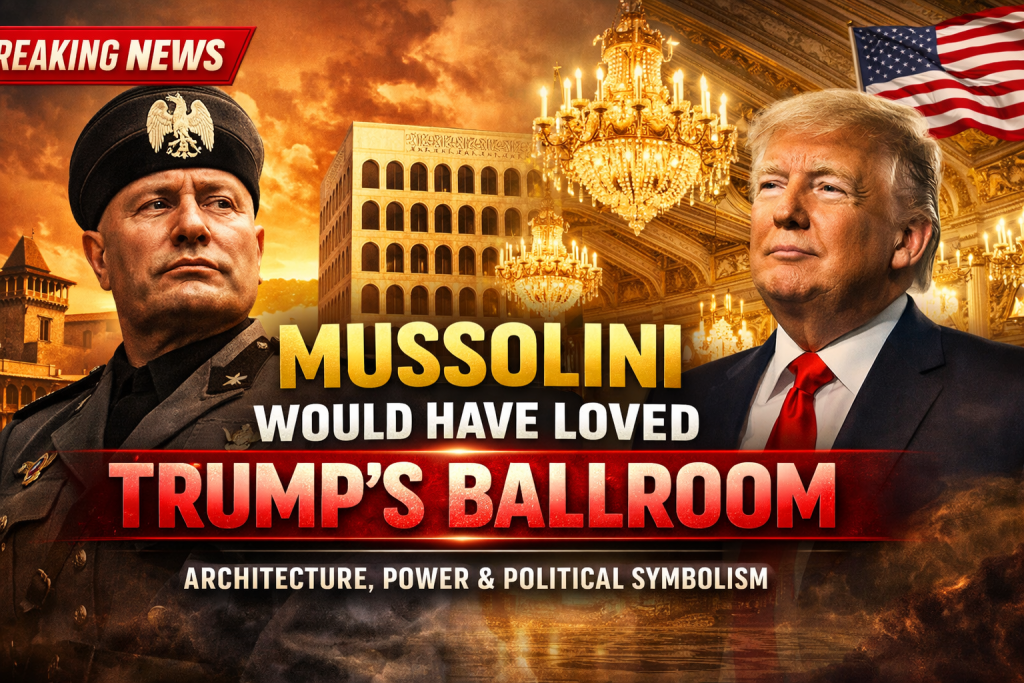
Mussolini Would Have Loved Trump’s Ballroom: Architecture, Power, and Political Symbolism
In political commentary, comparisons between leaders and historical figures are often used to highlight similarities in style, symbolism, or leadership approach. One phrase that has recently drawn attention is “Mussolini Would Have Loved Trump’s Ballroom.” The statement links the grand architectural style associated with Donald Trump to the monumental aesthetic favored by Benito Mussolini, the former leader of Italy. While the phrase is largely rhetorical and appears mostly in opinion pieces, it raises interesting questions about how architecture, luxury, and spectacle can become part of political narratives.
The Historical Legacy of Benito Mussolini Benito Mussolini ruled Italy from 1922 until 1943 as the founder of fascism. His regime emphasized strength, national pride, and authority—values that were often expressed through grand public works and monumental architecture. During his rule, large-scale building projects were designed to project power and permanence. One notable example is the EUR district in Rome, which was planned as a futuristic district intended to showcase the strength and ambition of the fascist government. These buildings featured large symmetrical designs, towering structures, and wide public spaces meant to inspire awe. For Mussolini’s regime.
Trump’s Mar-a-Lago Ballroom The comparison in the phrase often points to the lavish ballroom at Mar-a-Lago, the famous private club and residence owned by Donald Trump in Palm Beach Gold leaf decorations Crystal chandeliers Marble floors and columns Massive space capable of hosting large events The ballroom is often used for weddings, political gatherings, charity events, and high-profile social functions. Supporters see the design as a reflection of luxury and success, consistent with Trump’s long-standing branding around wealth and opulence. Critics, however, sometimes interpret the grand style as symbolic of excess and spectacle.
Architecture as a Symbol of Power Throughout history, powerful leaders have used architecture to convey authority and influence. Monumental buildings, large plazas, and grand interiors can create a sense of dominance and prestige. Grand palaces built by European monarchs Massive government complexes in authoritarian states Large national monuments designed to inspire unity and pride The debate around Trump’s ballroom reflects this broader idea: that architecture can represent more than just design—it can also communicate a message about leadership and identity.
Why the Comparison Appears in Political Commentary When commentators say “Mussolini would have loved Trump’s ballroom,” they are usually making a symbolic argument rather than a literal claim. The comparison is intended to highlight perceived similarities in aesthetic preferences, particularly: Dramatic, imposing spaces Gold-colored luxury and ornate design Architecture that emphasizes grandeur Such comparisons often appear in political opinion columns or cultural analysis pieces, where writers explore how style and presentation influence public perception of leaders
Supporters vs. Critics Like many political discussions, reactions to the comparison are divided. Supporters of Donald Trump argue that the ballroom simply reflects his background in real estate and hospitality. Luxury design, they say, is common in high-end resorts and hotels around the world and should not be interpreted as political symbolism Critics, however, argue that the extravagant style reflects a preference for spectacle and showmanship in politics, which they believe can influence public perception of power and leadership
The Role of Image in Modern Politics Modern politics increasingly operates in a world of imagery, branding, and visual presentation. From social media to televised events, the physical spaces where leaders appear can shape public impressions. Large stages, impressive backdrops, and luxurious venues are often used to create memorable images that reinforce a political message. In this context, buildings like the ballroom at Mar-a-Lago become more than event spaces they become part of a broader narrative about image and identity.
A Debate About Style, Not History It is important to note that the phrase “Mussolini would have loved Trump’s ballroom” is not meant as a literal historical connection between Benito Mussolini and Donald Trump. Instead, it is a rhetorical comparison used in political commentary to discuss architecture, symbolism, and leadership style. Whether people see the ballroom as a symbol of luxury, ambition, or political spectacle often depends on their broader views about Trump and his influence on American politics