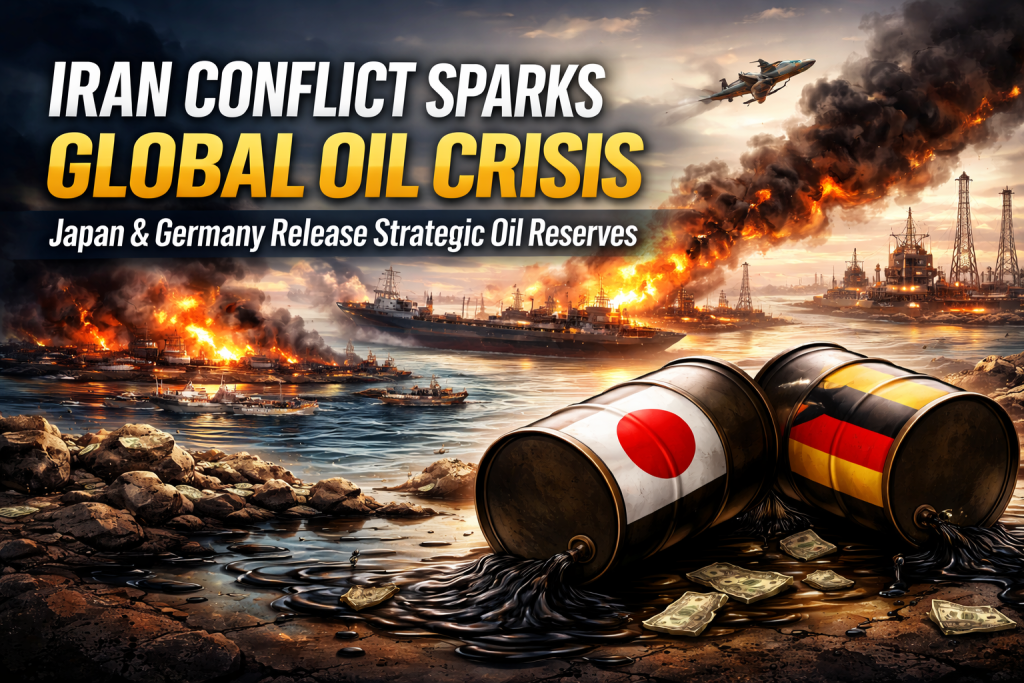
Breaking News: Japan and Germany to Release Oil Reserves Amid Iran War Supply Fears
Global energy markets are facing renewed instability as escalating tensions and conflict involving Iran threaten one of the world’s most important oil supply routes. Governments and international energy agencies are scrambling to stabilize markets after fears of supply disruptions caused oil prices to surge sharply. In response, several countries including Japan and Germany have announced plans to release oil from their emergency reserves as part of a coordinated international effort to calm global markets and prevent an energy crisis.
Global Oil Supply Shock Amid Iran Conflict The ongoing conflict in the Middle East has disrupted shipping and energy infrastructure, especially around the Strait of Hormuz — a key maritime route that carries roughly 20% of global oil supplies. Any disruption to this corridor immediately affects global fuel prices and supply chains. Recent tensions have already caused shipping delays and attacks on commercial vessels, raising fears that millions of barrels of oil could be removed from the global market. Analysts estimate that around 15 million barrels per day may have been temporarily disrupted, creating a major supply shock for the global economy.
As uncertainty spreads, oil prices have surged above $115 per barrel, with warnings that prices could climb even higher if the conflict escalates further. Historic Oil Reserve Release by IEA To address the crisis, the International Energy Agency (IEA) has coordinated what could become the largest emergency oil reserve release in history. IEA member countries have agreed to release around 400 million barrels of crude oil from strategic reserves to stabilize markets and counter supply disruptions caused by the conflict. This emergency intervention is significantly larger than previous coordinated releases, including the response to the Russia-Ukraine war 2022.
Japan Announces Major Oil Release Japan, one of the world’s largest oil importers, has taken a leading role in the effort. The country plans to release part of its national and private oil reserves to help ease global shortages. 15 days of oil reserves held by the private sector One month of government stockpiles The release is expected to begin in mid-March and is designed to maintain stable fuel supplies and support global energy markets. Japan depends heavily on Middle Eastern crude, with roughly 95% of its oil imports coming from the region, making it particularly vulnerable to disruptions in the Gulf
Germany Joins Global Energy Response Germany has also confirmed it will contribute to the emergency release of oil reserves Berlin announced plans to release about 19.5 million barrels from its strategic stockpiles as part of the international response coordinated by the IEA Officials say Germany currently holds enough emergency reserves to cover about 90 days of domestic demand, meaning the release will not threaten its internal supply The move is largely intended to show solidarity with global partners and help stabilize international markets during the crisis
Rising Oil Prices and Economic Risks The Iran conflict has created major uncertainty in global energy markets. Oil prices surged rapidly after reports of shipping disruptions and military activity in the Gulf region Some analysts warn that if tensions escalate further, oil prices could even approach $200 per barrel, which would have severe consequences for global inflation and economic growth. Transportation costs Food prices Electricity and heating bills Manufacturing and supply chains Countries heavily dependent on energy imports — including many in Asia and Europe could face significant economic pressure if the crisis continues
Strategic Oil Reserves: Why They Matter Strategic oil reserves are emergency stockpiles maintained by governments to protect against supply shocks caused by wars, disasters, or geopolitical crises. The IEA was originally created after the 1973 global oil crisis to coordinate responses to major supply disruptions. Today, member countries collectively hold more than 1.2 billion barrels of emergency oil reserves, which can be released during major crises to stabilize markets The current coordinated release aims to reassure markets that enough supply is available to prevent a severe energy shortage.
What Happens Next Energy analysts say the effectiveness of the reserve release will depend on several factors: Whether the Strait of Hormuz remains open The duration and intensity of the Iran conflict Global demand for oil in the coming months The Iran conflict has triggered one of the most serious energy market disruptions in recent years. In response, Japan, Germany, and other major economies are releasing oil from emergency reserves in a coordinated effort led by the International Energy Agency. While the move may help stabilize prices in the short term, the long-term outlook for global energy markets remains uncertain as geopolitical tensions continue to rise in the Middle East.