Blake Lively vs Justin Baldoni Ends in Surprise Settlement: What Really Happened?
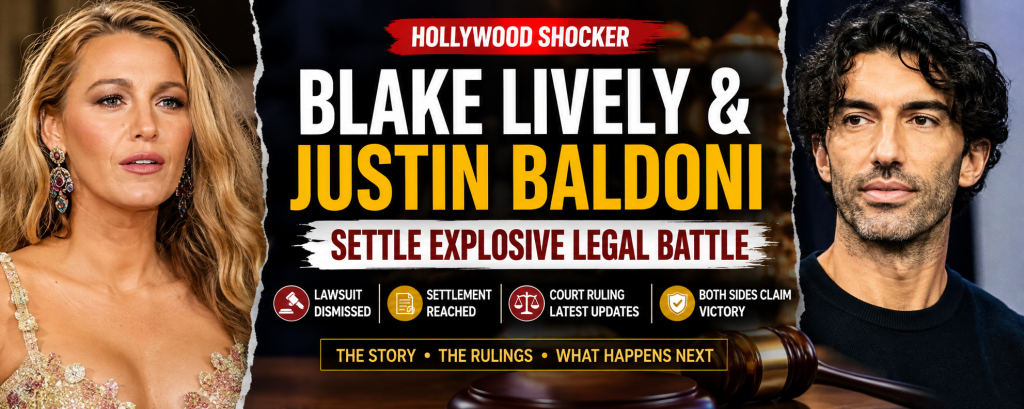
The long-running legal dispute between actress Blake Lively and actor-director Justin Baldoni has officially come to an end after both parties reached a confidential settlement in May 2026, bringing closure to one of Hollywood’s most closely watched courtroom battles. The case, which stemmed from allegations related to the production of the hit film It Ends With Us, attracted widespread media attention and generated intense public debate over workplace conduct, reputation management, and legal accountability in the entertainment industry.
The settlement was finalized just weeks before a scheduled trial in federal court. While neither side disclosed the financial or legal terms of the agreement, the resolution allowed both parties to avoid a lengthy courtroom confrontation that was expected to feature testimony from several high-profile witnesses connected to the film and the entertainment industry.
The dispute began in late 2024 when Blake Lively filed legal complaints alleging misconduct and retaliation connected to the production of It Ends With Us. Lively claimed that actions were taken against her after she raised concerns about workplace behavior during the film’s production. Justin Baldoni strongly denied the allegations and maintained that the claims were false.
The legal battle quickly escalated. Baldoni and his associates responded with a major countersuit seeking hundreds of millions of dollars in damages. The countersuit accused Lively, her husband Ryan Reynolds, and other associates of defamation and related claims. As court proceedings unfolded, both sides engaged in extensive legal filings, public statements, and procedural motions that kept the dispute in the headlines for more than a year.
A significant turning point came when federal courts dismissed Baldoni’s countersuit. Judges determined that several of the claims could not proceed under applicable legal protections. Later, courts also dismissed many of Lively’s original allegations, narrowing the scope of the case before trial. By spring 2026, only a limited number of claims remained active, setting the stage for a courtroom showdown that ultimately never occurred because of the settlement agreement.
Although the settlement resolved most outstanding issues, legal proceedings did not end entirely. In June 2026, a federal judge issued a separate ruling concerning attorney fees and litigation costs. The court concluded that Lively could seek reimbursement for legal expenses related to Baldoni’s dismissed countersuit under California law, which provides protections for individuals who report alleged harassment or misconduct. However, the judge declined to award punitive damages or other enhanced financial penalties requested by Lively.
The judge’s decision was viewed as a partial victory for Lively. Her legal team argued that the ruling reinforced protections for individuals who come forward with complaints in good faith. They stated that the court’s findings confirmed she had acted without malice and therefore qualified for certain legal protections. At the same time, Baldoni’s representatives emphasized that many of Lively’s original claims had been dismissed and argued that the overall outcome supported their position as well.
As a result, both sides publicly claimed elements of success following the settlement and subsequent court rulings. This unusual situation reflects the complexity of modern civil litigation, where settlements often end disputes without either side obtaining a definitive courtroom victory. Legal experts note that confidential settlements frequently allow parties to avoid additional costs, reputational risks, and uncertainty associated with jury trials.
The controversy also highlighted broader discussions within Hollywood regarding workplace culture, public relations strategies, and the increasing role of social media in shaping public perception during legal disputes. The case generated significant attention not only because of the celebrity status of those involved but also because it touched on issues that have become increasingly prominent across the entertainment industry in recent years.
Meanwhile, It Ends With Us remained a commercially successful project despite the legal turmoil surrounding its production. Industry observers noted that the dispute occasionally overshadowed conversations about the film itself, as headlines increasingly focused on court filings and legal developments rather than the movie’s box office performance and audience reception.
With the settlement now complete and the remaining fee-related issues moving through the courts, both Blake Lively and Justin Baldoni appear ready to move forward professionally. While the confidential nature of the agreement means many details may never become public, the conclusion of the case marks the end of a contentious chapter that captured the attention of Hollywood, legal analysts, and fans around the world.
For now, the settlement closes a legal battle that lasted more than a year and became one of the entertainment industry’s most discussed disputes, demonstrating how complex celebrity lawsuits can evolve when legal claims, public opinion, and media scrutiny intersect.