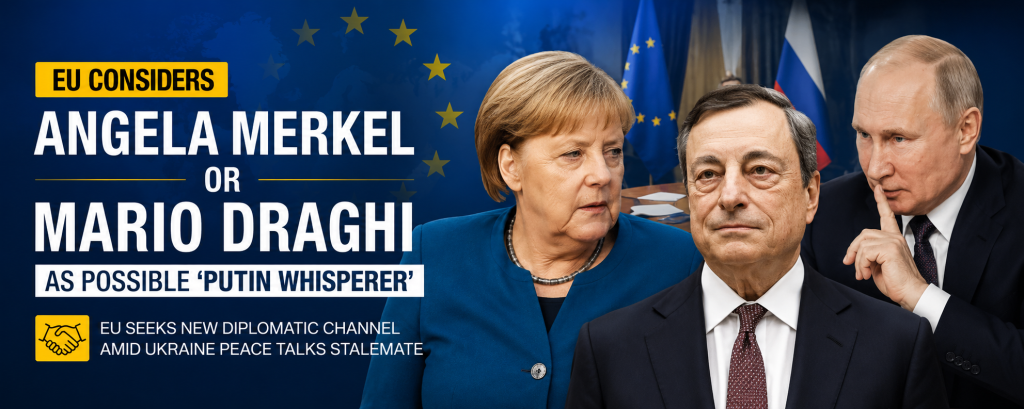
Angela Merkel and Mario Draghi Emerge in EU Peace Talk Discussions
As diplomatic efforts to end the Ukraine war remain stalled, European Union officials are reportedly exploring an unusual strategy: appointing a high-profile European figure capable of opening direct communication channels with Russian President Vladimir Putin.
According to recent reports, former German Chancellor Angela Merkel and former Italian Prime Minister Mario Draghi have emerged as leading names in quiet EU discussions about creating a special diplomatic role focused on future negotiations with Moscow.
Europe Wants a Stronger Voice in Peace Talks
Behind closed doors, European leaders are increasingly concerned that the EU could be pushed aside if future Ukraine-Russia negotiations are dominated by Washington, Ankara, or other global powers. The idea being discussed is not a formal “peace envoy” yet. Instead, diplomats are considering whether a respected senior European statesperson could act as an informal bridge between Brussels and the Kremlin.
The timing is important. Military tensions remain high, sanctions continue to reshape Europe’s economy, and several EU governments believe the continent needs its own independent diplomatic channel rather than relying entirely on U.S.-led initiatives.
Why Angela Merkel Is Back in the Conversation
For years, Merkel was considered Europe’s most experienced negotiator with Putin. During her 16-year tenure leading Germany, she participated in some of the most difficult negotiations involving Russia, including the Crimea crisis and the Minsk agreements.
Even critics admit she understands Putin’s negotiating style better than most current European leaders. Supporters of the proposal believe Merkel’s calm, methodical diplomacy could help reopen communication during a period where direct trust between Moscow and Europe has nearly disappeared. However, the idea is highly divisive across Europe
Many Eastern European governments remain skeptical because Merkel’s earlier Russia policies — especially Germany’s energy dependence on Russian gas — are now viewed by critics as strategic mistakes that strengthened Moscow’s leverage over Europe.
Merkel herself has not shown enthusiasm for returning to frontline diplomacy. Recent comments suggest she believes current elected leaders should manage negotiations rather than retired politicians.
Why Mario Draghi Is Seen as a Neutral Alternative
Unlike Merkel, Draghi enters the discussion with less political baggage connected to Russia. The former European Central Bank president earned global credibility during Europe’s financial crisis after famously pledging to do “whatever it takes” to protect the eurozone economy.
Some EU officials reportedly see Draghi as a more technocratic and neutral option — someone capable of representing broader European interests without reopening old geopolitical arguments.
Draghi also maintains strong relationships across multiple European capitals, which could help unify EU member states that currently disagree on how aggressively Europe should engage with Moscow.
The Bigger Political Signal
Whether Merkel, Draghi, or another figure is eventually selected, the discussions reveal something larger happening inside Europe. For much of the Ukraine conflict, the United States has dominated Western diplomatic strategy. But European governments now appear increasingly determined to shape the next phase themselves.
The debate also reflects growing fears inside Brussels that the war could eventually move toward a negotiated freeze rather than a decisive military outcome — meaning Europe wants influence before that moment arrives.
Officials from Finland, including President Alexander Stubb and former Finnish President Sauli Niinistö, have also reportedly been mentioned as possible candidates for future diplomatic outreach.
Can a “Putin Whisperer” Actually Change Anything?
The biggest question remains unanswered: would the Kremlin even trust a European envoy? Relations between Russia and the EU are at their worst point since the Cold War. Economic sanctions, frozen assets, military aid to Ukraine, and political hostility have shattered most traditional diplomatic channels.
Still, some European policymakers argue that diplomacy often begins long before public breakthroughs become visible. At the moment, there is no official EU appointment and no confirmed negotiation framework. But the discussions themselves signal that Europe may be preparing for a future where diplomacy — not only military strategy — becomes central again.