
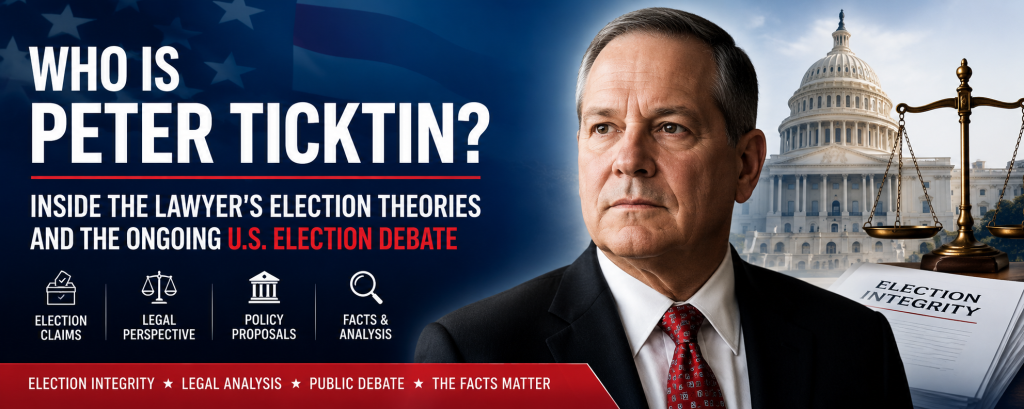
Peter Ticktin’s Election Claims Explained: What the Lawyer Has Said and the Facts
American attorney Peter Ticktin has remained a recognizable figure in conservative legal circles, largely because of his long-standing association with former President Donald Trump and his outspoken views on election integrity. Over the past several years, Ticktin has repeatedly questioned the administration of U.S. elections while advocating for sweeping electoral reforms.
His comments have drawn attention from political supporters, legal scholars, election officials, and media organizations alike. While Ticktin argues that significant changes are necessary to restore public confidence in elections, many of his claims have been rejected by courts and election authorities, who say there is insufficient evidence to support allegations of widespread fraud capable of changing election outcomes.
Peter Ticktin is a Florida-based attorney with decades of legal experience. He is widely known as a longtime associate of Donald Trump, with the two having attended military school together in their youth. Throughout his legal career, Ticktin has represented clients involved in high-profile political and business matters. In recent years, his public profile has grown because of his involvement in discussions surrounding election integrity, constitutional law, and voting reforms.
Following the 2020 U.S. presidential election, Ticktin became one of several attorneys who publicly argued that the election process contained significant vulnerabilities. Concerns over the security of widespread mail-in voting. Criticism of electronic voting systems and calls for greater transparency. Support for hand-counted paper ballots in many elections. Advocacy for stricter voter identification and proof-of-citizenship requirements. Arguments that federal action should play a larger role in protecting election integrity.
Ticktin has also raised concerns about alleged foreign interference in American elections, although these claims have not been substantiated by publicly available evidence accepted by U.S. courts.
Federal and state courts across the United States reviewed numerous lawsuits related to the 2020 presidential election. Many of these cases were dismissed because judges found insufficient evidence to demonstrate fraud on a scale capable of altering certified election results. Likewise, election officials from both Republican- and Democratic-led states repeatedly stated that they found no evidence of widespread fraud that would have changed the outcome of the election. While isolated instances of election misconduct have occasionally been prosecuted, officials have distinguished those cases from claims of coordinated nationwide fraud.
Although many of Ticktin’s allegations remain disputed, some of the policy proposals he has supported continue to be debated in political circles. Expanding voter identification requirements. Increasing audits of election results. Greater transparency in ballot counting. Limiting certain forms of mail voting. Increased use of paper ballots for verification. Supporters argue such measures could strengthen public confidence, while critics warn they could reduce voter access without addressing proven systemic problems.
One area of discussion surrounding Ticktin’s proposals concerns presidential authority over elections. Constitutional experts generally note that the U.S. Constitution grants states primary responsibility for administering elections. As a result, many legal scholars contend that a president cannot unilaterally impose nationwide election changes through executive action without congressional authorization or constitutional authority.
Peter Ticktin continues to appear in interviews, podcasts, and legal discussions focused on election law and constitutional issues. His views remain influential among some conservative audiences while drawing criticism from election experts, legal analysts, and voting-rights organizations. The broader national debate over election security, voter confidence, and election administration remains an important political issue in the United States, ensuring that figures such as Ticktin continue to attract media attention.
Election integrity remains one of the most closely watched issues in American politics. Supporters of stricter election laws argue they help protect the voting process, while opponents emphasize that reforms should be based on verified evidence and should not unnecessarily restrict access to the ballot. Peter Ticktin’s arguments reflect one side of that ongoing debate. However, it is important to note that claims of widespread fraud in the 2020 presidential election have not been substantiated in court decisions or by the broad consensus of election officials who reviewed the results.