
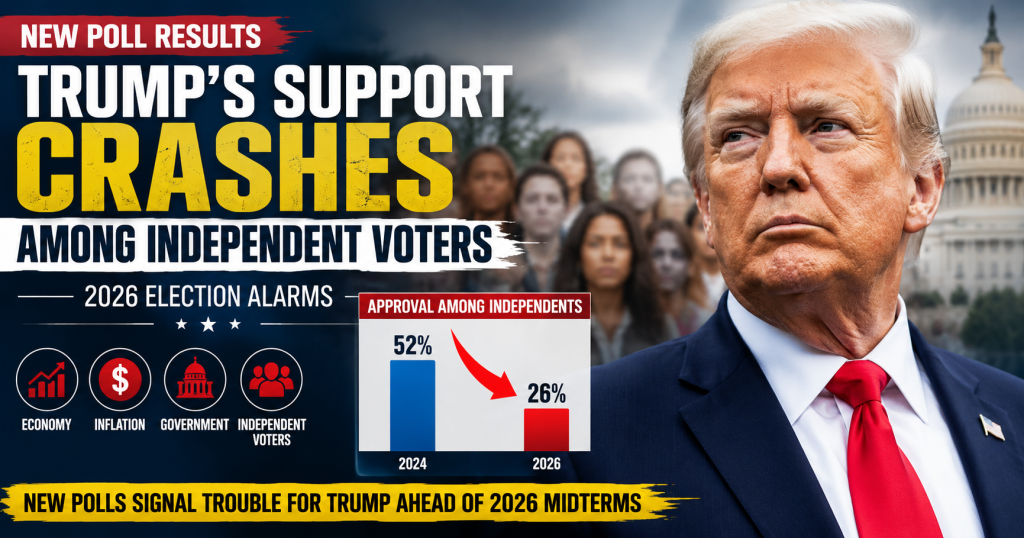
Trump’s Support Crashes Among Independent Voters as New Polls Raise 2026 Election Alarms
Independent Voters Drift Away from Trump Ahead of 2026 Midterms
President Donald Trump’s standing among independent voters has weakened significantly in recent national surveys, creating fresh challenges for Republicans as the 2026 midterm election season approaches. New polling data suggests that while Trump continues to enjoy strong support from Republican voters, independent Americans are becoming increasingly dissatisfied with his handling of the economy, cost-of-living concerns, and several major policy issues.
Independent voters have long been considered one of the most influential groups in American politics. Unlike voters who consistently align with either major party, independents often decide close elections and can dramatically shape congressional outcomes. Recent polling trends indicate that this critical voting bloc is moving away from Trump at a time when Republicans are working to maintain their political momentum.
According to a recent AP-NORC analysis, Trump’s favorability among independent voters without college degrees has fallen sharply since the 2024 election. Support within this demographic dropped from nearly half of respondents around Election Day 2024 to roughly one-quarter by spring 2026. Similar declines have been observed among younger and Hispanic independent voters, groups that played an important role in Trump’s previous electoral success.
Economic Concerns Driving Voter Sentiment
Economic issues appear to be at the center of growing dissatisfaction. Rising living costs, inflation concerns, and uncertainty surrounding future economic conditions have influenced public opinion across the country.
A recent Economist/YouGov survey found Trump’s approval among independent voters at historically low levels. The poll reported that only about one in five independents approved of his job performance, while a large majority expressed disapproval. The survey also showed overall national disapproval reaching a record high during his second presidency.
Additional polling from Quinnipiac University found Trump’s economic approval ratings at some of the lowest levels recorded during his political career. Analysts noted that the economy, once viewed as one of Trump’s strongest political assets, has become a source of concern for many voters.
Midterm Election Implications
Political strategists from both parties are paying close attention to these numbers because independent voters frequently determine the outcome of competitive congressional races.
Recent national surveys suggest Democrats currently hold an advantage in generic congressional ballot testing, reflecting broader concerns about economic conditions and public dissatisfaction with government performance. While Republicans maintain strong support on issues such as border security and crime, polling indicates Democrats have gained ground on economic matters and inflation.
Experts note that independents often react more strongly to current events than partisan voters. As economic pressures continue and national debates intensify, many independents appear to be reassessing their political preferences.
Strong Republican Base Remains Intact
Despite weakening numbers among independents, Trump continues to command substantial loyalty among Republican voters. Most national polls show approval ratings among Republicans remaining above 80 percent, demonstrating that his influence within the party remains strong.
This support could help Republicans maintain competitiveness in many districts. However, political analysts argue that success in closely contested races often depends on attracting independent and moderate voters, making recent polling trends difficult to ignore.
Hispanic and Younger Independents Show Shift
One of the most notable developments in recent polling has been the decline in support among Hispanic and younger independent voters. These groups showed greater openness toward Trump during the 2024 election cycle, but new surveys suggest many have become less supportive during his second term.
Researchers point to economic concerns, affordability issues, and broader dissatisfaction with government performance as major factors influencing these changes. Polling data indicates that many voters now prioritize cost-of-living issues above most other political concerns.
Looking Ahead
With the 2026 midterm elections approaching, both parties are expected to intensify efforts to win over independent voters. Republicans will likely emphasize border security, crime reduction, and national defense, while Democrats are expected to focus heavily on economic issues, healthcare, and inflation relief.
For Trump and Republican candidates, rebuilding support among independents may become one of the most important political challenges of the year. Whether current polling trends continue or reverse could play a major role in determining the balance of power in Congress after the midterm elections.
As political campaigns accelerate across the country, independent voters once again appear positioned to serve as one of the most decisive forces in American politics.