
Postmaster General Defends New Mail Ballot Rules Amid Growing Controversy
USPS Mail Ballot Proposal Sparks Debate Over Election Security and Voting Access
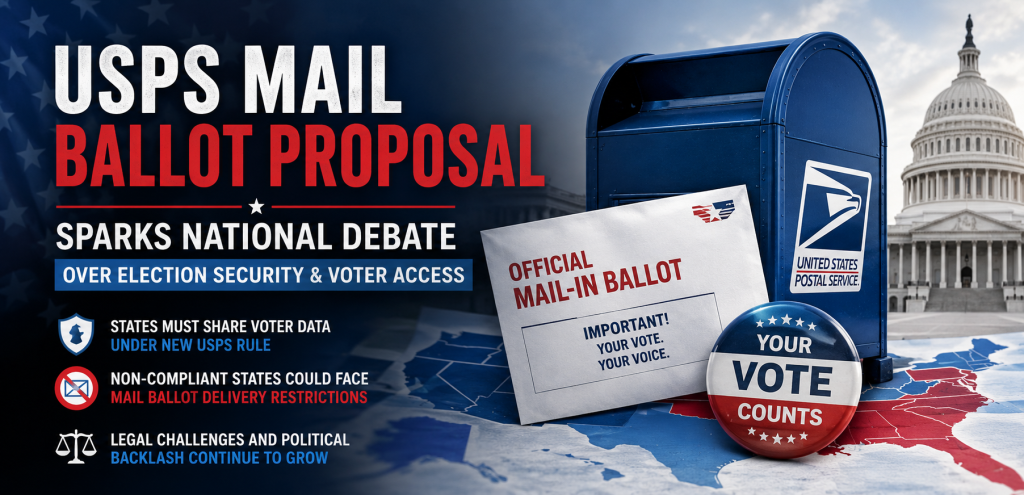
A controversial proposal from the United States Postal Service (USPS) has ignited a nationwide debate about election administration, voter access, and federal authority. The proposal, defended by U.S. Postmaster General David Steiner during a Senate hearing this week, would require states to provide voter eligibility information and ballot-tracking data to USPS before mail-in ballots are delivered for federal elections.
The plan arrives at a politically sensitive moment as the United States prepares for upcoming midterm elections. Supporters argue the measure would improve election security and create more standardized procedures across states. Critics, however, warn that the proposal could place new barriers on mail voting and expand federal influence over election processes traditionally managed by states.
What the Proposal Would Do
Under the proposed rule, state election officials would be required to submit lists of voters eligible to receive absentee or mail-in ballots, along with ballot tracking information and associated barcodes. USPS would use this information to verify ballot mailings before processing and delivering election mail.
During a Senate committee hearing, Postmaster General David Steiner stated that states refusing to provide the requested information could face restrictions on USPS delivery of mail ballots under the proposed framework. His comments immediately drew criticism from lawmakers who questioned whether the Postal Service should play a larger role in determining how election mail is handled.
The proposal follows a broader election-related initiative from President Donald Trump’s administration that seeks increased federal involvement in voter verification and election integrity measures.
Supporters Say It Improves Election Security
Advocates of the proposal argue that election systems across the country would benefit from more uniform standards and enhanced ballot tracking.
According to supporters, the additional data-sharing requirements would make it easier to verify that ballots are being sent only to eligible voters while improving transparency throughout the voting process. They contend that centralized tracking could help election officials identify discrepancies and strengthen confidence in election outcomes.
Proponents also point out that many states already maintain sophisticated ballot-tracking systems and voter databases. They argue that expanding coordination between election officials and USPS could improve efficiency and reduce administrative errors.
Critics Warn of Federal Overreach
Democratic lawmakers, voting rights organizations, and several election experts argue that the rule could fundamentally change the Postal Service’s long-standing role as a neutral carrier of election mail. They contend that USPS has traditionally delivered ballots without determining voter eligibility or validating election records.
Critics fear that requiring states to share voter information with a federal system could create legal, privacy, and implementation concerns. They also argue that the proposal could generate confusion among voters and election administrators just months before major elections.
Several Senate Democrats have described the plan as unconstitutional, maintaining that election administration remains primarily a responsibility of states and Congress rather than federal agencies.
Legal Challenges Already Emerging
Multiple lawsuits challenging related election directives have already been filed in federal courts. A federal judge recently blocked parts of an executive order that sought to impose additional voter citizenship verification requirements, ruling that the executive branch does not possess unlimited authority over election administration.
Legal experts expect courts to examine whether USPS can legally condition ballot delivery on state compliance with federal data-sharing requirements. Questions surrounding constitutional authority, election administration, and states’ rights are likely to become central issues in future litigation.
Impact on Mail-In Voters
Mail-in voting remains a critical voting method for millions of Americans, including military personnel stationed overseas, elderly voters, people with disabilities, and residents in rural communities.
Election experts note that any disruption to mail ballot procedures could affect voter participation, especially in states where absentee voting plays a significant role in election turnout. Voting rights groups have expressed concern that sudden procedural changes could create uncertainty for voters who depend on mail ballots.
At the same time, supporters of the proposal insist that stronger verification procedures would increase confidence in election results without limiting legitimate voting opportunities. Public comments on the USPS proposal are currently being reviewed, and the future of the rule remains uncertain. Legal challenges, congressional oversight, and ongoing public debate will likely determine whether the proposal is implemented before the next major federal elections.