
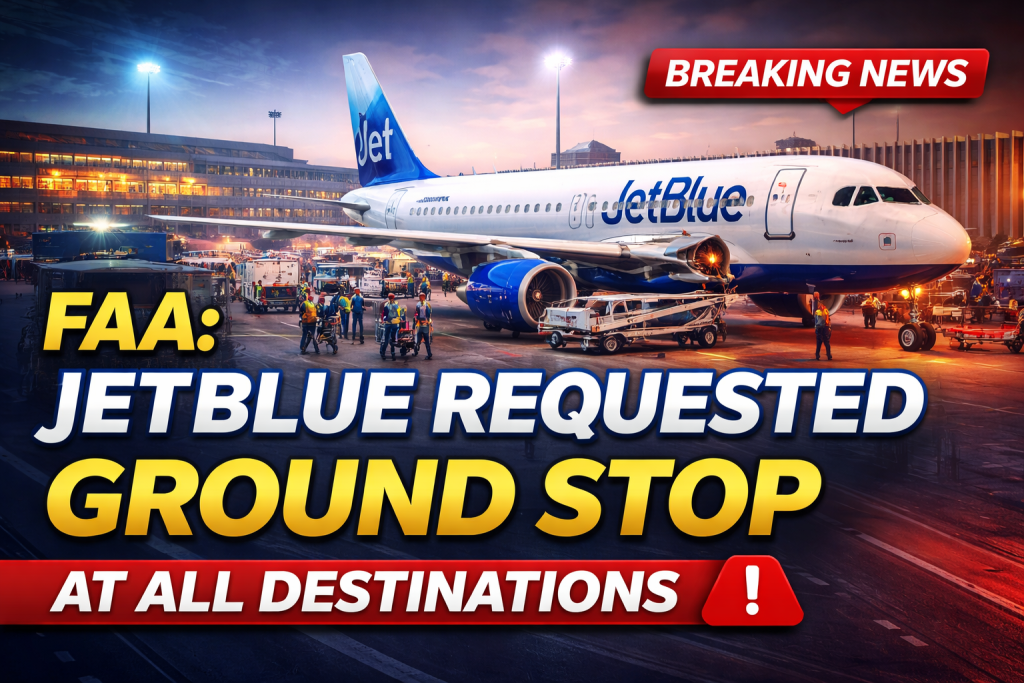
FAA Says JetBlue Requested Ground Stop at All Destinations: What Travelers Need to Know
The Federal Aviation Administration (FAA) announced that JetBlue Airways requested a temporary ground stop for its flights across all destinations, causing short-term disruptions for passengers and raising concerns across the airline industry. The unexpected halt affected flights nationwide and temporarily prevented JetBlue planes from departing airports while the airline addressed the issue. Although the situation was later stabilized, the announcement quickly became a major aviation headline as travelers sought answers about delays and cancellations.
What Is a Ground Stop A ground stop is an aviation control measure used by air traffic authorities to temporarily stop aircraft departures bound for a specific airport or airline network. In this case, the FAA confirmed that JetBlue itself requested the ground stop, meaning the airline needed time to resolve an operational issue affecting its flights. During a ground stop: Flights waiting to depart remain at the gate. Aircraft already in the air continue to their destinations New departures are temporarily paused until the issue is resolved. This procedure is commonly
Why JetBlue Requested the Ground Stop Initial reports indicated that the request was related to technical or operational concerns within JetBlue’s systems. However, the airline and the FAA did not immediately disclose full details about the cause. Industry analysts say such pauses can happen due to: IT or software issues Communication system disruptions Operational scheduling problems Weather-related coordination Airlines often request these stops proactively to avoid larger disruptions or safety risks.
Impact on Passengers Because the ground stop applied to all JetBlue destinations, the disruption had the potential to affect hundreds of flights across the airline’s network. Passengers experienced: Flight delays at major airports Some temporary cancellations Longer wait times at gates and terminals Major JetBlue hubs such as: New York Boston Fort Lauderdale Orlando saw the most noticeable impact as flights waited for clearance to resume departures. However, aviation authorities reported that the pause lasted a relatively short time, and normal operations gradually resumed once the issue was addressed.
Airline Response JetBlue worked closely with the FAA to resolve the issue quickly and restore its schedule. In situations like this, airlines typically coordinate with federal regulators to ensure that all aircraft systems and operational procedures are functioning properly before flights resume. A spokesperson for the airline said the ground stop was a precautionary step to maintain operational stability and passenger safety. Safety remains the top priority for airlines and aviation regulators, which is why ground stops are sometimes used even when the risk level is low.
Broader Aviation Context Ground stops are not unusual in modern aviation. Over the past few years, several airlines and airports have experienced similar temporary disruptions caused by technology outages or air traffic system issues. The FAA closely monitors airline operations to ensure safety standards are met across the United States aviation network, one of the busiest air traffic systems in the world. Events like this highlight the importance of real-time coordination between airlines, airports, and federal regulators to maintain safe and efficient travel.
What Travelers Should Do If you are flying with JetBlue or planning a trip soon, experts recommend: Checking flight status online before heading to the airport Allowing extra travel time Signing up for airline notifications Monitoring airline apps for real-time updates Most disruptions caused by ground stops are temporary, and airlines usually return to normal operations within a few hours. The FAA-issued ground stop requested by JetBlue caused brief travel disruptions but was quickly managed through coordination between the airline and federal regulators. While the exact cause remains under review, such measures are designed to protect passengers and maintain safe airline operations.