
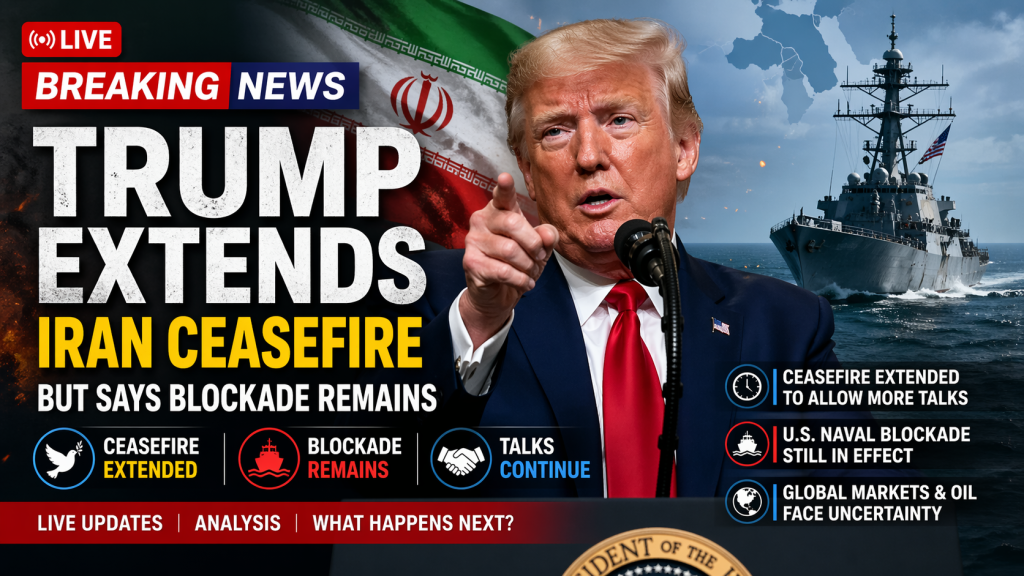
Trump Extends Iran Ceasefire but Keeps Naval Blockade in Place | Live News Updat
In a major geopolitical development, Donald Trump has announced an extension of the ceasefire between the United States and Iran, offering more time for diplomatic negotiations. However, the United States confirmed that its naval blockade on Iranian ports will remain in place, keeping tensions high across the region. The announcement came just hours before the existing ceasefire was due to expire, signaling a temporary pause in fighting but not a full resolution to the crisis.
Why the Ceasefire Was Extended
According to officials, the ceasefire extension was made to allow ongoing peace negotiations to continue, especially after mediation efforts led by Shehbaz Sharif and Pakistani military leadership. The ceasefire was extended indefinitely to give Iran time to present a unified proposal. Peace talks scheduled in Islamabad faced delays due to internal disagreements within Iran’s leadership. U.S. officials said they are waiting for a formal response from Iranian authorities before deciding on further steps. These diplomatic moves were intended to prevent immediate escalation and provide space for negotiations.
U.S. Blockade Still in Effect
Despite extending the ceasefire, the United States confirmed that its naval blockade against Iran will continue, which remains one of the biggest sources of tension. The U.S. Navy continues to restrict ships entering and leaving Iranian ports. Several vessels suspected of carrying Iranian oil have already been intercepted. The blockade is part of a broader strategy to pressure Iran into negotiations over security and nuclear concerns. The ongoing blockade has affected global shipping routes, especially near the Strait of Hormuz, one of the world’s most critical oil transit routes.
Rising Regional and Global Tensions
Even with the ceasefire extension, tensions remain extremely high across the Middle East. Military deployments continue, and analysts warn that the situation could escalate again if negotiations fail. Additional U.S. naval forces have been deployed to strengthen enforcement of the blockade. Iranian officials have criticized the blockade and warned of possible retaliation. Energy markets worldwide have reacted nervously due to fears of disruption to oil supply routes. Experts note that the ceasefire reduces immediate risk but does not remove the threat of renewed conflict.
Diplomatic Talks and Mediation Efforts
Pakistan has emerged as a crucial mediator in the crisis. Officials in Islamabad have worked to bring both sides to the negotiating table in hopes of reaching a long-term peace agreement. Negotiators are currently waiting for Iran to submit a detailed proposal outlining its position on: Maritime security Sanctions and military operations Regional stability commitments Diplomatic sources suggest that the coming days will be critical in determining whether the ceasefire leads to peace or renewed fighting.
Impact on Global Markets and Oil Supply
The ongoing crisis has created uncertainty in international markets, especially in the energy sector. Major impacts include: Oil prices have fluctuated due to concerns about shipping disruptions Shipping companies are rerouting vessels to avoid conflict zones. The Strait of Hormuz remains central to global trade, with millions of barrels of oil passing through daily, making stability in the region essential.
The extension of the U.S.–Iran ceasefire announced by Donald Trump offers temporary relief from immediate fighting, but the continuation of the naval blockade shows that tensions remain unresolved. With diplomatic negotiations still underway and military forces on alert, the situation remains fragile and uncertain. Global leaders, investors, and citizens worldwide are closely watching developments as the coming days may shape the future of peace and stability in the Middle East.