
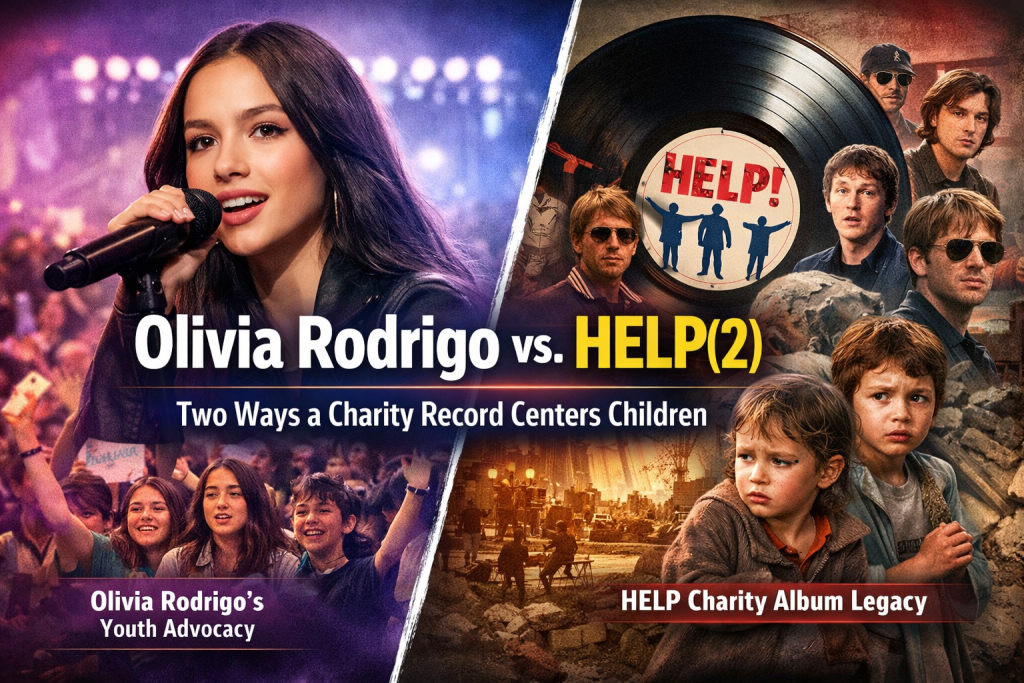
Olivia Rodrigo vs. HELP(2): Two Ways a Charity Record Centers Children
In the world of music and activism, artists have often used their influence to support humanitarian causes. Recently, conversations in the music industry have highlighted two different ways charity records and music initiatives focus on helping children—one through modern pop advocacy connected with Olivia Rodrigo and another through the collaborative charity album tradition inspired by Help! A Day in the Life, often referenced as a model for projects like HELP(2).
Both approaches aim to support children and youth-centered charities, but they represent different eras of the music industry and different strategies for raising awareness and funds. A New Generation of Advocacy: Olivia Rodrigo Global pop star Olivia Rodrigo has become one of the most influential voices among young music fans. Rising to fame with her hit albums SOUR and GUTS, Rodrigo has built a powerful platform that reaches millions of listeners worldwide. Beyond music, Rodrigo has increasingly used her popularity to support causes that affect young people. During interviews and tours, she has spoken about youth empowerment,
education, and community support programs. Her activism often integrates directly with her concerts and online presence, where she encourages fans to learn about charities and participate in fundraising campaigns. Unlike traditional charity records, Rodrigo’s strategy focuses on direct engagement with fans, using social media platforms, live events, and partnerships with nonprofit organizations to highlight issues impacting children and teenagers. The Charity Album Tradition Before the era of streaming and social media influence, charity albums were one of the
most effective ways for musicians to support humanitarian causes. One notable example is Help! A Day in the Life, a collaborative project created to support the humanitarian organization War Child. The album featured exclusive recordings donated by major artists and bands, with p The album featured exclusive recordings donated by major artists and bands, with profits directed toward programs helping children affected by war and humanitarian crises Several influential musicians were associated with charity projects like this, including artists such as Paul McCartney, Oasis, and Radiohead. Their participation helped bring global attention to the challenges faced by children in conflict zones.
This collaborative approach—sometimes described as the HELP model”—shows how the music industry can unite multiple artists around a single humanitarian goal. Two Different Models for the Same Cause While both initiatives place children at the center of their message, they differ significantly in how they operate. Industry Collaboration vs. Individual Influence Charity albums like the HELP project rely on many artists contributing songs to create a large fundraising campaign. Modern artists like Olivia Rodrigo, however, often use their individual global influence to promote causes.
Physical Sales vs. Digital Engagement In the 1990s, charity projects relied heavily on album purchases to raise money. Today, artists use streaming platforms, online donations, and social media campaigns to reach audiences instantly. Media Strategy Older charity records depended on television, radio promotion, and press coverage. Modern activism benefits from direct communication with fans through platforms like TikTok, Instagram, and live streaming events. Why Music Continues to Support Children’s Causes Children’s charities have long been connected to music campaigns because music
naturally brings people together. When artists speak about humanitarian issues, fans often respond with empathy and action. Organizations like War Child have used music projects to fund programs that provide education, protection, and psychological support to children affected by war and poverty. These initiatives demonstrate how entertainment can be transformed into meaningful social impact. The Future of Charity Music Projects Experts believe future charity campaigns will combine elements from both models. Collaborative projects featuring multiple artists may continue to raise large-scale awareness, while individual stars like Olivia Rodrigo will likely keep using their platforms to highlight issues affecting young people.