
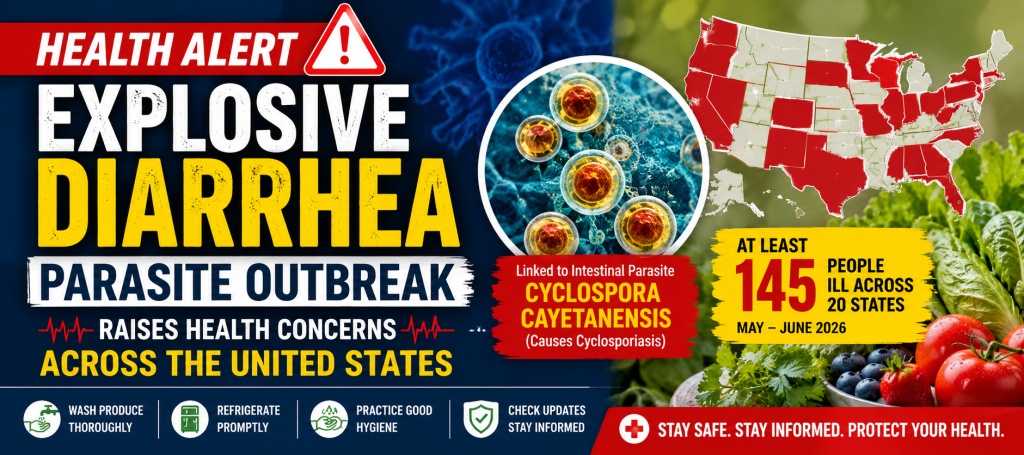
Explosive Diarrhea Parasite Outbreak Sparks Health Alert Across the United States
A growing Cyclospora parasite outbreak is causing severe diarrhea and gastrointestinal illness across multiple U.S. states. Learn about symptoms, causes, treatment, and prevention.
Health officials across the United States are investigating a growing outbreak of a foodborne parasite that has caused severe gastrointestinal illness in multiple states. The outbreak, linked to the microscopic parasite Cyclospora, has resulted in numerous confirmed infections and raised concerns among public health experts as authorities work to determine the exact source of contamination.
The illness, known as cyclosporiasis, is characterized by intense digestive symptoms, including severe watery diarrhea often described as “explosive diarrhea.” While most patients recover with appropriate treatment, the infection can cause prolonged illness and significant discomfort, particularly among vulnerable individuals.
What Is Cyclospora?
Cyclospora cayetanensis is a microscopic parasite that infects the human intestinal tract. The parasite spreads through contaminated food or water and has been responsible for several outbreaks in North America over the past two decades.
Unlike many bacterial foodborne illnesses, Cyclospora requires time outside the human body before it becomes infectious. This unique characteristic means that direct person-to-person transmission is uncommon. Instead, infections are typically associated with contaminated fresh produce, herbs, or water supplies.
Public health agencies have frequently linked previous outbreaks to fresh fruits and vegetables imported from various regions. Because fresh produce is often consumed raw, contamination can be difficult to eliminate once it enters the food supply chain.
Growing Number of Cases
Health departments in several states have reported an increasing number of confirmed infections. Epidemiologists are conducting interviews with patients, reviewing food histories, and tracing supply chains in an effort to identify a common source.
Officials have not yet announced a definitive product responsible for the outbreak. Investigators continue to analyze data from affected individuals and food distributors to determine whether a specific fruit, vegetable, herb, or packaged food item may be involved.
The lack of an identified source has made prevention efforts more challenging, prompting health agencies to encourage consumers to practice enhanced food safety measures.
Symptoms Can Be Severe
One of the most notable symptoms associated with Cyclospora infection is prolonged watery diarrhea. Many patients report sudden and severe digestive distress that can disrupt daily activities and lead to dehydration.
- Severe watery diarrhea
- Stomach cramps and abdominal pain
- Nausea
- Loss of appetite
- Bloating and gas
- Fatigue and weakness
- Weight loss
- Low-grade fever in some cases
Symptoms may develop several days to two weeks after consuming contaminated food or water. In some cases, symptoms can disappear and then return weeks later if treatment is not administered.
Why Health Experts Are Concerned
Although Cyclospora infections are rarely life-threatening, the illness can be particularly difficult for older adults, young children, and individuals with weakened immune systems.
Extended episodes of diarrhea can result in dehydration, nutritional deficiencies, and prolonged recovery periods. Medical experts warn that individuals experiencing persistent diarrhea should seek healthcare evaluation, especially if symptoms continue for more than a few days.
The investigation has also highlighted ongoing challenges in monitoring fresh produce distribution networks. Modern food supply chains often involve multiple farms, processing facilities, and transportation routes, making outbreak investigations complex and time-consuming.
Food Safety Measures for Consumers
While authorities continue searching for the contamination source, consumers can take several steps to reduce their risk of foodborne illness:
While authorities continue searching for the contamination source, consumers can take several steps to reduce their risk of foodborne illness:
Rinse fruits and vegetables under running water before consumption, even when products are labeled as pre-washed.
Wash hands with soap and water before preparing meals and after handling raw foods.
Drink water from trusted sources and avoid consuming untreated water when traveling.
Monitor updates from health agencies regarding recalls or public health alerts related to contaminated food products.
Persistent diarrhea, dehydration, dizziness, or severe abdominal pain should be evaluated by a healthcare professional.
Treatment and Recovery
Cyclosporiasis is generally treatable with prescription antibiotics when diagnosed correctly. Healthcare providers may also recommend increased fluid intake and supportive care to prevent dehydration.
Most patients recover fully, although untreated infections can persist for several weeks or even months. Early diagnosis can significantly reduce symptom duration and improve recovery outcomes.
Ongoing Investigation
Federal and state health authorities continue working together to identify the source of the outbreak and prevent additional infections. As laboratory testing and epidemiological investigations progress, officials are expected to provide updates regarding any contaminated products or distribution channels linked to the cases.
Until more information becomes available, health experts emphasize vigilance, proper food handling practices, and prompt medical attention for individuals experiencing symptoms consistent with Cyclospora infection.
The outbreak serves as a reminder of the importance of food safety monitoring and public health surveillance in protecting consumers from emerging foodborne threats. With investigators actively tracing potential sources, authorities remain hopeful that identifying the contamination point will help prevent further illnesses and safeguard public health.