
What Is the Saros Cycle? Understanding the 18-Year Eclipse Prediction System
The term Saros has gained attention recently as astronomers and skywatchers discuss upcoming eclipses between 2026 and 2028, a period described as a rare “golden age” of solar eclipses. This surge in interest highlights the importance of the Saros cycle, an ancient astronomical discovery that still guides modern eclipse predictions. With multiple major eclipses expected over the next few years, understanding the Saros cycle helps explain why similar celestial events repeat after long intervals.
What Is the Saros Cycle?
The Saros cycle is a repeating astronomical period lasting approximately: 18 years 11 days 8 hours After this time, the Sun, Earth, and Moon return to nearly the same alignment, causing similar solar and lunar eclipses to occur again. This predictable pattern has been used by astronomers for centuries to forecast future eclipses. Each Saros cycle contains dozens of eclipses, grouped into what scientists call a Saros series, which may continue for hundreds or even thousands of years.
Saros Cycle and Upcoming Eclipse Events (2026–2028)
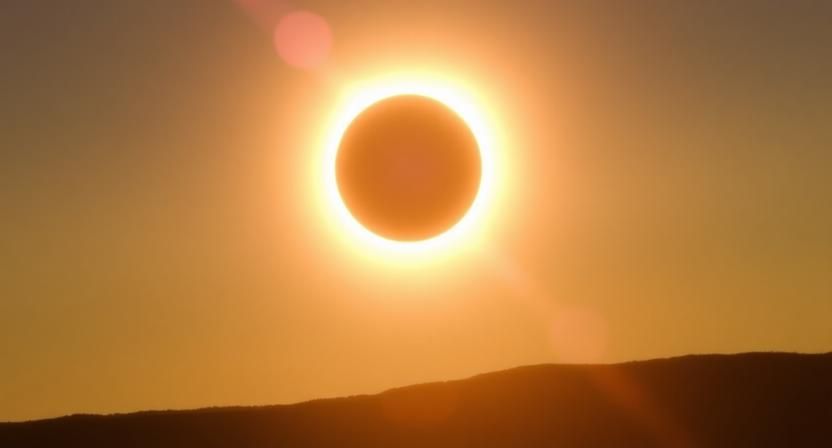
Astronomers report that 2026 marks the beginning of a special sequence of eclipses, all connected through Saros cycles. February 17, 2026: Annular Solar Eclipse (Ring of Fire) March 3, 2026: Total Lunar Eclipse August 12, 2026: Total Solar Eclipse visible in parts of Europe August 28, 2026: Partial Lunar Eclipse 2027–2028: Additional total and annular solar eclipses across multiple continents Experts say that from 2026 to 2028, the Earth will experience three total solar eclipses and three annular eclipses, forming one of the most exciting eclipse periods in decades
How the Saros Cycle Helps Predict Eclipses
The Saros cycle works because of the relationship between three key orbital cycles: Moon’s orbit around Earth Earth’s orbit around the Sun Moon’s orbital tilt When these cycles align again after about 18 years, eclipses occur at similar positions and times. For example: The annular solar eclipse on February 17, 2026 belongs to Saros Cycle 121, part of a series containing dozens of eclipses spanning centuries
Why the Saros Cycle Matters Today
The Saros cycle is not just a historical concept it plays a crucial role in modern astronomy. Key Uses Today: Predicting solar and lunar eclipses Planning global astronomical observations Helping scientists study Earth–Moon orbital patterns Supporting space research and educational programs Astronomers continue to use Saros-based calculations to accurately forecast eclipse timings decades in advance.
Historical Importance of the Saros Cycle
The Saros cycle was first discovered by ancient astronomers, including: Babylonian sky observers Early Greek scientists They noticed that eclipses seemed to repeat after long intervals, eventually identifying the pattern that became known as the Saros cycle. This discovery allowed early civilizations to predict eclipses long before modern technology existed.
The Future of Saros Cycles and Astronomy
Scientists believe the coming years will be especially exciting for eclipse enthusiasts. The sequence of eclipses from 2026 to 2028 is considered one of the most accessible and visually spectacular series in decades. Astronomers also predict that similar triple eclipse sequences occur roughly every Saros cycle, meaning the next comparable period will occur around 2044–2046.
The Saros cycle remains one of the most fascinating and useful discoveries in astronomy. As the world prepares for a series of spectacular eclipses between 2026 and 2028, understanding this cycle helps explain why these celestial events occur in repeating patterns. With growing public interest in space and skywatching, the Saros cycle continues to connect ancient knowledge with modern science—reminding us that the universe follows patterns that humans have studied for thousands of years.