
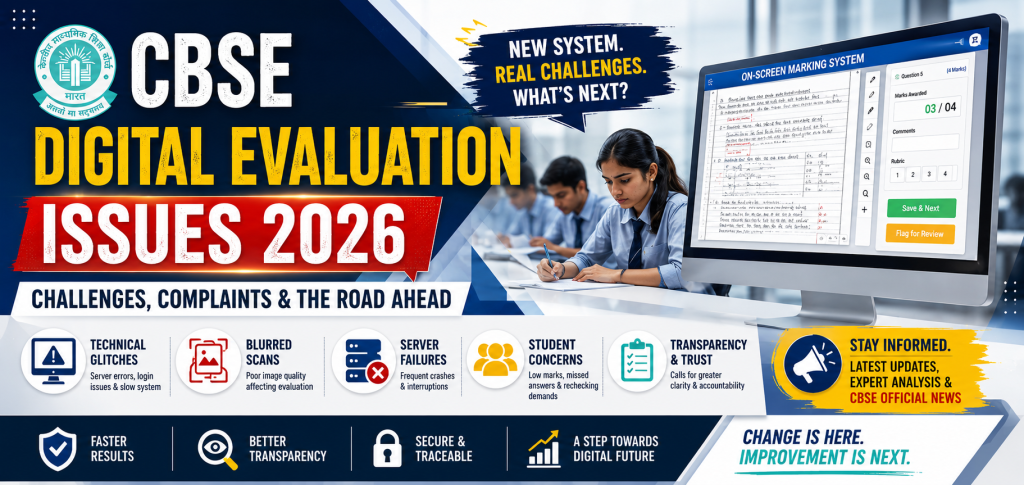
CBSE 2026 Result Controversy Explained: Problems With Digital Evaluation System
India’s education sector witnessed a major technological shift in 2026 as the Central Board of Secondary Education introduced a large-scale digital evaluation system for Class 12 board examinations. The initiative, known as On-Screen Marking (OSM), aimed to modernize the answer-sheet checking process by replacing traditional paper-based evaluation with scanned digital copies.
While the board described the move as a step toward faster and more transparent results, the rollout has also triggered widespread criticism from teachers, students, and parents who reported technical glitches, delayed evaluations, and unexpected score discrepancies. CBSE’s new digital evaluation system for Class 12 exams faces criticism in 2026 after students and teachers report technical glitches, low scores, and on-screen marking concerns.
What Is CBSE’s On-Screen Marking System?
Under the new digital evaluation process, physical answer sheets are scanned at dedicated centers and uploaded to a secure online platform. Examiners then evaluate the scanned copies remotely using computer systems instead of manually checking paper answer books.
According to CBSE officials, the digital model was introduced to: Reduce human calculation errors Improve transparency Speed up result processing Create a digital audit trail Prevent loss or damage of answer sheets The board stated that digital evaluation could reduce the overall checking cycle by several days compared to the traditional system.
Technical Problems Reported by Evaluators
Despite the modernization effort, many teachers across India reported serious operational difficulties during the first full-scale implementation.
Blurred and Poor-Quality Scans
Several evaluators complained that scanned answer sheets appeared unclear or blurry on screens. Handwritten answers, diagrams, and mathematical calculations were reportedly difficult to read in some cases.
Teachers said this not only slowed the evaluation process but also increased the risk of accidental marking errors. Server Failures and Slow Performance
Examiners also reported: Frequent portal crashes, Login authentication issues, Slow loading times, Delays in downloading answer scripts, System freezing during evaluation, Some teachers claimed the technical interruptions significantly reduced their daily evaluation capacity compared to physical checking methods.
Student Concerns Grow After Results
The controversy intensified after the declaration of the 2026 Class 12 board results. Students and parents across multiple states expressed concern over unexpectedly low marks in core science subjects, particularly: Physics Chemistry Mathematics Biology
In some widely discussed cases on social media, students who had reportedly performed well in competitive examinations such as JEE Main claimed they received unusually low board scores. Although exam patterns and evaluation standards differ between entrance tests and board exams, the sudden rise in complaints fueled public debate about the reliability of the new digital system.
CBSE Defends the New Evaluation Model
CBSE officials have defended the On-Screen Marking system and insisted that digital evaluation improves consistency and reduces manual errors.
The board highlighted several safeguards implemented during the process: Examiner training sessions Mock digital evaluation exercises Automated mark totaling Digital tracking of evaluated scripts Centralized monitoring systems
CBSE also introduced a revised post-result grievance system allowing students to first access scanned answer copies before applying for re-evaluation. Officials maintain that the technical challenges experienced during the 2026 cycle are temporary and expected during the first nationwide rollout of a new technology-driven framework.
Impact on India’s Examination System
The 2026 evaluation cycle may become a defining moment in India’s transition toward digital academic administration. As one of the country’s largest examination boards, CBSE’s success or failure could influence how other state and national education boards adopt similar technologies in the future.
The debate surrounding the system has also highlighted a broader challenge: balancing technological efficiency with fairness and student trust.