BREAKING: Trump’s Name Removed from Kennedy Center After Major Court Ruling!
June 2026 — A federal court ruling has ordered the removal of former U.S. President Donald Trump’s name from the Kennedy Center for the Performing Arts, marking one of the most controversial cultural and legal disputes in recent American political history. The decision has triggered compliance actions inside the institution, legal appeals from leadership, and renewed debate over political influence in national cultural landmarks.
The Kennedy Center, one of the United States’ most prominent arts institutions, has already begun removing Trump’s name from its official website, internal documents, and digital branding. However, the legal battle is far from over as appeals continue in higher courts.
Court Rules Renaming Was Illegal
The controversy began after the Kennedy Center’s governing board, which was reshaped during Trump’s return to political leadership in 2025, voted to rename parts of the institution in his honor. The move included adding his name to official branding and signage.
However, a U.S. District Court judge ruled that the decision violated federal law. The court emphasized that the Kennedy Center was originally established by Congress to honor President John F. Kennedy, and therefore only Congress has the authority to change its official name. The judge’s ruling stated that the board exceeded its legal authority and acted unconstitutionally in attempting to rename a federally created cultural institution.
Immediate Compliance Begins
Following the ruling, Kennedy Center officials began implementing changes to comply with the court order. Internal memos instructed staff to remove Trump’s name from email signatures, official letterheads, brochures, and promotional materials.
Digital platforms were among the first to change. The Kennedy Center website and affiliated social media accounts were updated to reflect the institution’s original name: The John F. Kennedy Center for the Performing Arts.
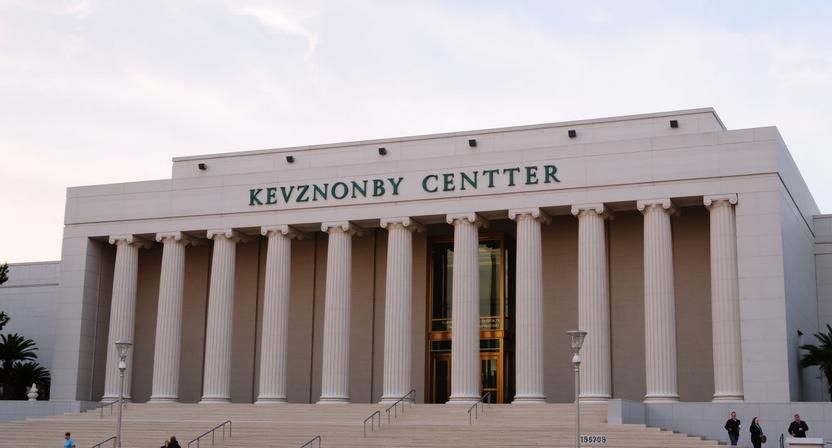
Despite these updates, the physical removal process remains ongoing. Reports indicate that Trump’s name was still visible on parts of the building’s exterior as of early June, although additional work has been scheduled to fully align the facility with the court’s order.
Leadership Pushes Back With Appeal
Although the institution has begun compliance, the Kennedy Center’s board of trustees has voted to appeal the ruling. Board members argue that the renaming effort was part of a broader initiative to modernize and rebrand the institution, and they claim the court decision limits administrative autonomy.
The leadership maintains that the renaming was intended to reflect Trump’s influence on the organization’s restructuring and funding direction. According to internal statements, the board believes the court order undermines governance flexibility for federally supported cultural institutions.
The appeal is expected to move through the U.S. Court of Appeals for the D.C. Circuit, a process that could take months or even longer, leaving the institution in a state of legal and operational uncertainty.
Political Reactions Intensify
The ruling has sparked strong political reactions across Washington. Supporters of the decision argue that it protects historical integrity and prevents political figures from using cultural institutions for personal branding.
Critics, however, claim the ruling is politically motivated and undermines recent reforms made to the Kennedy Center’s leadership structure. Some allies of Trump have described the decision as part of a broader effort to reverse changes implemented during his administration’s cultural policy overhaul.
The dispute has also reignited debate over how public institutions should be governed, particularly those funded or overseen through federal authority but managed by independent boards.
Cultural Community Divided
The arts community has reacted with mixed opinions. Some performers and cultural organizations had previously distanced themselves from the Kennedy Center after the renaming controversy first emerged in 2025. Concerns were raised about political influence affecting programming decisions and institutional neutrality.
Other artists and administrators argue that the current ruling restores the Kennedy Center’s original mission and removes political branding from a national cultural space that is meant to represent all Americans. Several long-term collaborators remain cautious, waiting to see whether further legal decisions will stabilize the institution’s identity.
Historical Significance of the Kennedy Center
The Kennedy Center was established in 1958 and officially designated by Congress in 1964 as a national memorial to President John F. Kennedy. As a federally recognized cultural institution, its name carries legal protection that prevents unilateral changes by internal boards or administrators.
Legal experts note that this case could set an important precedent for how far governing boards can go in rebranding federally created institutions. The court’s ruling reinforces that symbolic naming rights tied to congressional authority cannot be altered without legislative approval.
Trump’s Role and Response
Donald Trump, who has been closely associated with the Kennedy Center’s recent restructuring, has criticized the ruling and filed an appeal. He has defended the renaming initiative as part of a broader effort to modernize national cultural infrastructure and improve operational efficiency.
Trump and his allies argue that his involvement helped revitalize funding strategies and infrastructure planning for the venue. However, opponents claim the changes blurred the line between political leadership and cultural independence. His appeal is now part of a wider legal effort that could ultimately reach higher federal courts.
Ongoing Uncertainty
As of June 2026, the Kennedy Center remains in transition. While official digital branding has been restored to its original name, physical signage and long-term naming status remain unresolved due to ongoing appeals.
The case continues to attract national attention, not only for its political implications but also for its broader impact on governance of public cultural institutions in the United States. Legal experts suggest that the final outcome could redefine how naming rights, political influence, and federal authority intersect in America’s cultural landscape.