
Blue Moon 2026: Rare Lunar Event Dazzles Skywatchers Around the World
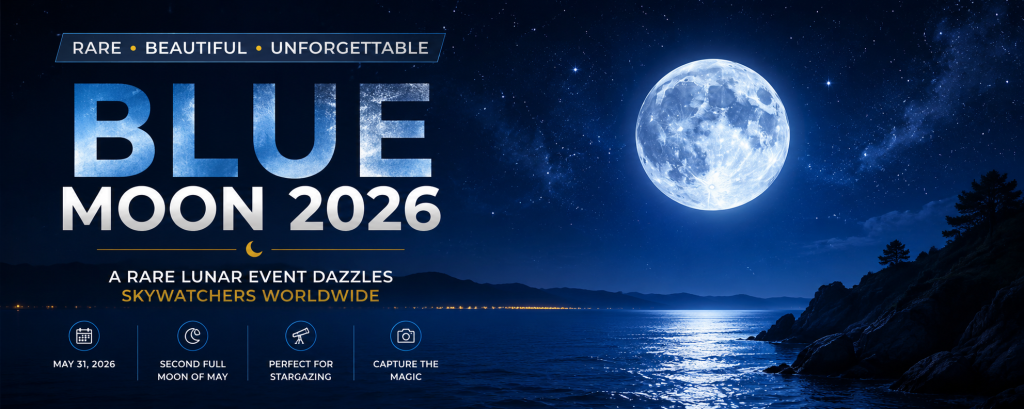
A rare Blue Moon graced the night sky this weekend, drawing the attention of astronomy enthusiasts and casual skywatchers around the world. The event, which occurred on May 31, 2026, marked the second full moon of the month—a phenomenon commonly known as a “Blue Moon.” Despite its name, the moon did not actually appear blue. Instead, observers witnessed the familiar bright glow of a full moon rising above the horizon. The term “Blue Moon” refers to a calendar event rather than a change in the moon’s color.
A Blue Moon occurs when two full moons appear within the same calendar month. Since the lunar cycle lasts approximately 29.5 days, this phenomenon is relatively uncommon. The saying “once in a blue moon” originates from the rarity of the event. The first full moon of May 2026 appeared on May 1, while the second occurred on May 31, officially making it a Blue Moon.
This year’s Blue Moon carried an additional distinction. It was also classified as a “micromoon,” meaning the moon reached its full phase while near the farthest point in its orbit from Earth. As a result, the moon appeared slightly smaller and dimmer than an average full moon. However, the difference was subtle and difficult to notice without direct comparison.
Across many countries, clear skies allowed millions of people to enjoy the celestial event. Social media platforms quickly filled with photographs of the moon rising over city skylines, mountains, oceans, and rural landscapes. Astronomy clubs and observatories organized special viewing sessions, encouraging people to look up and appreciate one of nature’s most beautiful spectacles.
Many people are surprised to learn that a Blue Moon is not actually blue. Under rare atmospheric conditions, such as after large volcanic eruptions or major wildfires, particles in the atmosphere can cause the moon to take on a bluish tint. However, this effect is unrelated to the calendar-based Blue Moon event. Most observers saw the moon shining in its usual white, yellow, or orange colors depending on local atmospheric conditions.
Because Blue Moons occur only every few years, astronomy enthusiasts often mark them on their calendars. The next Blue Moon will provide another opportunity for skywatchers to experience this unusual lunar event and learn more about Earth’s closest celestial neighbor.
In an era dominated by screens and digital distractions, events like the Blue Moon serve as a reminder of the wonders that exist beyond our everyday lives. Whether viewed through a telescope, a camera lens, or simply with the naked eye, the Blue Moon of 2026 offered a memorable moment for people around the globe. As the lunar glow faded into the night, it left many observers inspired by the beauty and mystery of the universe.