
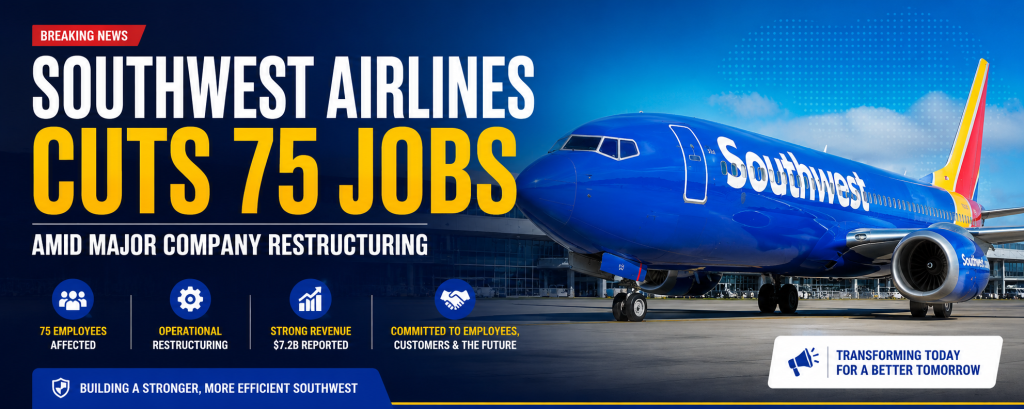
Inside Southwest’s Latest Workforce Reduction and What It Means for Employees and Travelers
Southwest Airlines has confirmed another round of layoffs, with approximately 75 employees affected as the airline continues a sweeping transformation strategy designed to modernize operations and improve long-term profitability.
The Dallas-based carrier said the staff reductions are part of an operational restructuring effort. According to company statements, impacted employees may still have opportunities to apply for other available positions within the airline as Southwest reshapes several internal departments.
The move comes during one of the most significant transition periods in Southwest’s history — a company long recognized for its employee-focused culture and decades-long reputation for avoiding layoffs.
Why Southwest Airlines Is Restructuring
Over the past year, Southwest has been under growing pressure from investors and changing market conditions. Rising operational costs, increased competition, and shifting traveler expectations have pushed the airline to rethink parts of its traditional business model. The airline has already announced or implemented several major changes, including:
Assigned seating options Premium extra-legroom seats Adjustments to baggage policies Expansion of digital and operational systems Evaluation of new international growth opportunities
These changes represent a dramatic shift for a carrier that built its brand around simplicity and customer-friendly policies. CEO Bob Jordan previously described the company overhaul as one of the largest transformations in Southwest’s history.
Second Consecutive Year of Layoffs
This latest reduction follows a much larger workforce cut announced in 2025, when Southwest eliminated around 1,750 corporate positions — nearly 15% of its corporate workforce. Industry analysts say the recent layoffs indicate that Southwest is continuing to streamline management and operational structures while investing in modernization efforts.
Although 75 positions represent a smaller reduction compared to last year, the news has still raised concerns among aviation employees and labor observers who view Southwest as one of the airline industry’s historically stable employers.
Financial Performance Remains Strong
Interestingly, the layoffs arrive despite strong revenue performance from the airline. Southwest recently reported record first-quarter operating revenue of approximately $7.2 billion, signaling continued travel demand and steady passenger traffic.
However, airline experts note that strong revenue does not always prevent workforce restructuring. Many airlines are now focusing heavily on: Automation Operational efficiency Technology investments Cost optimization Shareholder pressure for higher profitability
What This Means for Travelers
For passengers, the layoffs are not expected to cause immediate disruptions to flight schedules or customer service operations. Southwest says it remains focused on improving:
On-time performance Customer experience Fleet modernization Digital booking systems Seating flexibility Travelers may continue seeing gradual policy and service changes as the airline adapts to compete more aggressively with other major U.S. carriers.
Industry-Wide Pressure on Airlines
Southwest is not alone in making workforce adjustments. Several global airlines have been reviewing staffing levels amid: Inflationary pressures Fuel price volatility Aircraft delivery delays Higher labor costs Evolving post-pandemic travel demand
The aviation industry continues balancing profitability with operational reliability as competition intensifies across domestic and international markets.