
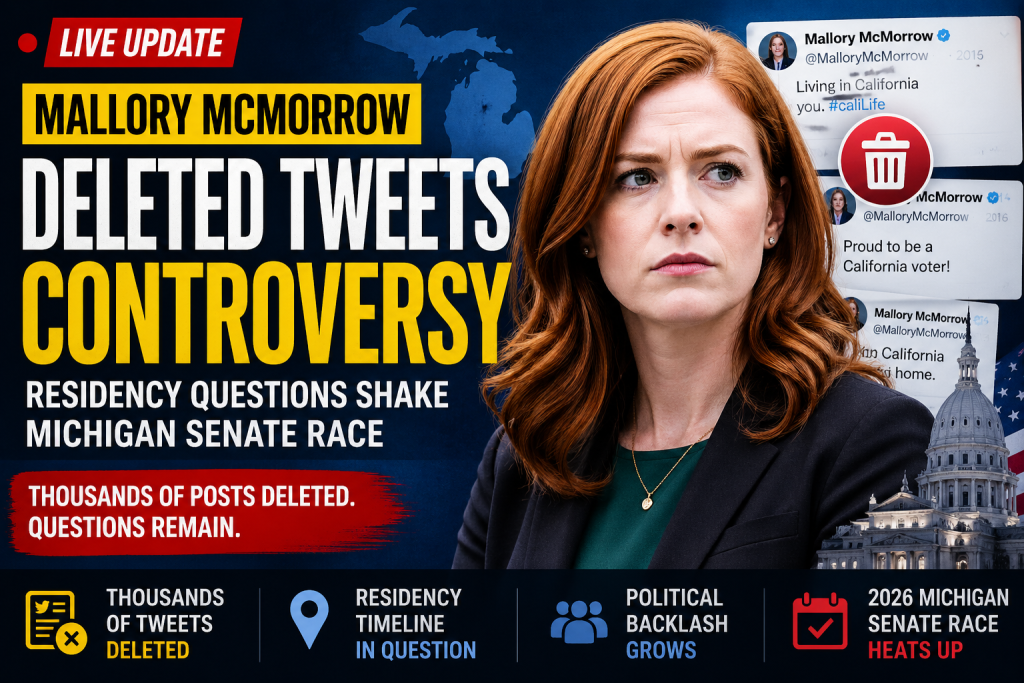
Mallory McMorrow Under Fire After Thousands of Deleted Tweets Surface During Senate Campaign
A major political controversy has erupted around Mallory McMorrow after reports surfaced that thousands of her old tweets were deleted, raising fresh questions about her residency timeline and past political views during a critical U.S. Senate race. The issue has quickly become one of the most talked-about developments in the 2026 Michigan Senate election, placing the Democratic candidate under intense scrutiny from opponents and voters alike.
Thousands of Tweets Deleted Ahead of Primary
According to multiple reports, approximately 6,000 tweets were removed from McMorrow’s account during the early stages of the campaign. The deletions reportedly happened as the Michigan Democratic Senate primary gained momentum, leading critics to question the timing and purpose of the move. Political analysts say that deleting old social media posts before major elections is not uncommon, but the large number of removed tweets has drawn unusual attention.
Residency Timeline Under Scrutiny
The biggest controversy involves where McMorrow lived between 2014 and 2016. Archived digital records suggest that: She identified as a California resident after claiming to move permanently to Michigan in 2014 Some records indicate participation in California voting activities as late as 2016 Her official campaign narrative describes the relocation as a gradual transition rather than a single move date These findings have fueled accusations that her public statements about residency may not fully align with historical records.
Content of the Deleted Tweets
Reports suggest the removed tweets contained: References to continued ties with California Comments about political issues and regional culture Messages encouraging participation in California elections Personal reflections about moving from California to the Midwest Some deleted remarks also reflected earlier political views that critics say differ from her current messaging strategy.
Campaign Responds to Criticism
McMorrow’s campaign has responded by stating that: The move from California to Michigan was a gradual relocation process She considers 2014 the beginning of her move, even though some legal records remained tied to California temporarily Deleting older posts is described as a routine digital cleanup used by many political candidates before elections Supporters argue that the controversy is being exaggerated for political advantage.
Why This Story Matters
This controversy comes at a critical moment because the 2026 Michigan Senate race is considered one of the most competitive elections in the United States. The seat is especially significant because: It is a key battleground race with national political consequences The outcome could influence control of the U.S. Senate Multiple Democratic candidates are competing in a highly contested primary Experts believe even small credibility questions can impact voter perception during tightly contested races.
Political Reactions and Public Debate
Opponents have used the deleted posts to question transparency and trust, arguing that voters deserve full disclosure about past statements and voting history. Meanwhile, supporters say: Social media deletion does not prove wrongdoing Political narratives often evolve over time Archived content may lack full context The debate has quickly spread across media platforms, fueling national attention.
What Happens Next
Political observers expect the controversy to remain in headlines as: More archived digital records may emerge Opponents continue reviewing past statements Voters evaluate the issue ahead of primary voting The situation highlights how digital history and social media records are becoming central issues in modern political campaigns.
The Mallory McMorrow deleted tweets controversy has become a major flashpoint in the 2026 U.S. Senate race. While thousands of deleted posts and residency questions have raised concerns among critics, her campaign maintains that the relocation timeline was gradual and that removing old social media content is a routine practice. As the election approaches, this story is expected to remain a key topic shaping voter perception and campaign strategy.