
A new opportunity to settle in the UK: What is Shabana Mahmood’s new immigration plan?
Shabana Mahmood announced three new legal immigration routes for refugees in the UK. Learn about the full plan.
The United Kingdom is preparing for one of the most significant changes to its asylum and immigration system in recent years. Home Secretary Shabana Mahmood has announced plans to introduce new safe and legal immigration routes aimed at providing refugees with alternatives to dangerous and irregular migration journeys.
The proposals form part of a broader Immigration and Asylum Bill that seeks to balance humanitarian responsibilities with stronger border controls. Supporters argue that the reforms could create a more structured and fair immigration framework, while critics fear that tougher asylum measures may limit protections for vulnerable individuals.
Three New Immigration Routes
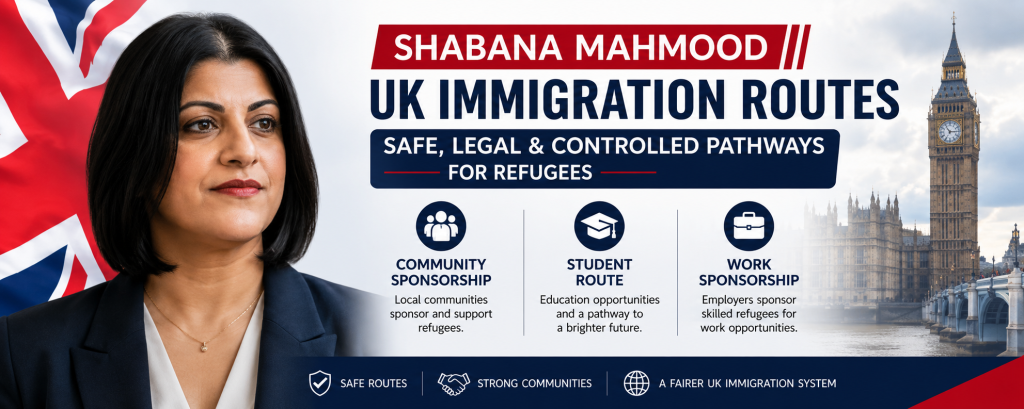
The first route expands the UK’s community sponsorship model. Under this approach, local communities, charities, faith groups, and volunteer organizations can help sponsor refugees and support their integration into British society. The government says the model draws inspiration from successful international programs and the UK’s previous refugee sponsorship
initiatives. Sponsored refugees would receive assistance with housing, language learning, employment opportunities, and community integration. Officials believe that community-led resettlement can strengthen local support networks while reducing reliance on government accommodation systems.
Student Refugee Route
A second pathway will create opportunities for displaced individuals to enter the UK through higher education. The student refugee route is expected to allow qualified refugees to pursue university studies while receiving protection through a legal immigration channel. Government officials argue that education can provide long-term economic and social benefits both for
refugees and the wider UK economy. The first arrivals under this route are expected in the coming years following the rollout of the scheme. Universities and educational institutions are expected to play a key role in supporting eligible students throughout the process.
Work Sponsorship Route
The third proposed pathway focuses on employment-based migration for refugees with skills needed by the UK labor market.
Under the scheme, employers could sponsor eligible refugees for work opportunities in sectors experiencing labor shortages. The government believes this route could help address workforce gaps while providing a secure and legal alternative to irregular migration. Officials say the program will be designed to align humanitarian protection with economic needs.
Annual Caps and Controlled Admissions
Government plans indicate that the new routes will operate under annual admission caps. The number of refugees admitted through these pathways would be determined according to the capacity of local communities, public services, and housing availability.
Supporters of the policy argue that a controlled system can help maintain public confidence while ensuring that resources remain available for successful integration.
Broader Immigration Reforms
The new legal routes are only one part of a wider package of immigration reforms. The proposed legislation includes stronger measures against illegal migration, increased enforcement against smuggling networks, and reforms aimed at accelerating asylum decisions.
The government has repeatedly argued that expanding legal pathways must be accompanied by tougher action against criminal groups facilitating dangerous Channel crossings. Additional proposals include changes to appeals processes, stricter enforcement mechanisms, and revisions to refugee protection policies.
Political Debate Intensifies
The announcement has generated significant political debate across the United Kingdom. Supporters within government describe the policy as a balanced approach that combines compassion with border security. They argue that safe and legal routes can reduce incentives for dangerous journeys while maintaining Britain’s tradition of offering refuge to people fleeing conflict and persecution.
However, critics from refugee advocacy organizations and some politicians contend that the tougher aspects of the wider immigration package could undermine humanitarian protections. Concerns have been raised about asylum procedures, family reunification rules, and future settlement requirements. The debate reflects broader tensions surrounding migration policy across Europe, where governments continue to search for solutions that balance border management with international humanitarian obligations.
Impact on Refugees and Communities
If implemented successfully, the new routes could provide thousands of refugees with legal alternatives to dangerous migration journeys. Community groups may gain a greater role in supporting refugee integration, universities could expand educational opportunities for displaced students, and employers may benefit from access to skilled workers.
The government believes these pathways will reduce pressure on the asylum system while offering genuine protection to those in need. Critics, meanwhile, argue that the effectiveness of the reforms will depend heavily on implementation, funding, and the availability of support services.
What must have happened next?
The proposed immigration reforms represent a major shift in the UK’s approach to refugee resettlement. By combining community sponsorship, educational opportunities, and employment pathways, the government hopes to create a structured system of legal migration while strengthening border enforcement. As Parliament prepares to debate the legislation, the outcome could shape the future of UK immigration policy for years to come.
Whether the reforms achieve their intended goals will likely depend on their practical implementation, public support, and the government’s ability to balance humanitarian commitments with immigration control. For now, the announcement marks a significant moment in the UK’s ongoing conversation about migration, asylum, and the role of safe and legal routes in addressing global displacement challenges.