Paigelynne Gonyea Case Explained: Free Speech, Privacy, and Federal Scrutiny
Paigelynne Gonyea claims DHS and ICE agents asked her to remove an Instagram post. Learn the details, legal questions, and public reaction surrounding the case.
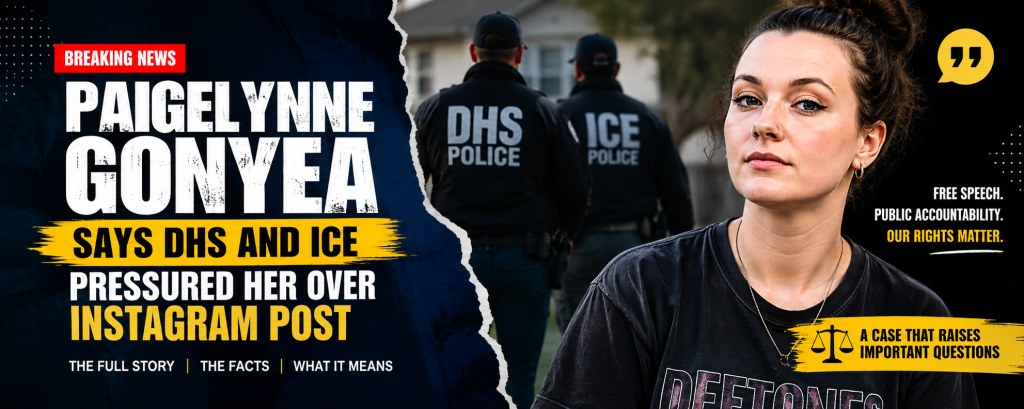
A recent incident involving Syracuse resident Paigelynne Gonyea has generated national attention after she alleged that representatives from the U.S. Department of Homeland Security (DHS) and Immigration and Customs Enforcement (ICE) contacted her regarding an Instagram post she published months earlier.
According to reports, Gonyea was working as a poll worker at a public library in Syracuse, New York, when two federal agents approached her and presented a warning notice concerning social media activity they claimed may have violated federal law. The notice reportedly referenced an Instagram account that agents believed contained content directed at ICE personnel.
What Triggered the Investigation?
The dispute centers on a January social media post in which Gonyea discussed an ICE agent involved in a highly publicized Minnesota protest-related shooting. Gonyea maintains that the information she shared was already publicly available through news reports and did not include private details such as home addresses, phone numbers, or other sensitive personal information.
Federal agents reportedly characterized the post as potentially violating laws intended to protect federal officials from threats or harassment. However, Gonyea strongly rejected the accusation, arguing that she was exercising her right to discuss matters of public interest and government accountability.
Concerns About Government Oversight
The incident has raised broader questions about the relationship between online speech and government enforcement. Civil liberties advocates have noted that public criticism of government officials is generally protected under the First Amendment, while federal authorities have a responsibility to investigate genuine threats against employees and officers.
The case highlights the increasingly complex challenge of distinguishing between protected political expression and content that authorities may view as intimidation or harassment. Legal experts suggest that context, intent, and the nature of the information shared often play critical roles in such determinations.
Public Reaction and Political Attention
Following the encounter, Gonyea publicly shared details of the visit and stated that she does not intend to remove the disputed post. Reports indicate that she has reached out to civil liberties organizations and elected officials seeking guidance and oversight regarding the actions of federal agents.
The incident has fueled discussions across social media platforms, where supporters argue that government transparency and accountability require open public discussion of officials’ actions. Others emphasize the importance of protecting federal employees from targeted harassment and potential security risks.
Why This Story Matters
As social media continues to shape political discourse, cases like this illustrate the tension between public accountability, privacy concerns, and free expression. The outcome could influence future conversations about what constitutes protected online speech and how federal agencies respond to controversial posts involving government personnel.
At present, there have been no public reports indicating that Gonyea faces criminal charges related to the matter. The debate surrounding the incident is likely to continue as civil rights groups, legal observers, and government officials examine the implications of the case.
The Paigelynne Gonyea case represents a significant moment in the ongoing national discussion about free speech, digital activism, and government oversight. Whether viewed as a legitimate federal inquiry or an example of governmental overreach, the incident underscores the growing importance of defining the boundaries of online expression in an increasingly connected world.