GOP Panic Grows as Trump’s Midterm Strategy Divides Republicans
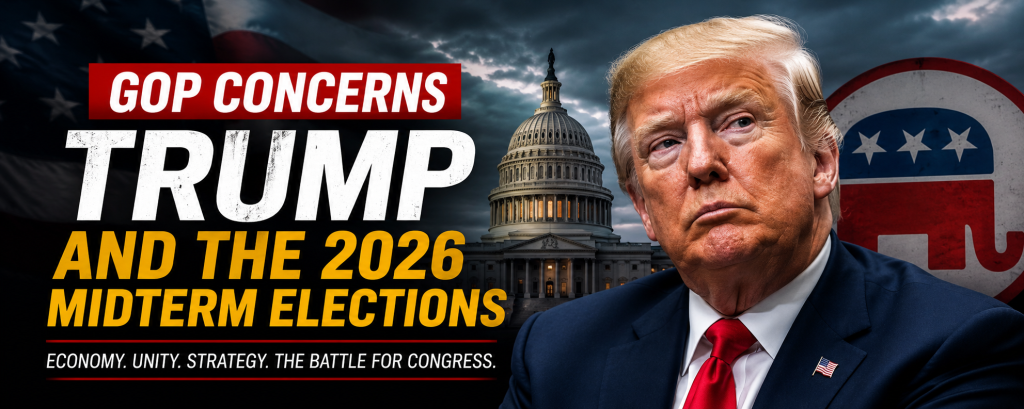
The Republican Party is entering the 2026 midterm election season facing a difficult question: can the GOP maintain control of Congress while remaining tightly tied to President Donald Trump?
Across Washington and several battleground states, Republican lawmakers and strategists are increasingly expressing concern that Trump’s political style, economic challenges, and internal party battles could weaken GOP chances in November. While Trump continues to dominate the Republican base, signs of nervousness inside the party are becoming more visible as polls tighten and key races grow more competitive.
Political analysts say Republicans are dealing with a combination of rising fuel prices, voter frustration over the economy, and divisions within the party itself. Some GOP leaders fear that instead of focusing on inflation, jobs, and border security, the party is becoming distracted by loyalty fights and personal political vendettas.
According to recent reports, Republican strategists are quietly recalibrating their midterm messaging by emphasizing Trump-style policies while reducing direct focus on the former president himself.
Republicans Worry About Economic Fallout
One of the biggest concerns inside the GOP is the economy. Rising gas prices and broader cost-of-living pressures have become major voter frustrations in recent months. Republicans traditionally perform well when campaigning on economic issues, but some strategists fear Trump’s recent foreign policy decisions and ongoing tensions involving Iran are overshadowing domestic priorities.
Several polls now show Trump’s approval rating slipping compared with the start of his second term. Analysts at the Brookings Institution noted that public dissatisfaction has expanded beyond inflation and now includes concerns about international conflict and political instability.
Republican candidates in competitive districts are reportedly trying to localize their campaigns, focusing on state issues rather than national political drama. However, Trump continues to dominate media coverage and Republican primary politics.
Internal GOP Divisions Deepen
The Republican Party is also facing growing internal divisions between Trump loyalists and more traditional conservatives.
Trump has aggressively backed primary challengers against Republicans who publicly disagreed with him on issues like Iran policy, spending bills, and election strategy. This has created tensions among lawmakers who fear the party is spending too much energy attacking fellow Republicans instead of preparing for Democrats in the general election.
Former Kentucky Congressman Thomas Massie recently warned that Trump has “alienated” some independent and conservative voters who helped Republicans win in previous elections. Massie argued that many voters are becoming frustrated with what he described as “Trump disappointment syndrome.”
Meanwhile, the high-profile Senate runoff battle between John Cornyn and Ken Paxton has become another test of Trump’s influence inside the Republican Party. Trump’s endorsement of Paxton intensified fears among establishment Republicans that divisive primaries could hurt GOP chances in swing states.
Midterm History Adds Pressure
History is also working against Republicans. The party controlling the White House often loses congressional seats during midterm elections, and Democrats are hoping to capitalize on voter frustration.
Political experts say the GOP’s narrow House majority makes every battleground district critical. Even a small shift in suburban voters or independent voters could change control of Congress.
At the same time, Republicans are engaged in aggressive redistricting efforts across multiple states, hoping to secure favorable congressional maps before November. Critics argue these efforts may energize Democratic turnout and create even more legal and political battles.
Trump Remains Central to Republican Politics
Despite the growing concerns, Trump remains the dominant figure inside the Republican Party. Most GOP lawmakers still publicly support him because of his enormous influence over Republican voters and primary elections.
Trump has repeatedly insisted Republicans will perform strongly in the midterms and has framed the election as a battle between his “America First” movement and Democratic leadership. His allies believe strong conservative turnout can overcome economic frustrations and political controversy.
Still, behind the scenes, many Republicans appear increasingly uneasy about whether Trump’s confrontational political approach will help or hurt the party in the final stretch of the campaign. With control of Congress hanging in the balance, the 2026 midterm elections are shaping up to be one of the most important political tests of Trump’s post-presidency influence — and of the Republican Party’s future direction.