Masoud Pezeshkian: Iran’s Reformist President Shaping the Nation’s Future
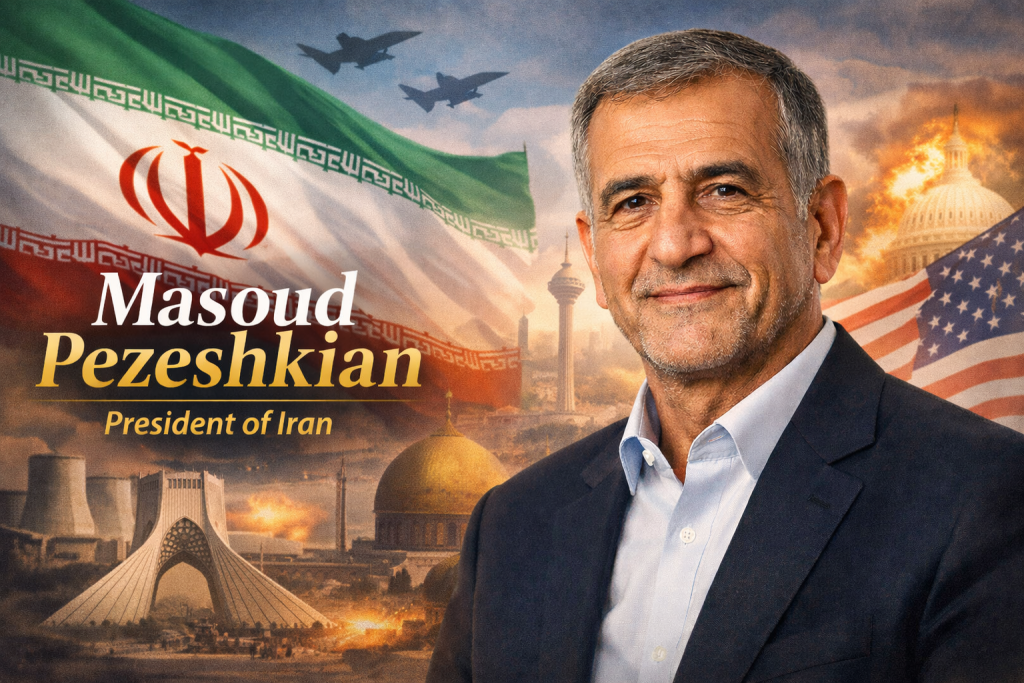
Masoud Pezeshkian has emerged as one of the most important political figures in the Middle East after becoming President of Iran in 2024. Known for his background as a heart surgeon and his moderate political stance, Pezeshkian represents a reformist voice within Iran’s political system. His presidency comes at a critical time when Iran faces economic pressure, regional tensions, and global scrutiny over its foreign policy and nuclear program.
Early Life and Education Masoud Pezeshkian was born on September 29, 1954, in Mahabad, a city in Iran’s West Azerbaijan province. He comes from an Azerbaijani Kurdish background and grew up in a multicultural environment. Pezeshkian pursued medical studies and later became a cardiac surgeon. He studied at Tabriz University of Medical Sciences, where he later served as a professor and medical administrator. His experience in healthcare helped shape his views on public service and social policy.
Entry into Politics Masoud Pezeshkian entered national politics in the late 1990s and quickly gained recognition for his administrative skills and moderate political views. During the presidency of Mohammad Khatami, Pezeshkian served as Iran’s Minister of Health from 2001 to 2005. In this role, he worked to improve healthcare access and modernize the country’s medical system. After his tenure as health minister, Pezeshkian was elected to the Iranian Parliament (Majlis) representing the city of Tabriz. Over the years, he became known for advocating reforms and criticizing hardline policies.
The 2024 Presidential Election Masoud Pezeshkian rose to national prominence after winning the 2024 Iranian presidential election. The election was held following the tragic death of former President Ebrahim Raisi, who died in a helicopter crash in May 2024. Pezeshkian ran as a reformist candidate, promising economic reforms, improved governance, and greater engagement with the international community. In the runoff election, he defeated conservative candidate Saeed Jalili, marking a significant moment for reformist supporters in Iran.
Political Views and Leadership Style Masoud Pezeshkian is often described as a moderate reformist within Iran’s political landscape. His leadership style focuses on dialogue, pragmatic policy decisions, and addressing domestic economic issues. Key aspects of his political approach include: Promoting economic recovery amid international sanctions Improving relations with global powers Supporting limited social reforms Addressing public dissatisfaction and economic hardship However, like all Iranian presidents, Pezeshkian operates under the authority of Iran’s Supreme Leader, Ali Khamenei, who
holds ultimate power over key national policies. Challenges Facing His Presidency Pezeshkian assumed office during a highly complex period for Iran. Economic Sanctions Iran’s economy has been heavily affected by international sanctions, particularly those imposed by the United States. Managing inflation, unemployment, and currency instability remains one of his biggest challenges. Nuclear Negotiations Iran’s nuclear program continues to be a major global issue. Negotiations involving countries such as the United Kingdom, France, and Germany aim to revive agreements that could ease sanctions.
Regional Tensions Iran’s relationships with regional rivals such as Israel and geopolitical conflicts across the Middle East add further pressure on Pezeshkian’s administration. Domestic Expectations Many Iranian citizens expect economic improvements, job opportunities, and social reforms. Balancing these expectations with political realities is a difficult task. Global Impact of His Presidency Masoud Pezeshkian’s leadership could influence the direction of Middle Eastern politics. If his administration succeeds in easing tensions and improving economic conditions, it could reshape Iran’s international relationships.