
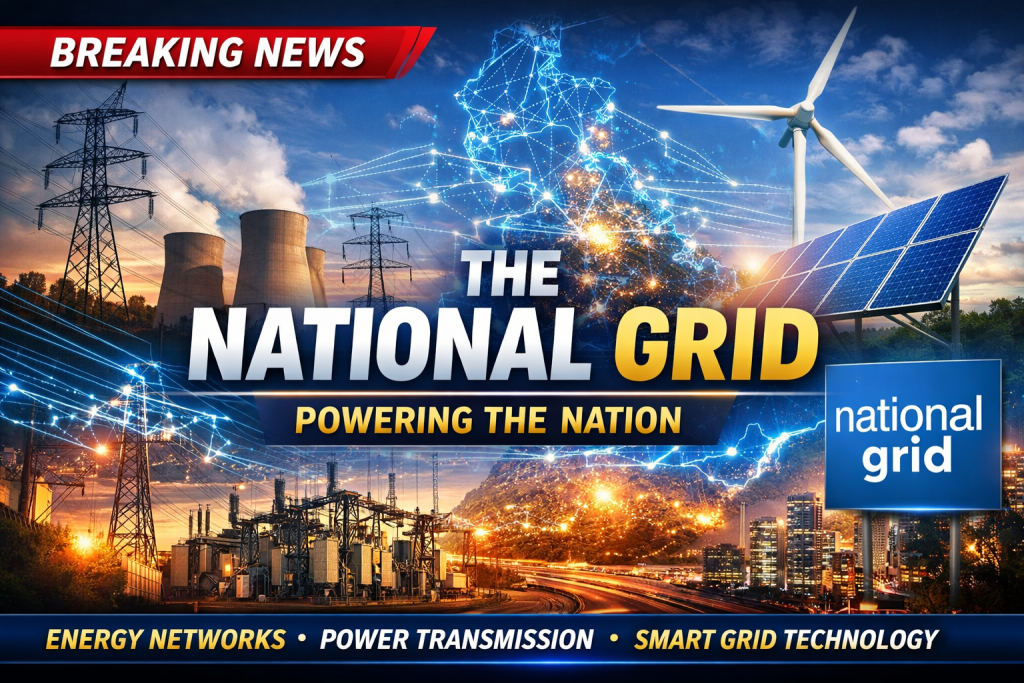
National Grid: The Backbone of Modern Electricity Systems
Electricity powers almost every aspect of modern life—from homes and hospitals to businesses and transportation systems. Behind this constant supply of power is a complex infrastructure known as the national grid. A national grid is a vast network of power stations, transmission lines, substations, and distribution systems that deliver electricity across an entire country. Without it, reliable electricity would not be possible on the scale required by modern societies.
What Is a National Grid A national grid is the interconnected system that transports electricity from power plants to consumers. Power is generated in facilities such as coal plants, hydroelectric dams, nuclear stations, and renewable energy sites like wind farms and solar parks. Once electricity is generated, it must travel long distances to reach cities and rural areas. The grid uses high-voltage transmission lines to move electricity efficiently across large regions. These lines connect to substations that step down the voltage before distributing power to homes and businesses through local distribution networks.
The Role of National Grid plc One of the most well-known organizations associated with energy transmission is National Grid plc, a multinational electricity and gas utility company headquartered in London. The company operates major energy networks in the United Kingdom and parts of the United States. Maintaining high-voltage electricity transmission systems Delivering natural gas to millions of customers Ensuring the balance between electricity supply and demand Investing in infrastructure to support renewable energy Through these efforts, the company plays a crucial role in maintaining reliable energy supplies for millions of households and businesses.
How the National Grid Works Electricity Generation Power plants generate electricity using various energy sources such as fossil fuels, nuclear power, hydroelectric dams, and renewable sources like wind and solar. Transmission Electricity is transported across long distances using high-voltage transmission lines. High voltage reduces energy loss during transmission. Substations Substations lower the voltage to safer levels so electricity can be distributed locally Distribution Local distribution networks deliver electricity to homes, offices, factories, and public infrastructure. This coordinated system allows electricity to flow seamlessly across regions,
ensuring stable and continuous power supply. Importance of the National Grid The national grid is essential for economic growth and daily life. Its key benefits include: Reliable electricity supply: Keeps homes, hospitals, and industries running. Energy sharing: Allows electricity generated in one region to power another. Efficiency: Large interconnected networks reduce energy waste. Support for renewable energy: Enables wind and solar power from remote locations to reach urban centers. Without a national grid, electricity generation and distribution would be fragmented and far less reliable.
Challenges Facing Modern Grids As energy demand grows and renewable sources expand, national grids face several challenges: Aging infrastructure that requires modernization Increased electricity demand from digital technologies and electric vehicles Integrating renewable energy sources that depend on weather conditions Protecting the grid from cyberattacks and technical failures Governments and energy companies worldwide are investing billions to upgrade grid systems and make them smarter and more resilient. The Future of National Grids The future of electricity systems lies in smart grids, which use advanced digital
technology to monitor and manage electricity flow in real time. Smart grids can improve efficiency, reduce outages, and support a larger share of renewable energy. Battery storage systems, artificial intelligence, and decentralized power generation will also play key roles in shaping the next generation of national grids. The national grid is the backbone of modern energy systems. By connecting power plants to consumers through a vast network of transmission and distribution infrastructure, it ensures reliable electricity for millions of people every day. As the world transitions toward cleaner energy and smarter technology.