
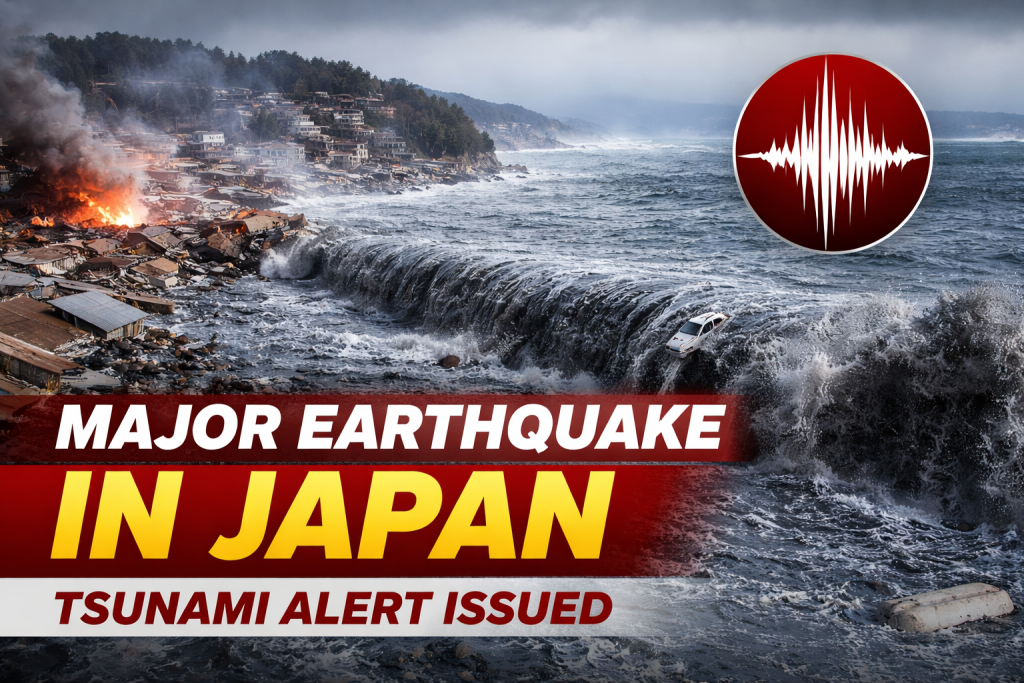
Japan Earthquake Today: Powerful 7.5 Magnitude Quake Triggers Tsunami Alerts in Northern Japan
A powerful earthquake measuring 7.5 magnitude struck off the northeastern coast of Japan on Monday, April 20, 2026, triggering tsunami warnings and emergency evacuations in several coastal regions. Earthquake Strikes Northern Japan According to officials, the earthquake occurred near the Sanriku Coast at a depth of approximately 10 kilometers below the ocean floor. The tremor hit around 4:53 p.m. local time, shaking buildings across multiple regions and causing widespread panic among residents. Authorities immediately issued tsunami alerts after the quake, warning residents along the Pacific coastline to move to higher ground.
Tsunami Warning Issued
Japan’s Meteorological Agency warned that tsunami waves up to 3 meters (10 feet) could hit coastal areas, especially in the northern prefectures of: Iwate Prefecture Aomori Prefecture Hokkaido Initial tsunami waves measuring about 80 centimeters were recorded at ports in Iwate, confirming the threat posed by the offshore earthquake. Emergency services urged residents to evacuate immediately and avoid coastal zones until further notice.
Emergency Response and Safety Measures
Following the earthquake, the Japanese government activated emergency response systems, and Prime Minister Sanae Takaichi established a national disaster task force. Key emergency actions included: Suspension of bullet train services in northern regions Ships leaving ports to avoid tsunami damage Inspection of power and infrastructure facilities Deployment of rescue and emergency teams Transportation disruptions were reported, particularly in Aomori, where bullet train operations were temporarily halted as a precaution.
Damage and Casualty Updates
As of the latest reports, no major casualties have been confirmed, though damage assessments are still ongoing. Officials stated that buildings experienced strong shaking, especially in areas recording upper-level seismic intensity, which can damage structures and cause falling debris injuries. Authorities also warned that aftershocks are likely in the coming hours or days.
Japan’s Earthquake Risk and History
Japan lies along the Pacific Ring of Fire, one of the most seismically active zones in the world. Earthquakes are common in the region due to tectonic plate movement beneath the Pacific Ocean.
The latest quake revived memories of the devastating 2011 Tōhoku Earthquake and Tsunami, which killed more than 22,000 people and caused widespread destruction across northeastern Japan.
What Happens Next?
Authorities continue to monitor the situation closely, especially the risk of additional tsunami waves and strong aftershocks. Rescue teams remain on standby, and residents have been advised to stay alert for emergency updates. Experts emphasize that preparedness and rapid evacuation are critical in minimizing casualties during such disasters.
The powerful earthquake that struck northern Japan today has triggered widespread emergency measures and tsunami alerts across multiple coastal regions. While no large-scale casualties have been confirmed yet, authorities remain on high alert as aftershocks and tsunami risks continue. Residents in affected areas are urged to follow official instructions and prioritize safety.