
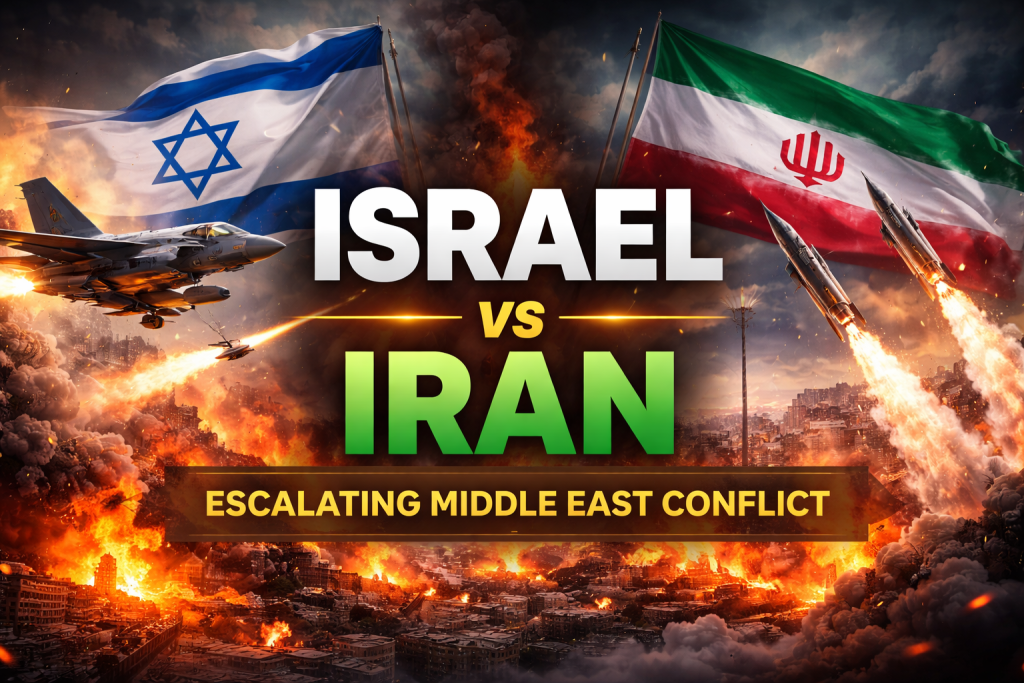
Israel–Iran Conflict Escalates: Rising Tensions Threaten Wider Middle East War
The long-standing hostility between Israel and Iran has once again escalated, raising fears of a wider war across the Middle East. Military strikes, missile attacks, and growing regional involvement have intensified tensions between the two powerful rivals. Analysts warn that if the conflict continues to grow, it could destabilize the entire region and impact global energy markets.
Background of the Israel–Iran Conflict The rivalry between Israel and Iran dates back decades and is rooted in political, ideological, and military disagreements Iran’s leadership has long opposed Israel’s existence and has supported groups that confront Israel in the region, including Hezbollah in Lebanon and Hamas in Gaza. Israel, on the other hand, views Iran as its biggest security threat particularly due to Iran’s missile capabilities and its controversial nuclear program. Tensions have often been expressed through cyber warfare, covert operations, and proxy conflicts rather than direct military clashes. However, recent developments suggest the conflict is becoming more direct dangerous
Recent Military Escalation In the latest developments, Israel reportedly carried out targeted airstrikes against Iranian military facilities and suspected weapons storage sites linked to Iranian forces operating abroad. The strikes were designed to prevent Iran from strengthening its military presence near Israeli borders. Iran responded strongly, accusing Israel of aggression and warning that retaliation would follow. Iranian officials stated that any attack on Iranian assets would trigger a “powerful response. Missile launches and drone activities have been reported in several areas connected to the conflict, increasing concerns about a full-scale confrontation.
Role of Regional Allies and Proxy Groups The Israel–Iran rivalry rarely occurs in isolation. Several regional actors are often involved indirectly. Groups backed by Iran, particularly Hezbollah, play a significant role in the conflict dynamics. Hezbollah has thousands of rockets capable of reaching Israeli cities and has previously engaged in wars with Israel. Meanwhile, Israel maintains close military cooperation with the United States, which provides military aid, intelligence support, and advanced defense systems such as the Iron Dome These alliances mean that even a limited clash could rapidly expand into a broader regional confrontation.
Global Impact and Economic Concerns The Israel–Iran conflict has implications far beyond the Middle East. One of the biggest global concerns is the potential disruption of oil supplies through the Strait of Hormuz, a vital shipping route for global energy exports. If tensions escalate further, oil prices could surge, impacting economies worldwide. Airlines, shipping companies, and global markets closely monitor the situation for signs of instability. Financial markets often react quickly to Middle East tensions, especially when major oil-producing countries are involved
International Reactions Many countries and international organizations are urging restraint from both sides The United Nations has called for dialogue and de-escalation, warning that further military action could lead to widespread humanitarian consequences. Several European and Asian governments have also expressed concern, emphasizing the need for diplomatic solutions rather than military confrontation. What Could Happen Next Limited Military Exchanges – Occasional strikes and retaliations without full-scale war. Proxy War Expansion – Increased involvement of regional groups backed by Iran.
Full Regional Conflict – Direct war involving multiple Middle Eastern nations. The escalating tensions between Israel and Iran highlight one of the most dangerous geopolitical rivalries in the modern world. With regional alliances, advanced weapon systems, and global economic stakes involved, any major escalation could have far-reaching consequences. For now, the international community continues to push for diplomacy and restraint in hopes of preventing a broader Middle East war.