
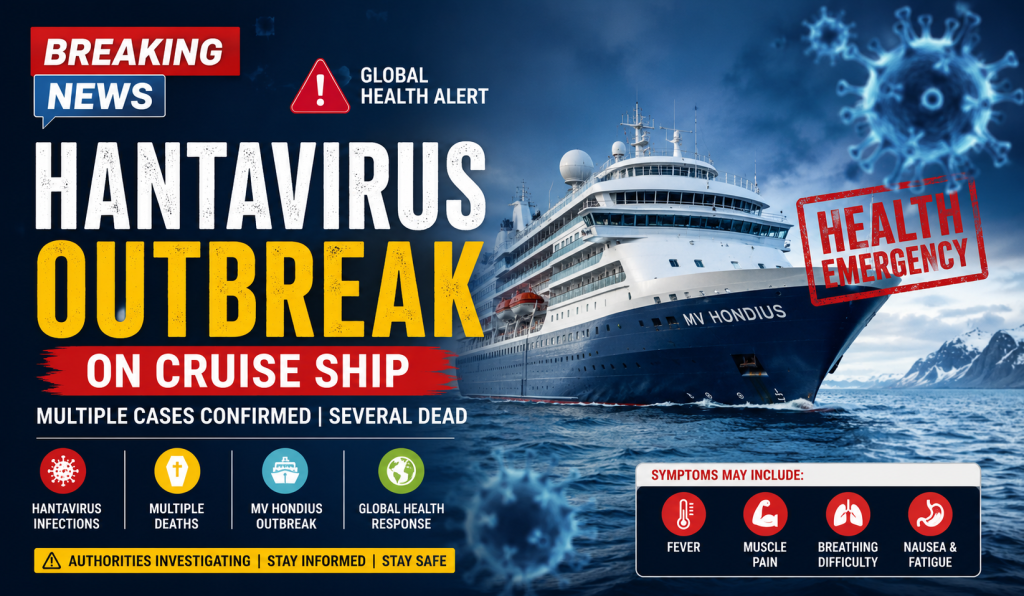
Deadly Hantavirus Outbreak Reported on South Atlantic Cruise Ship
A suspected outbreak of hantavirus infections aboard the expedition cruise ship MV Hondius has triggered an international public health response after multiple passengers became seriously ill and at least three people died. Health authorities across Europe, the Americas, Africa, and Asia are now monitoring passengers and crew linked to the voyage as fears grow over the rare Andes strain of hantavirus.
The Dutch-operated vessel was traveling through remote South Atlantic regions after departing from Ushuaia, Argentina, when passengers reportedly began developing fever, breathing problems, and severe flu-like symptoms. The ship later came under intense scrutiny after several infections were confirmed and emergency medical evacuations were ordered.
What Is Happening on the MV Hondius?
The outbreak involves the Andes virus strain, one of the few hantaviruses known to allow limited human-to-human transmission. Most hantavirus infections typically spread through contact with infected rodent urine, saliva, or droppings. However, investigators are now examining whether close-contact transmission may also have occurred aboard the ship.
According to international health agencies: Multiple confirmed and suspected cases have been identified At least three passengers have died Several patients were airlifted for emergency treatment More than a dozen countries are conducting contact tracing WHO currently says the wider public risk remains low The cruise ship is expected to dock in the Canary Islands, where health teams from multiple countries, including the U.S. CDC, are preparing quarantine and screening operations.
Symptoms Reported Among Passengers
Passengers and crew reportedly experienced symptoms including: High fever Muscle pain Extreme fatigue Nausea and vomiting Difficulty breathing Severe lung complications in critical cases Doctors warn that hantavirus pulmonary syndrome can rapidly worsen and become fatal without intensive medical care.
Global Response Intensifies
The World Health Organization, CDC, European health agencies, and several national governments have activated monitoring systems following the outbreak. The United States has already announced medical repatriation plans for American passengers aboard the vessel.
The UK, South Africa, Singapore, Spain, India, and the Netherlands are also tracking travelers who may have been exposed during the voyage. Reports indicate that some passengers left the ship before the outbreak was fully confirmed, increasing concerns about international spread.
Could This Become a Larger Outbreak?
Health experts say the current situation does not resemble a pandemic-level event. The Andes strain can spread between humans in rare situations involving prolonged close contact, but transmission is considered difficult compared to viruses like COVID-19.
Authorities continue to investigate whether the infections originated from rodent exposure during shore excursions or through onboard transmission among passengers and crew.
Cruise Industry Under Pressure Again
The incident has revived concerns about infectious disease risks on cruise ships, especially during long voyages in remote regions where medical access is limited. Public health officials are expected to review emergency preparedness procedures and onboard disease surveillance protocols following the investigation. While officials stress that the overall public threat remains low, the MV Hondius outbreak has become one of the most closely watched infectious disease incidents of 2026 so far.