SAVE Plan Notices Issued by Education Department
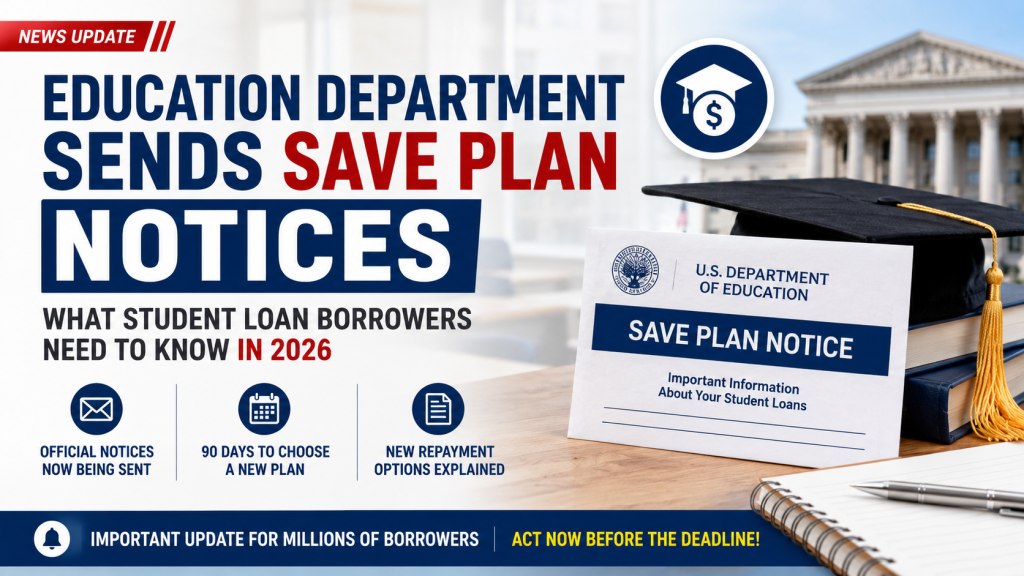
Department of Education has begun sending SAVE Plan notices to millions of federal student loan borrowers. Learn why the SAVE Plan is ending, what borrowers must do, available repayment options, and key deadlines.
The U.S. Department of Education has officially begun notifying millions of federal student loan borrowers that the Saving on a Valuable Education (SAVE) repayment plan is ending. The notices mark one of the most significant changes to the federal student loan system in recent years, requiring affected borrowers to choose a new repayment option within a specified timeframe or face automatic enrollment into another repayment plan.
The move affects approximately 7.5 million borrowers who previously enrolled in the SAVE Plan, an income-driven repayment program introduced during the Biden administration. Following court rulings and subsequent policy changes, the Department of Education is now transitioning borrowers to legally authorized repayment options.
Why Is the SAVE Plan Ending?
The SAVE Plan was introduced to reduce monthly payments for eligible federal student loan borrowers by calculating payments based on income and family size. It also included provisions that accelerated loan forgiveness for certain borrowers.
However, the program faced multiple legal challenges. Federal courts ultimately ruled against the implementation of the plan, leading the Department of Education to discontinue it and begin transitioning borrowers into alternative repayment programs. As a result, borrowers can no longer enroll in the SAVE Plan, and existing participants must select another repayment option.
Notices Are Being Sent in Phases
Beginning in July 2026, federal loan servicers started sending official notices to borrowers currently enrolled in the SAVE Plan. Why the SAVE Plan is ending. The available repayment options. Individual deadlines for selecting a new repayment plan. Consequences of failing to choose a replacement plan. The Department has indicated that notices will be distributed in phases over several months, ensuring borrowers have adequate time to review their options.
Borrowers Have 90 Days to Choose a New Plan
After receiving an official notice, borrowers generally have 90 days to enroll in a new eligible repayment plan. If no action is taken before the deadline, loan servicers may automatically place borrowers into a standard repayment option, which could result in higher monthly payments than many borrowers previously paid under SAVE. The Department encourages borrowers to review all available plans carefully before making a decision.
New Repayment Options Available
Several repayment plans remain available for eligible federal student loan borrowers.
Repayment Assistance Plan (RAP).
One of the newest options is the Repayment Assistance Plan (RAP), designed to provide income-based monthly payments while maintaining long-term repayment flexibility.
Key features include:
- Monthly payments based on income.
- Extended repayment period.
- Eligibility for Public Service Loan Forgiveness where applicable.
- Automatic payment incentives in certain situations.
Income-Based Repayment (IBR)
Income-Based Repayment continues to serve as a major alternative for many borrowers. Payments calculated using income. Protection against unaffordable monthly bills. Potential loan forgiveness after meeting program requirements. Many former SAVE borrowers are expected to transition into IBR because of its established eligibility rules.
Standard Repayment Plans
Standard Repayment Plan Tiered Standard Plan These plans typically involve fixed monthly payments and shorter repayment timelines, although monthly costs may be higher compared with income-driven options.
What Borrowers Should Do Immediately
Borrowers receiving SAVE Plan notices should avoid delaying action.
- Read the official notice carefully.
- Review available repayment plans.
- Compare estimated monthly payments.
- Submit a repayment plan application before the deadline.
- Confirm enrollment with the loan servicer.
- Keep copies of all confirmation emails and documents.
Taking action early may help avoid processing delays as millions of borrowers transition simultaneously.
Impact on Public Service Loan Forgiveness (PSLF)
Borrowers working in qualifying public service careers should carefully evaluate which repayment option best supports their eligibility for Public Service Loan Forgiveness (PSLF).
Certain income-driven repayment plans continue to count toward PSLF requirements, while not every repayment option provides the same benefits. Borrowers pursuing loan forgiveness should verify eligibility before switching plans.
Why This Matters
The end of the SAVE Plan represents one of the largest changes to federal student loan repayment policy in years. Monthly payment amounts. Total repayment costs. Interest accumulation. Long-term loan forgiveness eligibility. Overall financial planning. Financial experts recommend comparing all available repayment options rather than automatically accepting default enrollment.
The Department of Education is expected to continue issuing notices throughout the transition period while implementing updated federal repayment programs. Borrowers should regularly monitor communications from their loan servicer and the Department of Education to avoid missing important deadlines or required actions. Officials have emphasized that early action can help borrowers maintain uninterrupted repayment and avoid unnecessary complications.
The Education Department’s SAVE Plan notices signal a major shift in the federal student loan landscape. Millions of borrowers now face important decisions regarding how they will repay their loans in the years ahead. Choosing the appropriate repayment plan can help borrowers manage monthly payments, remain eligible for forgiveness programs where applicable, and avoid automatic enrollment into less favorable repayment options. As notices continue to be distributed nationwide, borrowers are encouraged to review their options carefully and respond before their individual deadlines expire.