UK Forces Storm Russian Oil Tanker in Dramatic English Channel Operation
The United Kingdom has launched one of its most significant maritime enforcement actions against Russia’s sanctions-evasion network, intercepting a Russian-linked oil tanker in the English Channel. The operation highlights growing Western efforts to disrupt the so-called “shadow fleet” that has helped Moscow continue exporting oil despite extensive international sanctions imposed since the war in Ukraine began.
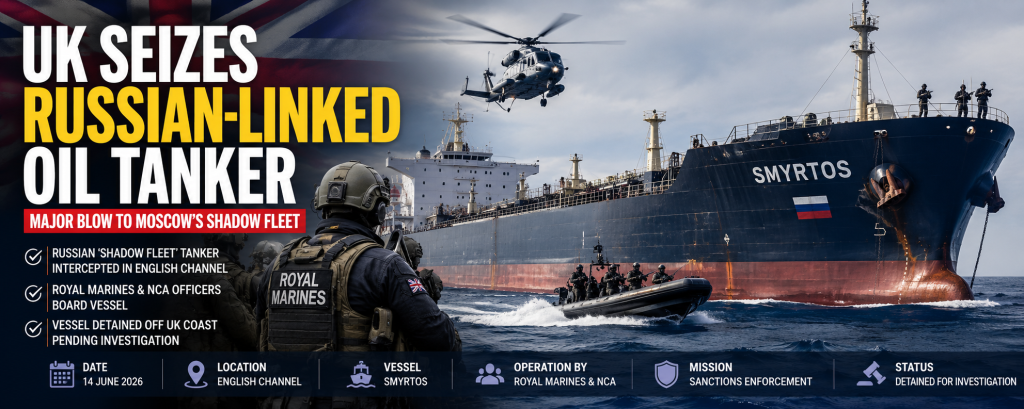
British authorities confirmed that the tanker, identified as SMYRTOS, was intercepted on June 14, 2026, during a coordinated operation involving Royal Marine Commandos and officers from the National Crime Agency. The vessel is currently being held off the southern coast of Britain while investigators examine its activities and ownership structure.
What Is Russia’s Shadow Fleet?
The term “shadow fleet” refers to a vast network of aging oil tankers operating through complex ownership structures, shell companies, and frequently changing flags. These vessels are often used to transport Russian crude oil while avoiding sanctions imposed by Western governments.
Many of these ships have been accused of disabling tracking systems, manipulating shipping records, or conducting ship-to-ship transfers at sea to conceal the origin of cargo. Western governments argue that these practices help Russia continue generating billions of dollars in oil revenue despite restrictions designed to limit funding for its military operations.
How the Operation Unfolded
According to British officials, the operation was carefully planned and executed under both domestic and international maritime law. Royal Marine Commandos boarded the vessel while National Crime Agency officers participated in the enforcement action.
Reports indicate the mission involved support from Royal Navy assets, surveillance aircraft, and helicopters. The tanker was stopped during its transit through one of the world’s busiest shipping routes—the English Channel—before being escorted for further investigation. The seizure represents a notable escalation in Britain’s strategy against vessels suspected of helping Russia bypass sanctions.
Prime Minister Sends Strong Message
UK Prime Minister Keir Starmer praised the operation and described it as another significant step in efforts to weaken Russia’s ability to finance its war in Ukraine.
British officials emphasized that individuals and organizations attempting to assist sanctions evasion would face increasing scrutiny and enforcement action. Government statements framed the interception as a warning that the United Kingdom is prepared to take direct action against vessels suspected of participating in illicit oil transportation networks.
Increasing Pressure Across Europe
The UK operation comes amid a broader European campaign targeting Russia-linked maritime activities. Earlier this month, French authorities intercepted another tanker believed to be connected to Russia’s oil export network. That operation, conducted with support from allied countries, demonstrated increasing coordination among European nations seeking to enforce sanctions more aggressively.
Several European governments have expanded legal authorities allowing inspections, detentions, and investigations of vessels suspected of sanctions violations. The European Union has also explored stronger maritime enforcement measures in key shipping corridors.
Why the English Channel Matters
The English Channel serves as one of the most strategically important maritime routes in the world. Thousands of vessels pass through the narrow waterway each year, connecting the Atlantic Ocean with ports across Northern Europe.
Because of its location, the Channel has become a critical transit point for vessels linked to Russian oil exports. Monitoring and enforcement operations in the region have intensified as Western governments seek to ensure sanctions remain effective.
Maritime analysts note that controlling access to major shipping routes can significantly affect the ability of sanctioned entities to move goods internationally.
Russia’s Response
Russian officials have consistently criticized Western actions targeting shadow fleet vessels. Moscow argues that many inspections and detentions violate international maritime principles and unfairly target civilian shipping.
The Kremlin has previously condemned similar European operations and warned that aggressive enforcement actions could increase tensions at sea. Russian representatives have also rejected the characterization of many vessels as part of a sanctions-evasion network.
Investigators are expected to examine the tanker’s documentation, ownership records, cargo details, and operational history. Authorities will determine whether the vessel violated sanctions regulations or engaged in activities designed to conceal the origin or destination of Russian oil. If violations are confirmed, the case could lead to additional sanctions, financial penalties, or legal proceedings against individuals and organizations connected to the vessel.
The interception of SMYRTOS signals that Britain is prepared to move beyond monitoring and toward direct enforcement actions against ships suspected of supporting Russia’s sanctions-busting oil trade. As Western governments continue tightening restrictions, maritime enforcement is likely to play an increasingly important role in efforts to limit Russia’s energy revenues and economic resilience.