
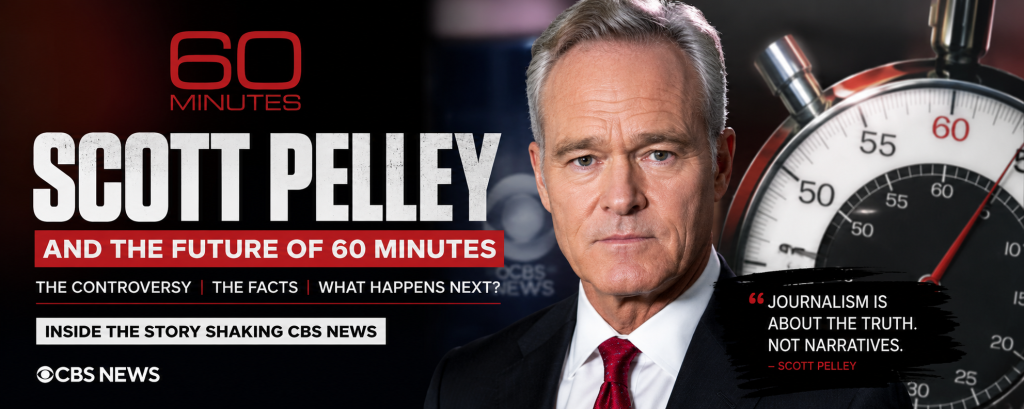
Scott Pelley’s Exit From 60 Minutes Sparks Major Debate Over Journalism and Editorial Independence
The recent departure of veteran journalist Scott Pelley from 60 Minutes has sparked widespread debate across the media industry. As one of the most respected television correspondents in the United States, Pelley’s exit marks a significant moment for both CBS News and the future of investigative journalism. The controversy surrounding his departure has generated intense discussion about editorial independence, newsroom leadership, and the changing landscape of television news.
Scott Pelley built a reputation over decades as one of America’s most trusted journalists. His work covering major international conflicts, political developments, and investigative reports earned him numerous awards and widespread recognition.
After joining CBS News, Pelley became a familiar face on 60 Minutes, a program widely regarded as one of the most influential news magazines in television history. His interviews with world leaders, business executives, and public figures helped shape public understanding of major global events. For many viewers, Pelley represented the traditional values of journalism: accuracy, fairness, and accountability.
Reports indicate that internal disagreements had been developing within CBS News for some time. As media organizations across the world adapt to changing audience habits and digital competition, many newsrooms have faced pressure to modernize their operations.
According to multiple reports, disagreements emerged regarding editorial direction, newsroom management, and the future vision for 60 Minutes. These tensions reportedly intensified during leadership changes within the organization. While CBS News has maintained that management decisions were made to strengthen the network’s future, critics argue that the changes could impact the program’s long-standing journalistic culture.
The controversy became public after reports emerged of a heated internal meeting involving senior newsroom figures. During the discussions, concerns were allegedly raised about editorial standards and decision-making processes. Pelley later expressed concerns regarding the direction of the organization and the potential influence of management on journalistic content. His comments quickly attracted national attention, with journalists, media analysts, and viewers weighing in on the dispute.
Supporters of Pelley argue that experienced journalists play a critical role in protecting editorial independence. Others believe that media organizations must evolve to remain competitive in a rapidly changing digital environment. Editorial independence is considered one of the foundational principles of journalism. It ensures that news coverage remains free from improper influence by political, commercial, or organizational interests.
When journalists believe that reporting decisions are being influenced by outside pressures, concerns often arise regarding public trust and credibility. This is particularly important for investigative programs like 60 Minutes, which have built their reputation on uncovering complex stories and holding powerful institutions accountable. The debate surrounding Pelley highlights broader questions facing the modern news industry:
- How should media organizations balance business goals with journalistic integrity?
- What role should newsroom leadership play in editorial decisions?
- How can traditional news programs adapt to changing audience expectations while maintaining credibility?
These questions extend far beyond a single organization and affect newsrooms worldwide. Media experts and journalism organizations have closely followed developments surrounding the dispute. Some commentators view the situation as part of a larger transformation occurring throughout the news industry. Traditional television networks face increasing competition from digital platforms, social media, independent creators, and streaming services. As audience behavior changes, news organizations are experimenting with new formats, technologies, and content strategies.
At the same time, many journalists worry that commercial pressures could weaken the investigative reporting that has long served the public interest. The discussion generated by Pelley’s departure reflects these broader industry concerns. Since its launch in 1968, 60 Minutes has become one of the most successful and respected television programs in history. The show has earned countless awards for investigative reporting and has influenced public debate on major national and international issues.
Over the decades, the program has featured legendary correspondents whose work helped define modern broadcast journalism. Its reputation has been built on thorough reporting, challenging interviews, and long-form storytelling. The current controversy raises questions about how the program will evolve in the years ahead and whether it can maintain the standards that made it a trusted source of news for generations.