
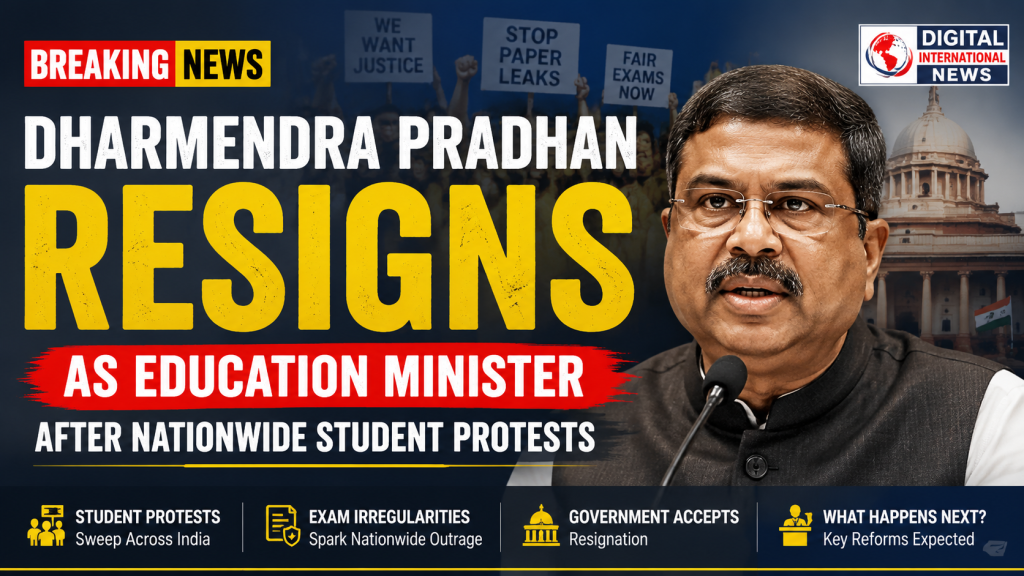
Dharmendra Pradhan Resigns as Education Minister Amid Nationwide Student Protests
India’s Education Minister Dharmendra Pradhan has resigned following weeks of nationwide student protests over examination-related issues. Here’s what happened, why it matters, and what comes next.
In a major political development, Dharmendra Pradhan has resigned as India’s Union Education Minister after weeks of nationwide student-led protests demanding accountability over examination-related controversies. The resignation marks one of the most significant cabinet changes in recent years and follows mounting public pressure over concerns surrounding the country’s education and examination system.
The announcement came after sustained demonstrations led primarily by students and young professionals, who accused the government of failing to prevent repeated examination irregularities and paper leak allegations. Protesters argued that such incidents had damaged public trust in India’s competitive examination process and affected the future of millions of aspirants.
The resignation follows weeks of protests triggered by concerns over alleged examination paper leaks and demands for greater transparency within India’s education system. Student organizations, civil society groups, and opposition parties called for stronger accountability, arguing that repeated controversies surrounding competitive examinations required political responsibility. As demonstrations expanded across several cities, pressure intensified on the Union government.
According to multiple reports, Dharmendra Pradhan chose to step down after acknowledging the growing public unrest and emphasizing that the interests of students should remain the government’s highest priority. The protests quickly evolved into one of India’s largest youth-led movements in recent years.
Thousands of students participated in marches, sit-ins, and peaceful demonstrations demanding:
- Greater transparency in national entrance examinations
- Stronger security against paper leaks
- Faster investigations into examination irregularities
- Reforms within examination authorities
- Protection of students’ academic futures
The movement attracted nationwide attention and sparked widespread debate about educational reforms, competitive examinations, and institutional accountability.
Following his resignation, Dharmendra Pradhan shared a public message stating that he accepted moral responsibility and did not want continuing controversy to harm students or the country’s education system. He thanked students, teachers, parents, and education officials while expressing hope that ongoing reforms would continue under new leadership.
The central government accepted Pradhan’s resignation and moved quickly to ensure continuity within the Ministry of Education. According to reports, senior Union Minister Pralhad Joshi has been entrusted with the Education Ministry portfolio until further administrative decisions are finalized. Government officials also indicated that education reforms and examination system improvements would remain a priority.
Dharmendra Pradhan assumed office as India’s Education Minister in July 2021 after previously serving in several key ministries, including: Petroleum and Natural Gas Steel Skill Development and Entrepreneurship During his tenure, the Ministry of Education worked on implementing the National Education Policy (NEP), expanding digital learning initiatives, promoting skill development, and pursuing reforms in higher education.
Leaders across the political spectrum responded swiftly to the resignation. Supporters described the decision as an act of political accountability, while opposition leaders argued it reflected the seriousness of the concerns raised by students. Education experts have also renewed calls for comprehensive reforms in examination administration, stronger digital security measures, and improved governance of national testing agencies.