Trump Accounts for Kids: Eligibility, Benefits, and How the Program Works
A new government-backed savings initiative known as Trump Accounts is drawing nationwide attention in 2026. Designed to help children build long-term wealth from an early age, the program offers eligible families a unique opportunity to receive a federal investment contribution while encouraging financial literacy and future planning.
The initiative, created under federal legislation passed during President Donald Trump’s second term, aims to provide children with an early stake in the U.S. economy through tax-advantaged investment accounts. Trump Accounts are special investment accounts established for children under the age of 18. The accounts are held in the child’s name and managed by a parent or legal guardian until adulthood.
Funds deposited into these accounts are invested in low-cost stock market index funds or exchange-traded funds (ETFs), allowing the money to grow over time through long-term market performance. According to federal guidelines, the accounts are designed to encourage wealth creation, savings habits, and financial independence for future generations.
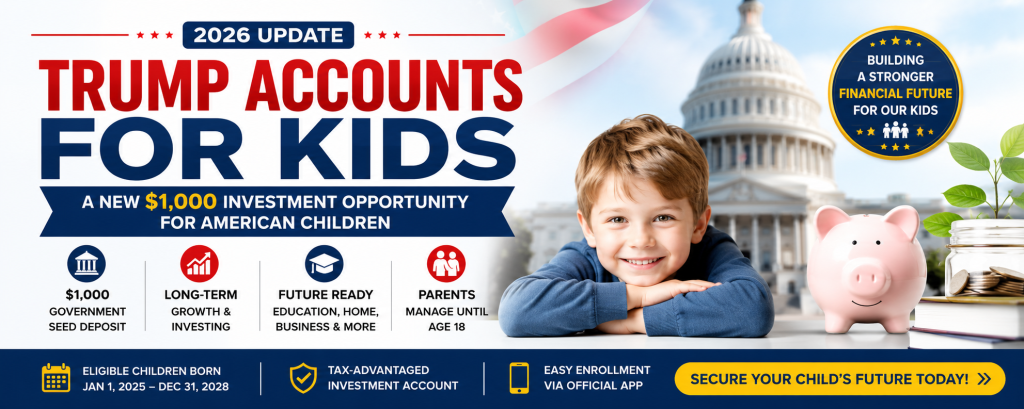
Any U.S. child under 18 with a valid Social Security number can generally have a Trump Account. However, children born between January 1, 2025, and December 31, 2028, qualify for a special government-funded deposit of $1,000, which serves as a starting investment in the account.
Parents, grandparents, employers, charities, and other approved contributors may add money to a child’s account.Current rules allow annual contributions of up to $5,000 per year, helping families steadily build long-term savings for education, housing, entrepreneurship, or future financial goals.
The money remains invested until the child reaches adulthood. Most withdrawals become available after age 18. Higher education expenses Purchasing a first home Starting a business Long-term investing and retirement planning Certain tax rules and penalties may apply if funds are used outside approved categories. The U.S. Treasury recently launched an official Trump Accounts digital platform and mobile application to simplify enrollment and account management.
Parents can register through the official system and complete the required documentation to secure eligibility for government contributions and future deposits. The platform is expected to become a central hub for account tracking, contributions, and investment monitoring. The program has also attracted support from major corporations and philanthropic organizations.
Several large financial institutions and private donors have announced plans to contribute additional funding to eligible children’s accounts. Supporters argue that early investment exposure can help reduce wealth inequality and provide future economic opportunities for younger generations. Starting investments at birth allows compound growth to work over many years.Children can learn about investing, saving, and responsible money management. Eligible newborns receive a one-time $1,000 federal contribution. Funds may help support college costs, housing purchases, or entrepreneurship.
While many financial experts welcome the idea of encouraging early investing, some analysts argue that existing savings vehicles such as 529 education plans and Roth IRAs may offer stronger tax advantages in certain situations. Others have raised concerns about enrollment complexity and whether all eligible families will participate. Financial advisors generally recommend comparing available options before making long-term decisions.