Fast Food Brands Get Snarky After McDonald’s CEO Burger Tasting Mishap
The fast-food industry is no stranger to playful rivalries, but a recent viral moment involving the CEO of McDonald’s has sparked a new wave of social-media banter among competing brands. What began as a simple promotional video quickly turned into a trending topic online after viewers—and rival companies mocked the CEO’s burger-tasting style. The incident has reignited the long-standing “burger wars” between major chains such as Burger King and Wendy’s, showing once again how social media can turn even the smallest marketing moment into a viral spectacle.
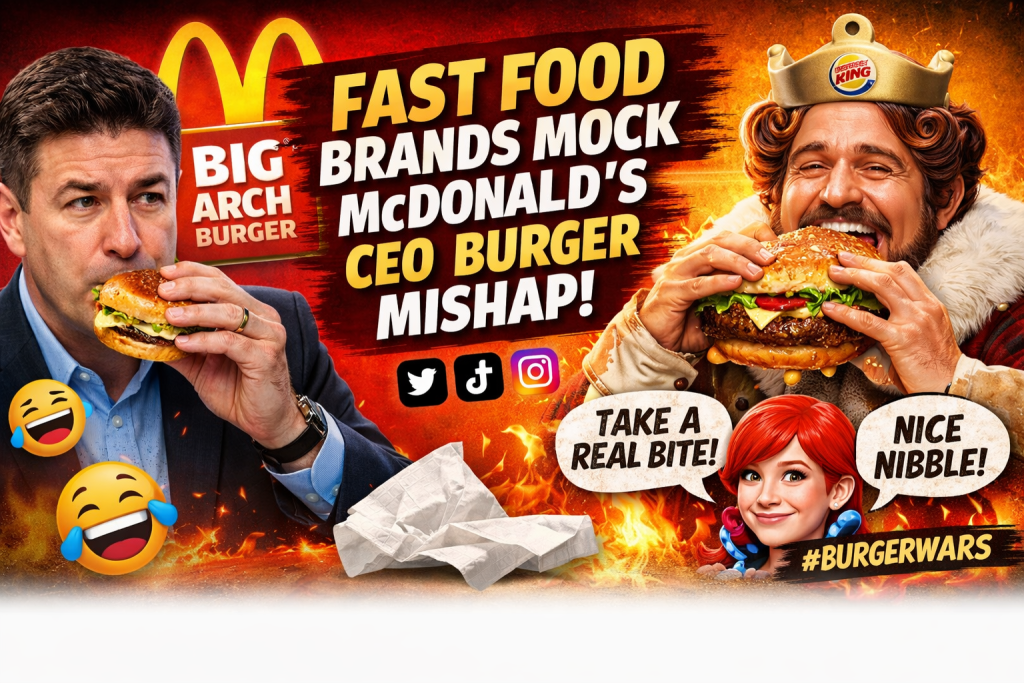
The Viral Video That Started It All The controversy began when Chris Kempczinski, the CEO of McDonald’s, appeared in a short promotional video tasting the company’s new burger, the Big Arch. The video was meant to highlight the taste and quality of the new menu item. However, viewers quickly noticed something unusual about the clip. Instead of taking a big bite like most fast-food commercials show, Kempczinski appeared hesitant and took only a small bite of the burger. His formal description of the sandwichreferring to it as a “product also struck many viewers as overly corporate.
Rival Brands Join the Conversation The internet’s reaction alone might have been enough to make the video viral, but competing fast-food chains quickly joined the fun. One of the most notable responses came from Burger King. The company posted a playful video featuring one of its executives enthusiastically biting into a Whopper, clearly contrasting with the restrained bite seen in the McDonald’s clip. The message was subtle but effective: burgers should be enjoyed boldly, not cautiously. Meanwhile, Wendy’s—already famous for its sarcastic social-media presence—joined the conversation with witty posts that lightly teased the situation. Although the brand didn’t directly attack McDonald’s,
Social Media Turns It Into a Marketing Moment The viral reaction shows how quickly the internet can transform ordinary marketing into a trending topic. What was intended as a simple promotional video became a global conversation about fast food branding, authenticity, and corporate messaging. Marketing experts say the situation demonstrates the power of social media engagement. In today’s digital world, brands are constantly watching each other and looking for opportunities to participate in trending conversations. For fast-food chains especially, humor and quick responses have become key marketing tools. Rival companies often use playful jabs to entertain audiences while promoting their own products.
The Long History of the “Burger Wars Competition between McDonald’s and Burger King dates back decades. Both brands have repeatedly launched advertising campaigns designed to highlight their differences. Burger King has often positioned itself as the rebellious alternative to McDonald’s, promoting its flame-grilled burgers as a more flavorful option. Meanwhile, McDonald’s has traditionally relied on its massive global presence, consistent menu, and brand recognition. Wendy’s has also joined these rivalries in recent years, particularly through its sharp and humorous social-media strategy that frequently goes viral.
Unexpected Benefits for McDonald’s Despite the online jokes and playful mockery, the viral moment may actually benefit McDonald’s. Any time a brand dominates social-media conversation, it receives valuable exposure. Millions of people who may not have known about the Big Arch burger are now aware of it. Marketing analysts often point out that viral attention—whether positive or negative—can drive curiosity and increase product interest. In this case, the controversy surrounding the video has brought enormous attention to McDonald’s latest menu item.
The Power of Authentic Branding The reaction to the video also highlights an important lesson for modern marketing: authenticity matters. Consumers today expect brands to appear genuine and relatable. When promotional content feels overly scripted or corporate, audiences are quick to notice—and sometimes mock it. In contrast, competitors like Burger King and Wendy’s often succeed on social media because their content feels more casual, humorous, and spontaneous.