
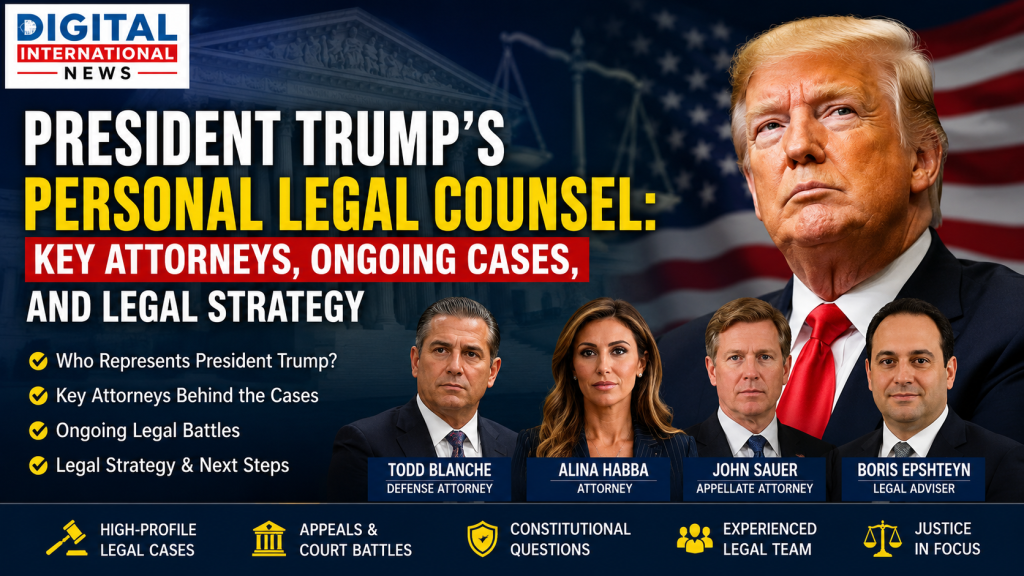
Who Represents President Trump? Legal Counsel Guide
President Trump’s Legal Team Continues to Shape Major Court Battles
President Donald Trump’s personal legal counsel remains one of the most closely watched legal teams in the United States as several high-profile civil and appellate cases continue to attract national and international attention. While the White House Counsel provides legal advice to the presidency as an institution, Trump’s personal attorneys represent him in matters involving private legal disputes, appeals, and litigation.
Over the past several years, Trump’s legal team has evolved significantly, with experienced trial lawyers, appellate specialists, and senior legal advisers taking on different responsibilities depending on the nature of each case. Several attorneys who previously represented Trump have since accepted positions within the federal government, while new private counsel has been retained for ongoing litigation.
One important distinction often misunderstood by the public is the difference between a President’s personal attorney and the White House Counsel. The White House Counsel serves as the chief legal adviser to the Office of the President and represents the interests of the executive branch. Personal legal counsel, by contrast, represents the President in private legal matters, including civil lawsuits, appeals, and cases unrelated to official government duties. This separation helps ensure that government legal resources are not used for personal legal defense.
Trump has been represented by several well-known attorneys during different phases of his legal challenges.
Todd Blanche, who became Trump’s lead criminal defense attorney before later joining the Department of Justice in a senior leadership role.
Alina Habba, who has represented Trump in multiple civil matters and frequently appears in media discussing legal developments.
John Sauer, who argued important constitutional and appellate issues on Trump’s behalf before serving in government.
Boris Epshteyn, who has acted as a senior legal adviser and coordinator of Trump’s broader legal strategy.
As legal proceedings change, the composition of Trump’s private legal team continues to evolve depending on each case’s requirements. Trump’s attorneys remain active in several ongoing appellate proceedings involving defamation judgments and other civil matters.
Recent court filings indicate that his legal team continues pursuing appeals while seeking additional time to review complex litigation records and prepare constitutional arguments. One notable matter involves continued efforts to delay enforcement of a civil judgment while appellate review proceeds. Legal experts note that appellate litigation often involves lengthy briefing schedules, procedural motions, and extensive constitutional analysis before final decisions are reached.
Trump’s legal strategy has increasingly emphasized appeals, constitutional questions, presidential authority, and procedural challenges. Rather than focusing solely on trial litigation, the legal team has concentrated on:
- Filing appeals in higher courts.
- Challenging procedural rulings.
- Raising constitutional questions.
- Seeking review by the U.S. Supreme Court where appropriate.
- Managing multiple cases simultaneously through specialized legal teams.
This approach reflects the complexity of handling multiple high-profile legal matters involving both civil and constitutional issues.
Because Donald Trump serves as President while also facing private legal proceedings, his legal cases continue to receive exceptional public attention. Many legal scholars believe these cases could influence future interpretations of presidential immunity, executive authority, and the relationship between public office and private legal responsibility. Court decisions involving presidential powers may establish precedents that affect future administrations regardless of political party.
As appeals continue through the federal court system, Trump’s personal legal counsel is expected to remain at the center of several nationally significant legal proceedings. The coming months will likely include additional court filings, appellate hearings, and judicial rulings that could shape both Trump’s personal legal position and broader constitutional questions regarding presidential authority. Observers across the legal community continue monitoring these developments closely, recognizing their potential impact on American jurisprudence and executive governance.