
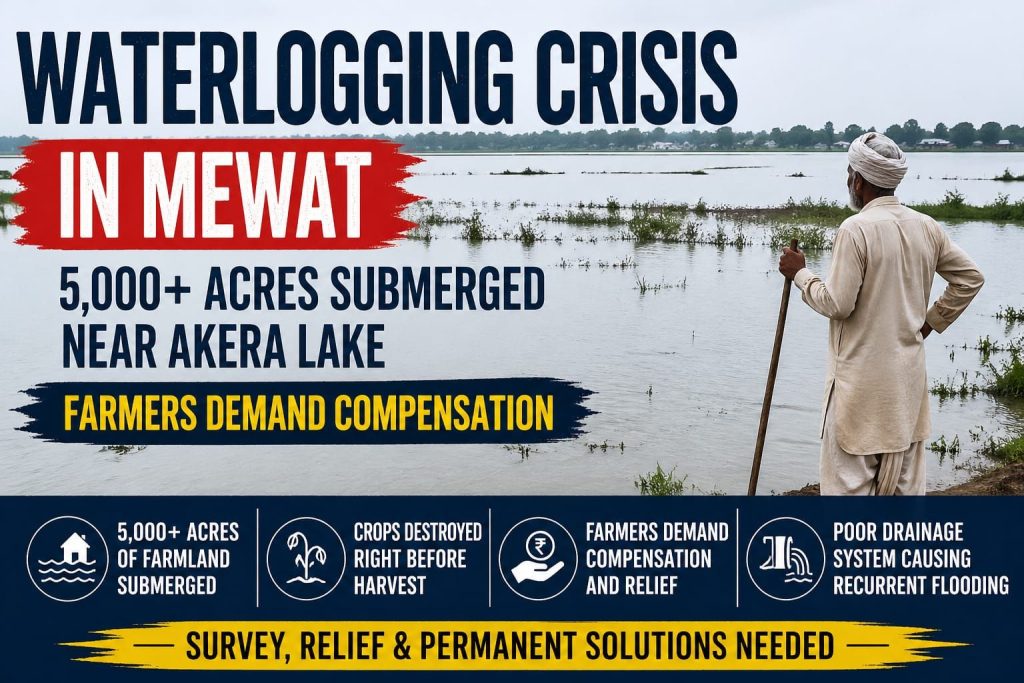
Waterlogging Crisis in Mewat: 5,000+ Acres Submerged Near Akera Lake, Farmers Demand Compensation
A severe and prolonged waterlogging crisis is unfolding in the Mewat region of Haryana, where thousands of farmers are struggling to survive amid flooded farmlands. For nearly three years, agricultural land surrounding Akera Lake has remained submerged, rendering cultivation nearly impossible and pushing rural livelihoods to the brink.
Over 5,000 Acres of Farmland Affected
According to local reports, more than 5,000 acres of fertile land have been severely impacted by stagnant water. Farmers say that the continuous waterlogging has destroyed crop cycles, damaged soil quality, and left fields unusable.
Many farmers who once relied on seasonal crops like wheat, mustard, and bajra are now unable to plant even a single crop. The economic consequences have been devastating, with mounting debts and no clear source of income.
5–6 Villages Facing the Impact
The crisis is not limited to isolated patches of land. At least five to six villages located near Akera Lake are directly affected. Residents of these villages report that water has remained stagnant for months, cutting off access to agricultural activities and even affecting daily life.
In some cases, pathways connecting villages have also been disrupted, making transportation and access to basic services more difficult.
Monsoon Makes the Situation Worse
The situation deteriorates further during the monsoon season. Heavy rains cause the water level in Akera Lake to rise, leading to overflow into nearby fields. Due to the absence of a proper drainage system, the excess water has nowhere to go, resulting in long-term stagnation.
Farmers claim that even months after the rains have stopped, water continues to remain in their fields, making recovery nearly impossible.
Farmers Demand Compensation and Drainage Solutions
Frustrated by years of inaction, farmers have intensified their demands for government intervention. Their key demands include:
Immediate compensation for crop losses over the past three years
Construction of a proper drainage system to prevent future waterlogging
Long-term infrastructure planning to protect agricultural land
Financial relief packages for affected families
Several farmer groups have reportedly approached local authorities multiple times, but they claim that no concrete action has been taken so far.
Administrative Response Under Scrutiny
The ongoing crisis has raised serious questions about administrative preparedness and response. Despite repeated complaints, residents allege that authorities have failed to implement even temporary solutions.
Local voices argue that timely intervention—such as drainage channels or water diversion systems—could have prevented the situation from escalating to this level.
Economic and Social Impact
The impact of this crisis goes beyond agriculture. With farming halted, many families are facing financial instability. Some farmers have been forced to seek alternative work, while others are struggling to repay loans.
The prolonged distress is also affecting mental health and community stability, as uncertainty continues to loom over the future.
What Lies Ahead?
Experts warn that if immediate steps are not taken, the damage could become irreversible. Soil degradation due to prolonged water exposure may permanently reduce agricultural productivity in the region.
A coordinated approach involving government agencies, irrigation experts, and local communities is essential to address both the immediate crisis and long-term sustainability.
The waterlogging crisis near Akera Lake in Mewat is a stark reminder of how environmental challenges and infrastructure gaps can devastate rural economies. As farmers continue to suffer, the urgency for effective solutions and fair compensation grows stronger.