
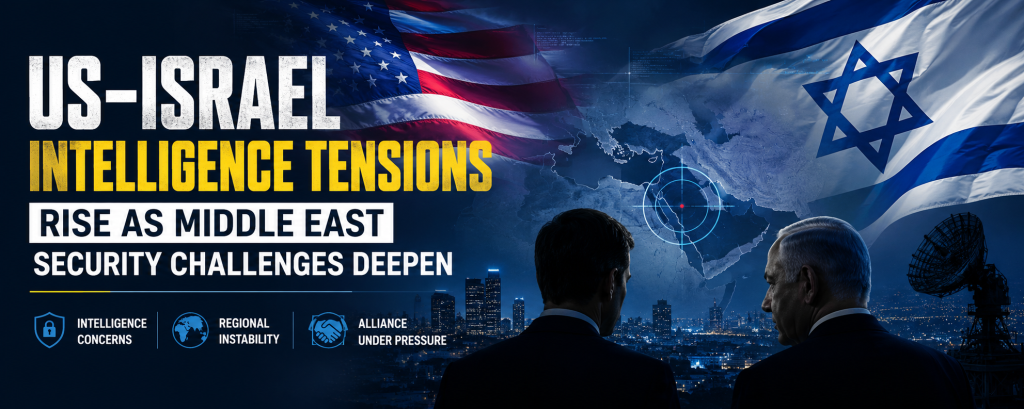
US and Israel Face New Intelligence Challenges as Regional Conflicts Intensif
The intelligence partnership between the United States and Israel has long been regarded as one of the strongest security relationships in the world. However, recent developments in the Middle East have exposed new tensions between the two allies, particularly regarding intelligence sharing, military strategy, and regional security priorities.
According to recent reports, officials within the U.S. defense and intelligence community have raised concerns about counterintelligence risks involving Israel. Some reports indicate that the Pentagon has elevated its assessment of Israeli intelligence activities, reflecting growing caution as both countries navigate an increasingly volatile regional environment. Israeli officials have strongly rejected allegations of inappropriate intelligence conduct.
The latest tensions appear to be closely linked to the ongoing conflict involving Iran and its regional allies. While Washington and Jerusalem continue to cooperate extensively on security matters, differences have emerged regarding military responses and diplomatic approaches.
The United States has recently pushed for de-escalation efforts in Lebanon and broader negotiations aimed at reducing regional violence. Meanwhile, Israeli leaders have emphasized the need for stronger military measures against perceived threats from Iran-backed groups. These differing approaches have occasionally created friction between policymakers and intelligence officials on both sides.
Intelligence cooperation remains essential for both countries. Joint efforts cover counterterrorism operations, cyber defense, missile defense systems, and monitoring of regional threats. However, heightened concerns about operational security have reportedly led U.S. officials to review how sensitive intelligence is shared and protected. Such reviews are not uncommon among close allies, especially during periods of conflict and geopolitical uncertainty. The current environment has increased scrutiny on intelligence procedures and information handling practices.
The broader conflict involving the United States, Israel, and Iran has significantly complicated the regional security landscape. Missile exchanges, military operations, and ongoing diplomatic negotiations have created a rapidly evolving environment where intelligence accuracy and coordination are more important than ever. Recent incidents involving Iranian missile launches and military responses have further intensified concerns about regional stability.
Security experts note that intelligence agencies must adapt quickly to changing threats, making cooperation essential despite political disagreements. As tensions rise across the Middle East, both nations continue to rely heavily on shared intelligence to protect their strategic interests.
Political disagreements have also contributed to the current atmosphere. Public reports of disagreements between senior American and Israeli leaders have highlighted differences over military operations and diplomatic initiatives. Although both governments continue to affirm their commitment to the alliance, public disputes have drawn increased attention to underlying policy differences.
Despite these challenges, analysts generally agree that the broader strategic relationship remains intact. Intelligence cooperation between the United States and Israel continues across multiple areas of mutual concern, even as both sides navigate complex regional realities.The future of U.S.–Israel intelligence cooperation will likely depend on how both countries manage regional conflicts, particularly those involving Iran and its allied groups. Maintaining trust, protecting sensitive information, and coordinating security strategies will remain essential priorities.
While recent tensions have attracted significant attention, the long-standing intelligence partnership continues to play a crucial role in regional security. The coming months will reveal whether current disagreements represent a temporary strain or a more significant shift in one of the world’s most important security alliances.