
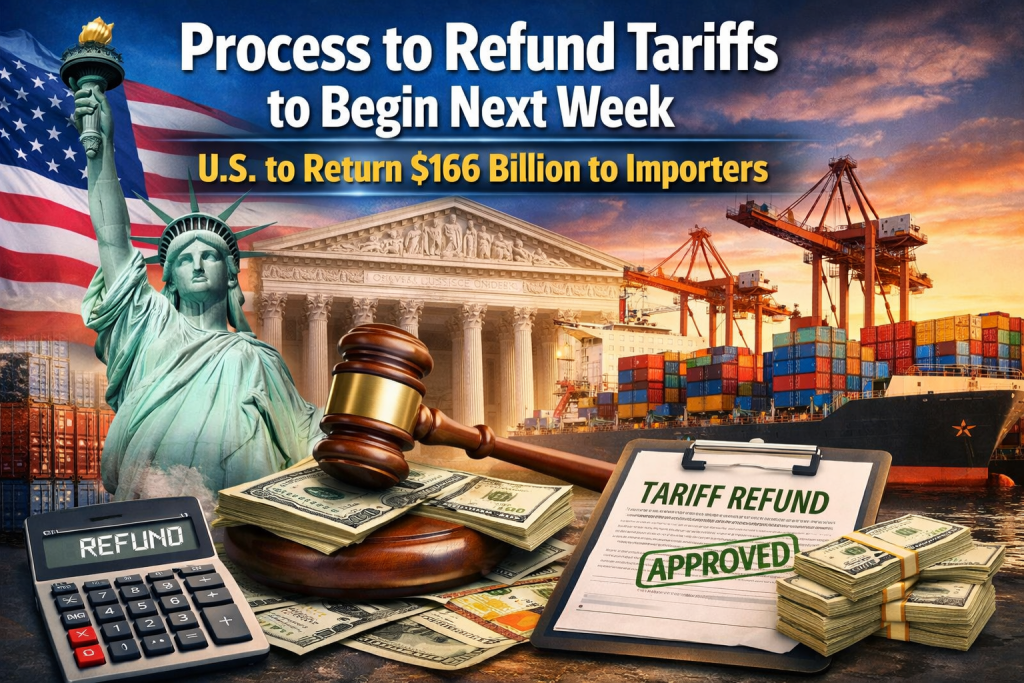
U.S. Tariff Refund Process to Start Next Week — Billions Set to Be Returned
The United States government is preparing to launch a major refund process next week that will return billions of dollars in previously collected tariffs to businesses. The move follows a landmark court ruling that declared certain tariffs illegal, forcing the government to refund massive sums to affected companies.
Refund Process to Start April 20
The U.S. government confirmed that the tariff refund system will officially begin operating on April 20, 2026. The system, called CAPE (Consolidated Administration and Processing of Entries), will allow businesses to submit claims and receive refunds electronically.
Authorities said the first phase of the system is already complete, and eligible businesses can start receiving payments soon. Each importer will receive a single consolidated payment, which may include interest on the refunded amount.
Why Tariffs Are Being Refunded
The refund process began after the U.S. Supreme Court ruled in February 2026 that certain tariffs imposed under emergency powers were unlawful. The court determined that the government did not have the legal authority to impose those tariffs under the International Emergency Economic Powers Act (IEEPA). Following the ruling, courts ordered the government to return the money collected from companies that paid the invalid tariffs.
Total Refund Amount Could Reach $166 Billion
Officials estimate that the government collected approximately $166 billion in tariffs that must now be returned. More than 330,000 importers were affected, covering over 53 million shipments of imported goods. As of early April, over 56,000 businesses had already registered for electronic refunds covering around $127 billion of the total amount.
Businesses — Not Consumers — Will Receive the Refunds
Despite the large refund total, ordinary consumers should not expect direct payments. The refunds will be issued only to businesses that originally paid the tariffs. Experts noted that consumers who experienced higher product prices due to tariffs are not eligible for refunds under the current system. Some companies have also indicated that they do not plan to pass the refund savings on to customers.
Challenges and Delays Still Possible
Although the system is ready to launch, experts warn that the refund process may take time. Some complex claims may require manual processing, which could slow down payments. Government agencies also noted that some businesses risk missing refunds if they fail to register electronically within the required timeframe Officials expect the full rollout to occur in phases, with simpler claims processed first.
Legal Battles Continue Over Tariffs
Even as refunds begin, legal challenges related to tariffs are ongoing. Thousands of lawsuits have already been filed by companies seeking compensation, and additional court cases may still influence future tariff policies. Meanwhile, policymakers are exploring alternative trade measures, meaning tariff-related disputes may continue in the coming months.
Global Impact of the Refund Decision
Although the refunds mainly affect U.S. companies, the decision could influence global trade markets. Possible international effects include: Changes in global import costs Adjustments in supply chain pricing Policy shifts affecting exporters worldwide Countries that trade heavily with the United States may see indirect impacts as companies adjust their strategies.
The launch of the tariff refund process marks one of the largest financial reimbursement efforts in U.S. trade history. With up to $166 billion set to be returned, businesses are preparing to file claims and recover funds collected under tariffs later ruled unlawful. While the refunds will not directly benefit consumers, the move represents a significant shift in trade policy and highlights the long-term impact of court rulings on global economic decisions.