
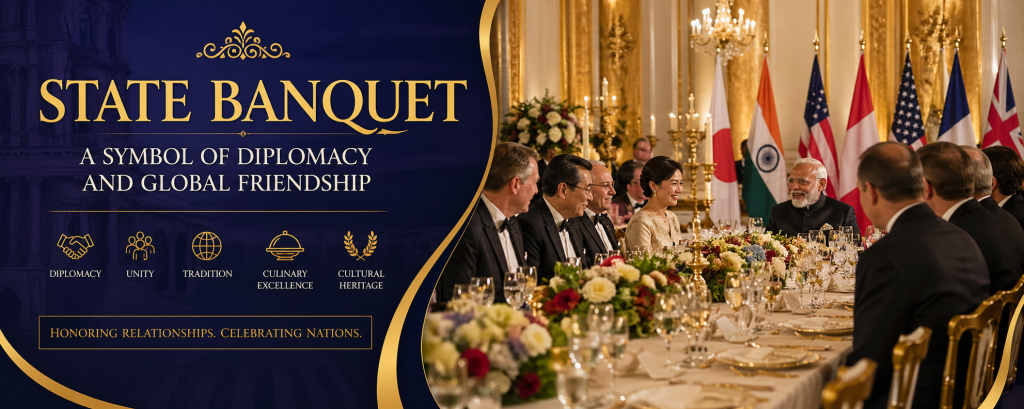
State Banquet 2026: A Grand Symbol of Diplomacy and Global Friendship
State banquets remain one of the most prestigious traditions in global diplomacy, bringing together world leaders, dignitaries, and officials in a grand setting to celebrate cooperation and friendship between nations. In 2026, several high-profile state banquets across the world have once again demonstrated their importance in strengthening international relations.
A recent example includes a grand state banquet held in honor of Droupadi Murmu during her official engagements in Shimla, where senior government leaders, judges, and ministers gathered for a formal dinner hosted at Lok Bhavan. The event featured traditional protocol, formal greetings, and dignified interactions among high-ranking officials.
What Is a State Banquet?
A state banquet is a formal dinner hosted by a country’s head of state to honor visiting foreign leaders or dignitaries. These events usually take place during official state visits and serve as a symbol of respect and cooperation between nations. Formal invitations to selected dignitaries Carefully planned seating arrangements Speeches and ceremonial toasts Multi-course meals showcasing national cuisine Cultural or musical performances These events are designed not only to provide hospitality but also to reinforce diplomatic relations between countries.
Recent High-Profile State Banquets Around the World
On April 28, 2026, Donald Trump hosted a grand state dinner at the White House for King Charles III and Queen Camilla. This event was particularly significant because it marked the first white-tie state dinner in the United States since 2007, showcasing a renewed level of ceremonial formality. The banquet symbolized the long-standing alliance between the United States and the United Kingdom, highlighting centuries of diplomatic relations.
India Showcases Cultural Heritage Through Cuisine
India has also used state banquets as a platform to promote its cultural identity. During a recent visit by the President of South Korea, a royal-style Rajasthani feast was served at Rashtrapati Bhavan. The elaborate menu included traditional Indian dishes such as Ker Kaju Kishmish, Govind Gatta, and Ghevar, highlighting regional culinary traditions and the diversity of Indian heritage. This banquet demonstrated how food diplomacy can strengthen international ties and promote cultural exchange.
Why State Banquets Matter in Modern Diplomacy
State banquets play an important role beyond ceremonial celebrations. They serve as platforms for: Strengthening diplomatic partnerships Encouraging political cooperation Promoting cultural understanding Showcasing national traditions Building personal relationships between leaders These events often create opportunities for informal discussions that can influence major international decisions.
Tradition Meets Modern Diplomacy
Despite evolving diplomatic practices, state banquets remain deeply rooted in tradition. Guests usually wear formal attire, including black tie or white tie, and the event follows strict ceremonial guidelines. Modern state banquets, however, are also adapting to contemporary values. Many governments now focus on sustainability, local ingredients, and cultural representation in their menus and decorations, reflecting changing global priorities.
State banquets continue to stand as powerful symbols of diplomacy, respect, and international cooperation. From the United States to India and beyond, these grand events reflect the cultural richness and political unity shared between nations. As global relationships evolve, state banquets will likely remain a key tradition in world diplomacy—combining ceremony, culture, and politics into a single memorable occasion