Shadow Docket Explained: Inside the Supreme Court of the United States’s Most Controversial Process
The term “shadow docket” has rapidly become one of the most debated topics in modern legal and political discussions. Used to describe a lesser-known process of the Supreme Court of the United States, the shadow docket refers to emergency rulings that are often issued quickly, without detailed explanations or public hearings. As its use grows, so does concern about transparency, accountability, and its impact on democracy.
What Is the Shadow Docket?
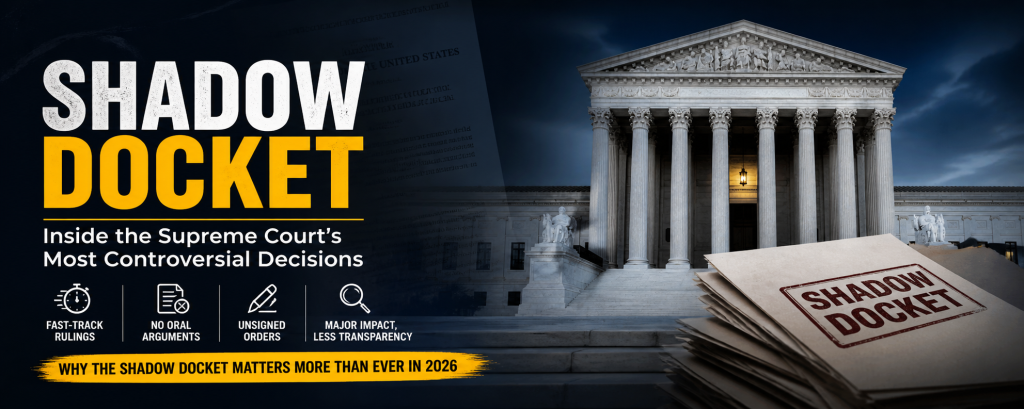
The “shadow docket” (also called the emergency docket) includes cases where the Supreme Court takes urgent action—often without: Full legal briefing Oral arguments Detailed written opinions These decisions are usually issued as short, unsigned orders and can dramatically affect laws and policies in real time. Legal scholar William Baude coined the term in 2015 to highlight how these rulings operate outside the Court’s traditional, more transparent process.
Why Is It in the News in 2026?
Recent developments have pushed the shadow docket into global headlines: U.S. Justice Ketanji Brown Jackson recently warned that increased reliance on emergency rulings is “corrosive” to judici At the same time, major rulings impacting voting laws and public policy have intensified debate over how such decisions are made.
How the Shadow Docket Works
Unlike regular cases (called the “merits docket”), shadow docket cases: Are handled on an expedited basis Often involve urgent appeals or injunctions May not include any explanation of the Court’s reasoning This allows the Court to act quickly—but also limits public understanding
Why Critics Are Concerned
Many decisions provide little or no reasoning, making it difficult to understand the legal basis. Important national policies—such as immigration rules, voting laws, and federal programs—can be shaped through these quick rulings. The number of emergency applications has increased significantly in recent years, especially in politically sensitive cases.
It is essential for urgent legal relie Courts must act quickly in cases involving immediate harm These rulings are often temporary, not final judgments Supporters say criticism is sometimes driven more by disagreement with outcomes than with the process itself. The shadow docket is no longer a hidden part of the judicial system—it is now central to debates about law, politics, and democracy in the United States. As its use expands, questions about fairness, transparency, and judicial accountability will continue to shape public discourse.