
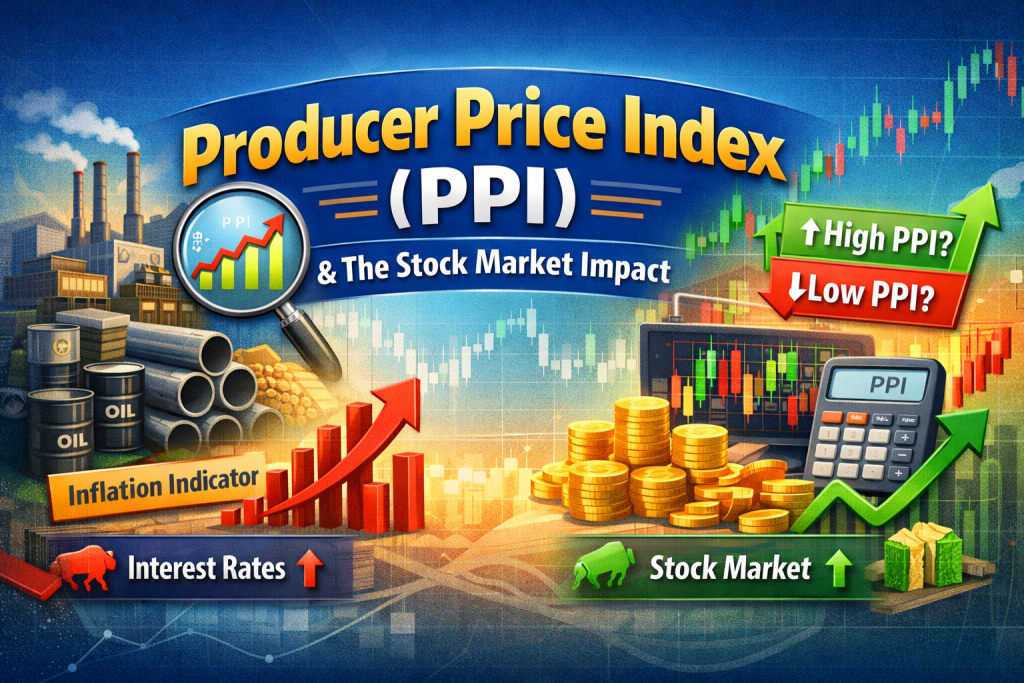
Producer Price Index (PPI) and Its Impact on the Stock Market
In the world of investing and finance, economic indicators play a crucial role in shaping market sentiment. One such key indicator is the Producer Price Index (PPI). Often overlooked by beginners, PPI provides early signals about inflation trends and helps investors anticipate stock market movements. What is the Producer Price Index (PPI) The Producer Price Index (PPI) measures the average change in prices that producers receive for their goods and services over time.
Unlike consumer-focused indicators, PPI tracks prices at the wholesale or production level, before products reach end consumers. Raw materials (e.g., metals, oil) Intermediate goods (e.g., parts used in manufacturing) Finished goods ready for sale Because it captures price changes early in the supply chain, PPI is considered a leading indicator of inflation. Why PPI Matters in the Stock Market Early Signal of Inflation PPI often rises before consumer prices increase. If producers face higher costs, they typically pass those costs on to consumers, leading to higher inflation. Investors closely watch PPI data to predict future inflation trends.
Impact on Company Profits Rising PPI: Higher production costs can reduce profit margins if companies cannot pass costs to consumers. Stable or Falling PPI: Lower input costs improve margins and profitability This directly affects stock valuations and investor confidence. Influence on Interest Rates Central banks monitor inflation indicators like PPI when deciding monetary policy High PPI → Potential rate hikes Low PPI → Stable or lower interest rates Higher interest rates typically put pressure on stock markets, especially growth stocks.
Market Reaction to PPI Data When PPI is Higher Than Expected Signals rising inflation Raises concerns about interest rate hikes Stock markets may decline When PPI is Lower Than Expected Indicates controlled inflation Stock markets often rise Real-World Example Imagine the price of crude oil increases significantly. This raises transportation and manufacturing costs across industries. Companies may increase product prices, leading to inflation. Investors anticipate this chain reaction and adjust their strategies accordingly—often causing volatility in stock markets.
How Traders Use PPI To forecast inflation trends To predict central bank decisions To identify sectors likely to benefit or suffer To plan short-term trading strategies around data releases The Producer Price Index (PPI) is a powerful economic indicator that provides valuable insights into inflation and market direction. By understanding PPI trends, investors can make more informed decisions and better navigate stock market volatility