
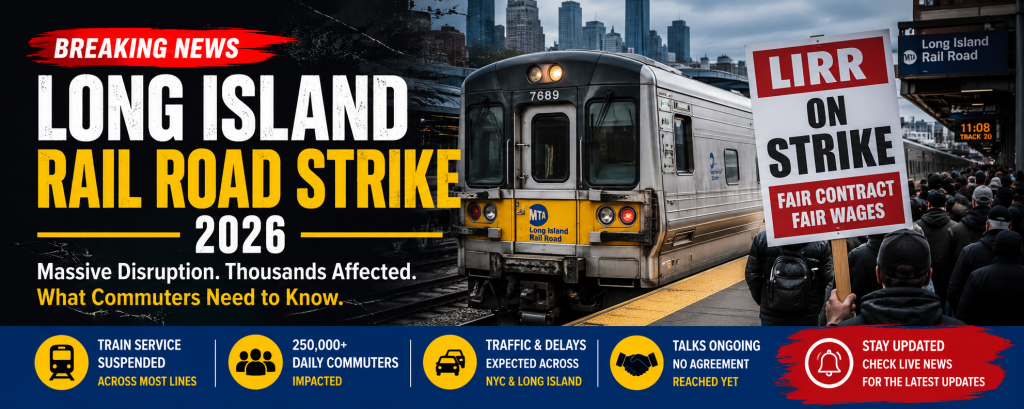
Long Island Rail Road Strike 2026: NYC Commuters Face Major Travel Chaos Amid Labor Dispute
The Long Island Rail Road (LIRR), one of the busiest commuter rail systems in the United States, has entered a major labor strike after negotiations between union representatives and the Metropolitan Transportation Authority (MTA) failed to produce a new agreement.
The work stoppage immediately disrupted transportation across New York and Long Island, leaving hundreds of thousands of commuters scrambling for alternative travel options. Roads leading into Manhattan experienced unusually heavy traffic early Monday morning, while bus terminals and subway systems saw overcrowding during peak hours. Officials warned that the strike could continue if both sides remain divided over wages, healthcare contributions, and workplace policies.
Why the LIRR Workers Went on Strike
Union leaders representing conductors, maintenance crews, engineers, and station employees said workers had been negotiating for months over compensation and working conditions. According to labor representatives, the key issues include:
Higher wage increases to match inflation
Healthcare benefit protections
Overtime and scheduling rules
Staffing shortages and worker fatigue
Long-term retirement protections
The MTA stated that it had already presented what it considers a “competitive offer,” but union officials argued the proposal failed to address the rising cost of living in the New York metropolitan area. Transportation analysts say the dispute reflects a larger national trend in which transit workers across the United States are demanding stronger labor protections after years of workforce pressure and post-pandemic operational challenges.
Hundreds of Thousands of Commuters Affected
The Long Island Rail Road normally serves hundreds of thousands of passengers every weekday, connecting Long Island communities with Manhattan, Brooklyn, and Queens. With train service halted across most routes, commuters faced several immediate problems:
Major Effects Seen Across New York
Severe traffic congestion on highways entering New York City
Overcrowded subway and bus services
Longer travel times for workers and students
Delays around Penn Station and Jamaica Station
Increased rideshare and taxi demand
Many businesses encouraged employees to work remotely to reduce travel pressure during the strike period. Local transportation authorities also deployed emergency shuttle buses on selected routes, though officials admitted buses cannot fully replace the capacity of the rail network.
Economic Impact Could Grow Quickly
Economists warn that a prolonged shutdown could damage regional productivity and cost businesses millions of dollars per day. Industries likely to feel the strongest impact include:
Finance and corporate offices in Manhattan
Retail businesses dependent on commuter traffic
Tourism and hospitality services
Airport transportation networks
Entertainment venues and event operations
Small businesses near train stations may also experience reduced customer traffic during the strike. Experts say even a short disruption can create ripple effects across the wider New York economy because the LIRR is considered critical infrastructure for daily workforce movement.
Political Leaders Urge Immediate Resolution
New York state leaders and transit officials have called for urgent negotiations to restart between union representatives and the MTA. Government officials warned that a prolonged transportation shutdown could create:
Economic instability
Increased commuting costs
Pressure on public transit systems
Public frustration across the region
Several lawmakers urged both parties to reach a compromise before the situation escalates further. Transit experts believe mediation efforts could intensify if the strike continues throughout the week.
Public Reaction Online
Social media platforms quickly filled with commuter reactions, with many residents sharing images of crowded highways, packed subway cars, and long bus lines. Some commuters expressed support for workers seeking better wages and conditions, while others criticized transit authorities for failing to prevent the shutdown. Transportation discussions also trended across New York community forums, where residents exchanged alternate travel tips and remote work advice.
Why This Strike Matters Nationally
The LIRR shutdown is being closely watched across the United States because it highlights ongoing tensions between public transit agencies and labor unions. Rising inflation, staffing shortages, and growing commuter demands have placed pressure on transportation systems nationwide. Analysts believe the outcome of this dispute could influence future labor negotiations involving transit workers in other major American cities.
For millions of Americans who rely on public transportation every day, the situation has become more than a local issue — it is now part of a broader national conversation about infrastructure, labor rights, and the future of commuter travel.