
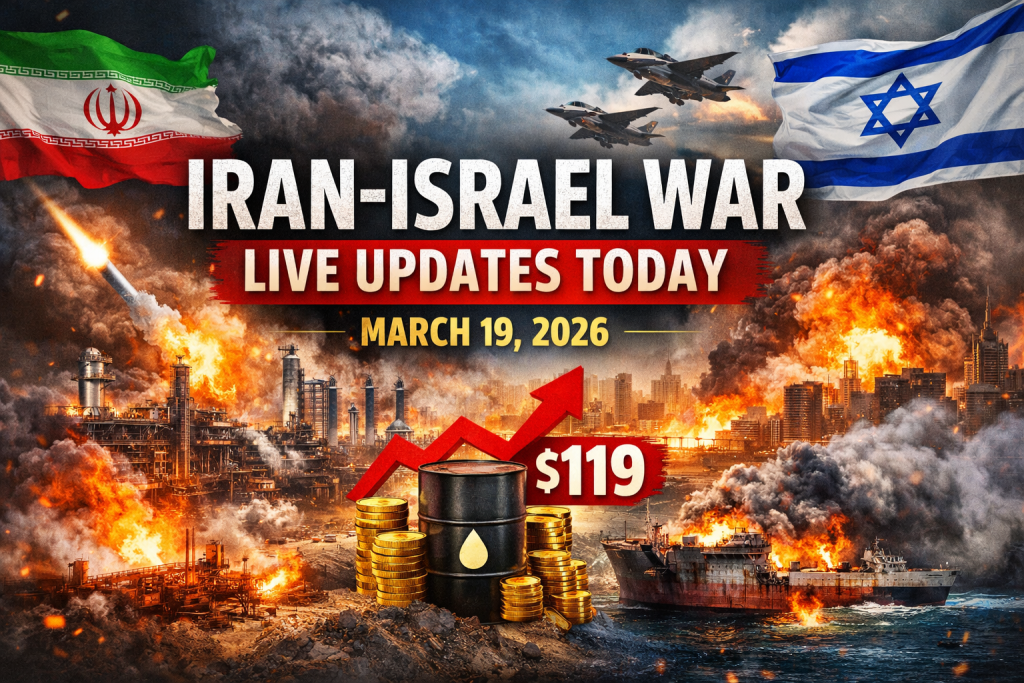
Iran-Israel War Live Updates Today: March 19, 2026 – Middle East Strikes, Global Oil Surge & Escalating Conflict
The conflict between Iran and the U.S.–Israel coalition has entered a new, highly volatile phase with multiple military fronts active today. The war, ongoing since late February, has broadened far beyond initial strikes, drawing in regional powers and threatening global stability. Israel’s Strategic Strikes Deep into Iran In a dramatic escalation, Israeli forces struck Iran’s South Pars gas field, one of the largest energy production sites in the world. This came just hours after Israel’s forces killed Iran’s top intelligence minister, Esmail Khatib, marking one of the most significant blows against Iranian leadership so far.
The South Pars strike severely disrupted Iranian gas output (impacting roughly 12 % of Iran’s total gas production) and halted operations at major facilities. Iran responded by cutting gas supplies to Iraq and triggering protests from Gulf partners. Iran’s Retaliation Across the Gulf In retaliation to the South Pars attack, Iran launched coordinated missile and drone strikes today on energy infrastructure across several Gulf countries, including: Saudi Arabia’s SAMREF refinery in Yanbu Qatar’s Ras Laffan LNG facility (a vital export hub) Major oil refineries in Kuwait
These strikes sparked large fires, disrupted production, and have been widely condemned by Gulf governments. More than 20 ships near the Strait of Hormuz have reportedly been damaged in maritime incidents since the conflict widened — threatening international shipping and oil transit. Civilians & Regional Security Alerts Bahrain issued public safety alerts and sirens, urging residents to take shelter amid heightened threat levels. Other neighboring states remain on high alert as regional tensions escalate. Leadership Assassinations & Military Losses Ali Larijani, former Iranian security chief
Gholamreza Soleimani, a senior commander of Basij militia These high‑profile assassinations have signaled a shift in tactics to decapitate Iran’s military leadership. Global Economic & Energy Impact Brent crude topped $119 per barrel today amid fears of prolonged supply disruption. European natural gas prices have hit multi‑year highs due to regional supply fears. The surge in energy prices is triggering broader economic concerns worldwide and could contribute to inflationary pressure in many countries. International Dynamics & U.S. Involvement The United States remains aligned with Israel in the conflict,
with President Trump warning of further actions if Iranian strikes continue to endanger energy infrastructure. Diplomatic channels are strained, with Tehran rejecting dialogue with Washington and insisting it can sustain intense conflict for months if necessary. Regional Markets & Financial Repercussions Asian stock markets have fallen sharply as attacks on Gulf energy infrastructure intensified fears of global supply shock. War Context & Broader Outlook The current war began as a coordinated U.S.–Israel offensive against Iran on February 28, 2026, initially targeting Iranian military and command centers.
It has since transformed into a multi‑front confrontation involving missiles, drones, naval threats, and proxy involvement across the Middle East. There is no ceasefire in sight, and analysts warn the conflict could persist for weeks or months, potentially drawing in more regional and global actors. What to Watch Next Further escalation around the Strait of Hormuz Additional retaliatory strikes by Iran into the Gulf Global energy supply disruptions continuing Possible diplomatic interventions by major powers