
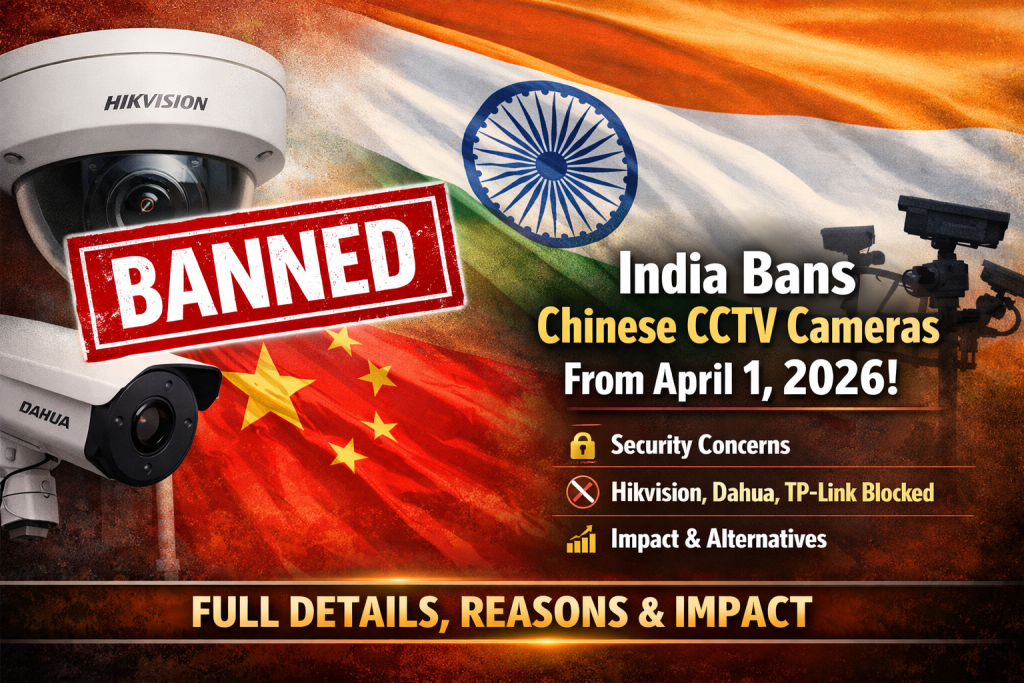
Chinese CCTV Camera Ban in India: Full List of Affected Brands and New Rules
India has taken a major step toward strengthening cybersecurity and reducing foreign surveillance risks by banning the sale of several Chinese CCTV camera brands starting April 1, 2026. The move is expected to significantly reshape the country’s surveillance market and boost domestic manufacturers. The new restrictions target internet-connected surveillance devices from major Chinese companies, marking one of the most significant technology policy shifts in recent years.
What Exactly Has Been Banned The Indian government has effectively blocked Chinese CCTV manufacturers from selling internet-connected cameras unless they receive mandatory security certification. Major affected companies include: Hikvision Dahua TP-Link These firms have reportedly been denied mandatory certification, making it illegal to sell their internet-connected CCTV devices in India. The new rule requires all CCTV cameras sold in India to receive approval under the Standardisation Testing and Quality Certification (STQC) system. Without certification, companies cannot legally sell their products in the country
Why India Banned Chinese CCTV Cameras Government officials cited national security and cybersecurity concerns as the primary reasons for the ban. Key Reasons: National Security Risks Authorities fear that foreign-made surveillance systems could allow unauthorized access to sensitive data or remote monitoring. The move aims to protect critical infrastructure from potential cyber threats and data leaks. Mandatory Security Testing CCTV devices must disclose chipset origin Systems must pass security testing Manufacturers must prevent remote hacking risks These rules were introduced in 2024 with a two-year compliance window
Reduce Dependence on Foreign Technology India is also pushing to increase domestic manufacturing and reduce reliance on imported surveillance technology. Domestic companies have already gained market share as Chinese brands exit the sector. What This Means for Existing CCTV Users Existing Chinese CCTV cameras will continue working Only new sales of uncertified models are restricted The rules mainly affect future purchases and imports, not devices already installed in homes or businesses
China’s Reaction to the Ban Chinese media outlets have criticized India’s decision, claiming the move violates international trade practices. Reports suggest that Chinese officials view the ban as an attempt to push Chinese companies out of the Indian market, raising tensions between the two countries. Global Trend: Not Just India Countries including the United States, United Kingdom, and Australia have previously restricted the use of certain Chinese surveillance systems due to similar security concerns. This indicates a global shift toward tighter cybersecurity policies for surveillance technology.
Which Brands May Benefit With Chinese brands restricted, several companies are gaining market share: CP Plus Qubo Prama Matrix Sparsh Bosch Honeywell These companies are focusing on secure, certified hardware and localized production. Possible Effects on Consumers Experts predict several short-term and long-term impacts: Short-Term Effects Slight increase in CCTV prices Limited availability of some premium models Market adjustment period Long-Term Effects Stronger cybersecurity standards Growth in Indian manufacturing More reliable surveillance systems