
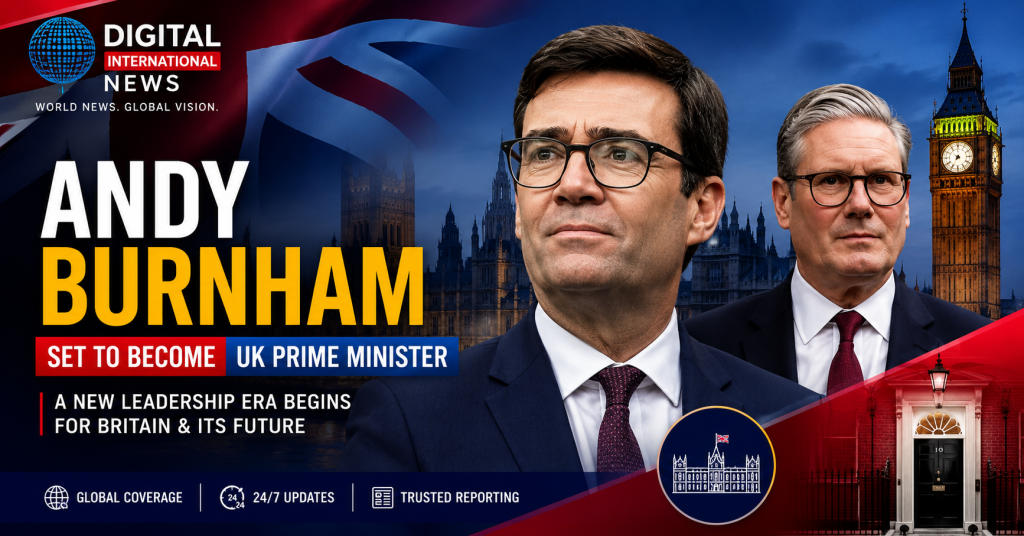
Andy Burnham’s Rise to Prime Minister: Britain’s Next Political Chapter Begins
Andy Burnham is poised to become the United Kingdom’s next Prime Minister following Keir Starmer’s resignation. Here’s what the leadership transition means for Britain, Labour, and the country’s future.
The United Kingdom is preparing for one of its most significant political transitions in recent years as Andy Burnham is expected to become the country’s next Prime Minister following Keir Starmer’s resignation. The change in leadership marks a pivotal moment for the Labour Party and signals the beginning of a new chapter in British politics.
With Burnham emerging as the sole candidate to succeed Starmer, the transition is expected to be completed smoothly. Political observers believe his leadership will reshape Labour’s priorities while attempting to restore public confidence in government during a period of economic and international uncertainty.
Andy Burnham is widely recognized for his experience in public service and regional leadership. Having built a strong political profile over the years, he enters the national spotlight with promises of reform, decentralization, and economic renewal. His expected appointment comes after Keir Starmer announced his resignation, ending a premiership that focused heavily on stabilizing the economy, strengthening Britain’s international partnerships, and rebuilding Labour’s electoral position. Starmer has publicly expressed confidence that Burnham can lead Labour successfully into the future.
Britain has witnessed several changes in national leadership over the past decade. Frequent political turnover has often raised concerns among businesses, investors, and international partners about long-term policy stability. Burnham’s transition therefore represents more than a simple leadership change. It is viewed as an opportunity to establish a clearer long-term direction for government while addressing domestic issues including: Cost of living pressures NHS and healthcare improvements Regional economic inequality Housing shortages Transport infrastructure Public sector investment
One of Burnham’s most distinctive proposals involves shifting political power away from London. He has repeatedly argued that regions outside the capital deserve greater authority over economic development, transport, housing, and public services. Reports suggest Burnham wants to establish a stronger governmental presence in northern England, reflecting his long-standing belief that decision-making should happen closer to local communities rather than remaining concentrated in Westminster. Supporters believe this approach could help reduce regional inequality while encouraging faster local investment and innovation.
Millions of households continue to face financial pressure due to rising living costs. Burnham has indicated that easing household expenses would become one of his government’s earliest priorities. Supporting local businesses Improving public transport affordability Expanding housing availability Reforming utility services Encouraging long-term economic growth He has emphasized that any major reforms should be introduced while maintaining fiscal responsibility.
Another important theme emerging during the transition is Burnham’s commitment to changing the internal culture of government. Senior Labour figures have argued that future appointments should prioritize diversity, merit, and professionalism. Burnham has reportedly pledged to discourage anonymous political briefings and create a more respectful working environment inside Downing Street, reflecting a broader effort to improve public trust in government institutions.
While domestic issues are expected to dominate headlines, Burnham will also inherit significant foreign policy responsibilities. Ongoing European security concerns NATO defence commitments Economic competitiveness International trade negotiations Global geopolitical instability Analysts note that funding future defence commitments will remain one of the most difficult financial challenges facing the incoming administration.
The leadership transition has drawn international attention. World leaders and foreign governments are closely watching Britain’s political developments because the UK remains one of the world’s largest economies and a major diplomatic partner. Recent comments from international officials suggest they hope the new government will deliver greater long-term stability and continue strong cooperation with allies.