
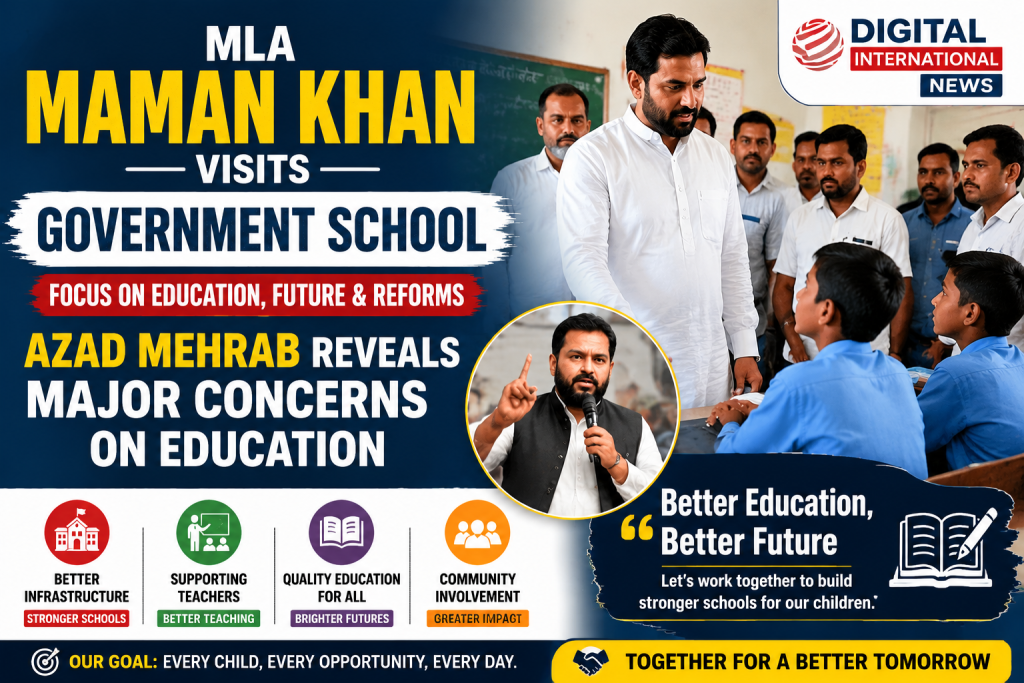
MLA Maman Khan Visits Government School; Azad Mehrab Reveals Major Education Challenges
Haryana: Education remained at the center of public discussion after MLA Maman Khan visited a government school to assess its academic environment and infrastructure. During the visit, local community members, school officials, and education supporters interacted with the legislator to discuss the current condition of public education and identify areas requiring immediate attention.
The visit also gained attention after Azad Mehrab shared his observations on the state of government schools, emphasizing the importance of strengthening the education system through better planning, improved facilities, and active public participation.
During the inspection, MLA Maman Khan reviewed various aspects of the school, including classroom conditions, sanitation, drinking water facilities, student attendance, and the overall learning environment.
Teachers and school staff reportedly briefed the MLA about routine challenges, resource requirements, and ongoing efforts to improve academic performance. Students also had an opportunity to interact with the visiting delegation, discussing their educational experiences and aspirations. The inspection aimed to understand the school’s needs directly rather than relying solely on official reports.
Speaking during the visit, Azad Mehrab stressed that education should remain one of the highest priorities for both government institutions and society. Shortage of teaching staff Infrastructure maintenance requirements Need for modern learning resources Better digital education facilities Increased community participation According to him, quality education can significantly improve opportunities for young people and contribute to long-term regional development.
Government schools play a vital role in providing affordable education to thousands of students, particularly in rural and economically weaker communities. Local administration Teachers Parents Public representatives Community organizations Regular inspections and direct interaction with school authorities help identify practical issues and encourage accountability.
Apart from infrastructure, discussions reportedly included student welfare initiatives such as: Clean drinking water Safe classrooms Proper sanitation Sports facilities Library resources Digital learning opportunities Improving these facilities is widely considered essential for creating an environment where students can focus on learning and personal development.
Education specialists often argue that sustainable improvement cannot be achieved through infrastructure alone. Teacher training, curriculum support, technology integration, and community engagement are equally important components of a successful public education system. Regular monitoring of school performance, transparent administration, and timely allocation of resources can contribute to stronger educational outcomes.
Local residents attending the visit emphasized that parents and community leaders should actively participate in school development initiatives. Public involvement can help ensure better maintenance of facilities, encourage student attendance, and create stronger collaboration between schools and families. Educational development is widely regarded as a shared responsibility rather than the sole responsibility of educational authorities.
During the interaction, MLA Maman Khan assured that concerns raised during the inspection would be communicated to the relevant departments for appropriate action. He reiterated the importance of providing students with an environment that supports learning, personal growth, and equal educational opportunities.
The visit reflected the growing emphasis on monitoring public education and addressing practical challenges through dialogue between elected representatives, educators, and local communities. Identify infrastructure gaps Improve accountability Encourage better governance Strengthen communication with educators Increase public confidence in government schools