
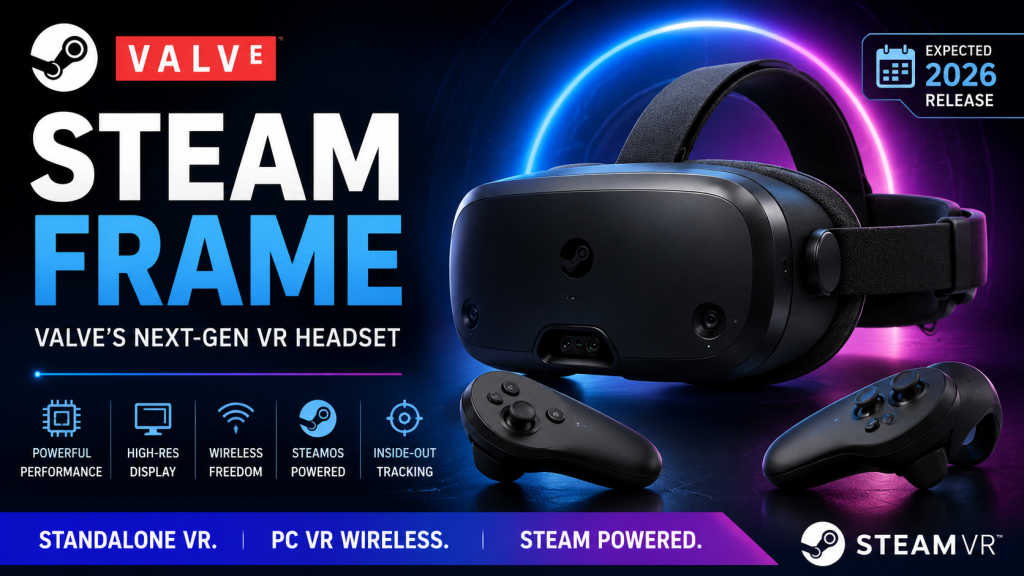
Valve’s Steam Frame: A New Era for Wireless PC VR Gaming
Valve Steam Frame, Valve’s upcoming standalone VR headset. Explore expected specifications, SteamOS integration, gaming features, release timeline, and why it could redefine the future of virtual reality gaming.
The virtual reality industry continues to evolve at an impressive pace, and Valve appears ready to make another significant contribution with its highly anticipated Steam Frame headset. After the lasting success of the Valve Index, gaming enthusiasts and VR developers have been eagerly waiting to see what Valve’s next-generation hardware will bring to the market.
Although Valve has not officially unveiled every detail of the device, growing interest surrounding Steam Frame has fueled speculation about its design, hardware capabilities, software ecosystem, and potential impact on the future of immersive gaming. If released as expected, Steam Frame could become one of the most exciting VR products in recent years.
Valve’s Next Chapter in Virtual Reality
Valve transformed the PC gaming industry with Steam, and later strengthened its position in virtual reality through SteamVR and the Valve Index headset. Instead of rushing annual hardware releases, Valve has traditionally focused on delivering products that emphasize quality, innovation, and long-term software support.
Steam Frame is expected to continue this philosophy by combining standalone functionality with deep integration into the Steam ecosystem. Unlike previous PC-only headsets, the new device is rumored to allow users to enjoy VR experiences without requiring a constant wired connection to a gaming computer.
A Standalone Headset with Steam at Its Core
One of the biggest expectations surrounding Steam Frame is its ability to function as a standalone VR headset while also supporting wireless PC VR streaming.
This hybrid approach would offer users greater flexibility. Casual gamers could launch compatible titles directly from the headset, while enthusiasts with powerful gaming PCs could stream demanding VR games through Steam Link or similar wireless technologies.
Such versatility could make Steam Frame attractive to a broad range of users, from beginners entering virtual reality to experienced VR enthusiasts seeking premium performance.
Expected Hardware Specifications
Although official specifications remain limited, industry discussions suggest that Steam Frame may include premium hardware designed to compete with leading VR devices.
- High-resolution dual displays for improved image clarity.
- Fast refresh rates that enhance smooth gameplay.
- Advanced inside-out tracking without requiring external base stations.
- High-performance mobile processor for standalone gaming.
- Wi-Fi 7 connectivity for faster wireless streaming.
- Bluetooth support for accessories.
- USB-C charging and data connectivity.
- Expandable storage options.
- Comfortable ergonomic design suitable for extended gaming sessions.
SteamOS Integration
Valve’s investment in SteamOS has already demonstrated success with the Steam Deck handheld gaming device. Steam Frame is expected to leverage the same operating system, giving players access to a familiar interface, seamless game management, cloud saves, and integration with Steam services. The use of SteamOS may also allow developers to optimize their VR experiences more efficiently while benefiting from Valve’s growing software ecosystem.
Wireless PC VR Gaming
One of the most exciting possibilities is native wireless PC VR support. Traditional PC VR often requires cables that can limit movement and immersion. A reliable wireless solution could significantly improve the user experience by allowing players to move naturally while maintaining access to graphically demanding games running on their desktop PCs. Valve has already demonstrated expertise in streaming technologies through Steam Link, making wireless VR integration a logical next step.
Improved Tracking Technology
Tracking accuracy plays a major role in delivering immersive VR experiences. Steam Frame is expected to feature advanced inside-out tracking cameras capable of monitoring controller movement and headset positioning without requiring external sensors. This would simplify setup while making the headset more portable and convenient for users who frequently move between locations
Expanding the SteamVR Ecosystem
SteamVR already supports thousands of virtual reality games, simulation titles, educational experiences, and creative applications. Steam Frame could immediately benefit from this extensive library, allowing users to access many existing VR experiences without waiting for developers to create an entirely new ecosystem. For developers, maintaining compatibility with SteamVR would also reduce barriers to adoption.
Potential Gaming Experience
Players can expect support for multiple categories of VR content, including: Action games Adventure titles Racing simulators Puzzle experiences Flight simulators Educational applications Virtual workspaces Social VR platforms Creative design software Fitness applications The versatility of Steam’s existing ecosystem gives Steam Frame the potential to become much more than simply a gaming headset.
Competition in the VR Market
Steam Frame is expected to compete with several major virtual reality platforms currently available worldwide. Major competitors include premium PC VR systems, standalone gaming headsets, and mixed-reality devices offered by leading technology companies. Valve’s strongest competitive advantage remains its massive Steam platform, established developer community, and long history of supporting PC gamers.
Why Gamers Are Excited
Several factors continue to generate excitement among the gaming community: Trusted Valve hardware engineering Strong Steam ecosystem integration Premium gaming focus Expected wireless functionality Standalone operation Large existing game library Developer-friendly platform Potential long-term software support These strengths could position Steam Frame as a compelling option for gamers seeking a premium VR experience.
Release Expectations
Valve has indicated that Steam Frame is planned for release during 2026, although the company has not yet announced a specific launch date or pricing. As with previous Valve hardware, additional information is expected to emerge through official announcements as development progresses. Consumers interested in purchasing the device should monitor Valve’s official communication channels for confirmed specifications, regional availability, and preorder information.
Valve Steam Frame represents one of the most anticipated developments in the virtual reality industry. By combining standalone functionality, SteamOS integration, wireless PC VR capabilities, and access to the expansive SteamVR ecosystem, the headset has the potential to appeal to both newcomers and experienced VR enthusiasts.